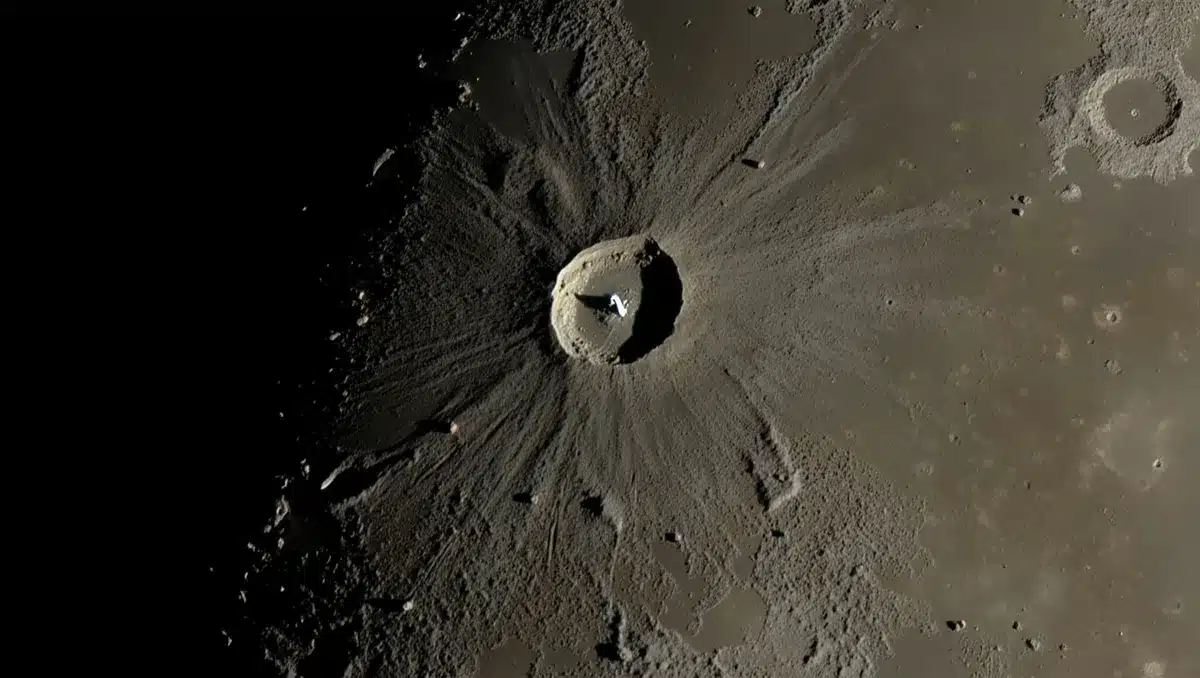
A SpaceX Falcon 9 upper stage crashed into the moon at 5,400 mph early Wednesday, August 5, carving out a new crater near Einstein Crater on the lunar near side. NASA confirmed the impact occurred around 2:35 a.m. ET, marking only the second known accidental spacecraft collision with the moon.
The abandoned 8,800-pound upper stage, which had launched two commercial lunar landers into orbit in January 2025, had been drifting through space in a highly elliptical orbit around Earth for more than a year. Space tracking expert Bill Gray predicted the collision using ground telescope observations and orbital analysis, designating the object 2025-010D.
The upper stage’s impact released energy equivalent to three tons of TNT, creating a crater estimated between 20 and 30 meters in diameter and 16 feet deep. Because the moon lacks an atmosphere, the rocket hardware did not burn up during descent. The collision sent ejected material several miles into space, visible to telescopes for tens of minutes after impact.
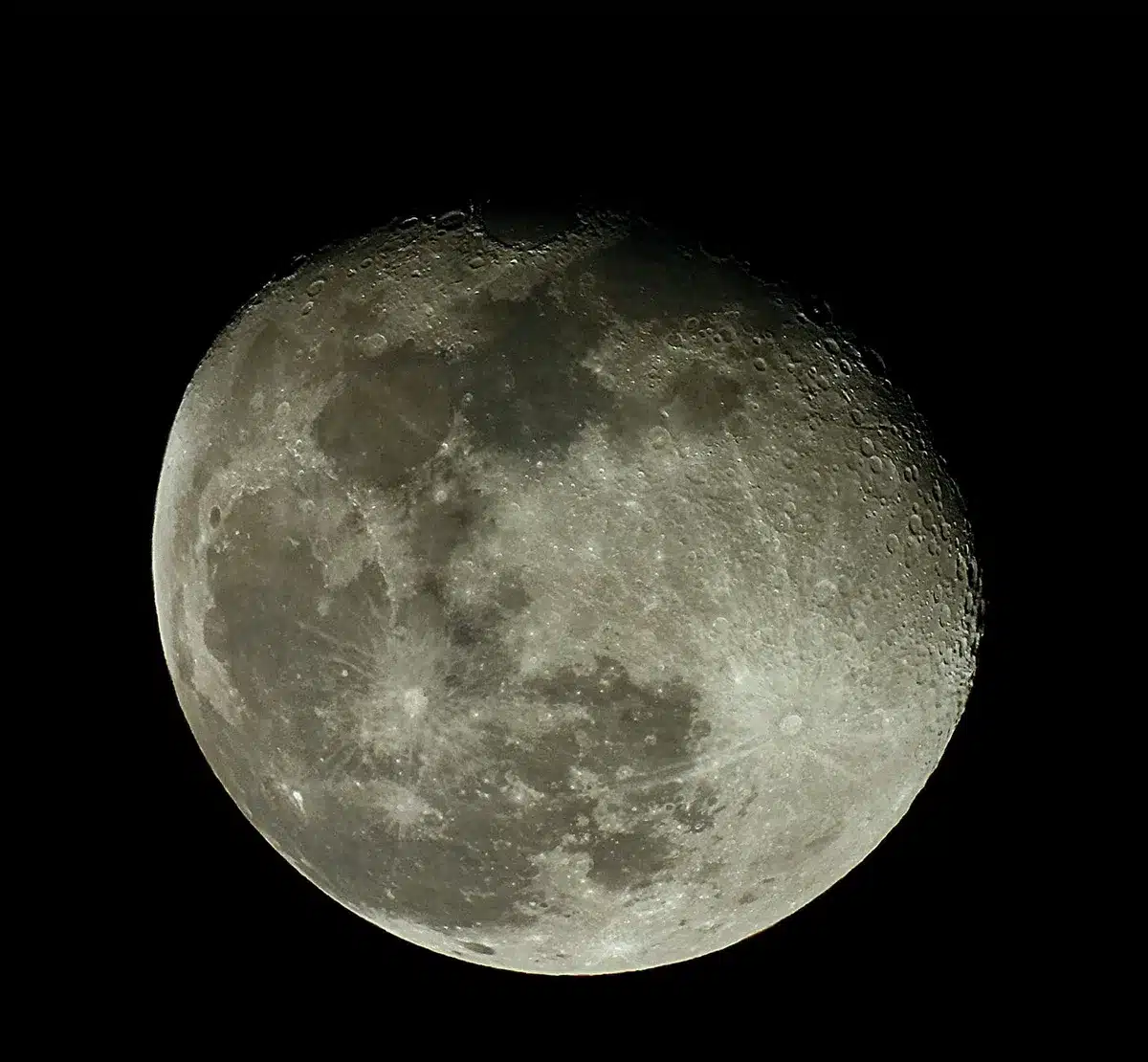
The Falcon 9 upper stage had carried two private lunar landers to the moon: Firefly Aerospace’s Blue Ghost, which became the first private spacecraft to achieve a fully successful lunar landing, and Japan-based ispace’s Hakuto-R Resilience lander, which failed during its landing attempt. Once their payloads were delivered, the upper stage remained in orbit instead of being nudged into a solar orbit, a maneuver that could have prevented the collision.
Scientists view the event as a rare opportunity to study impact physics and lunar surface properties. According to Benjamin Fernando, a researcher at Los Alamos National Laboratory, “Part of the reason for our interest in this event is to figure out how much of a hazard debris impacts pose to future astronauts.” NASA’s Lunar Reconnaissance Orbiter and South Korea’s Danuri lunar orbiter captured before-and-after imagery of the impact site.
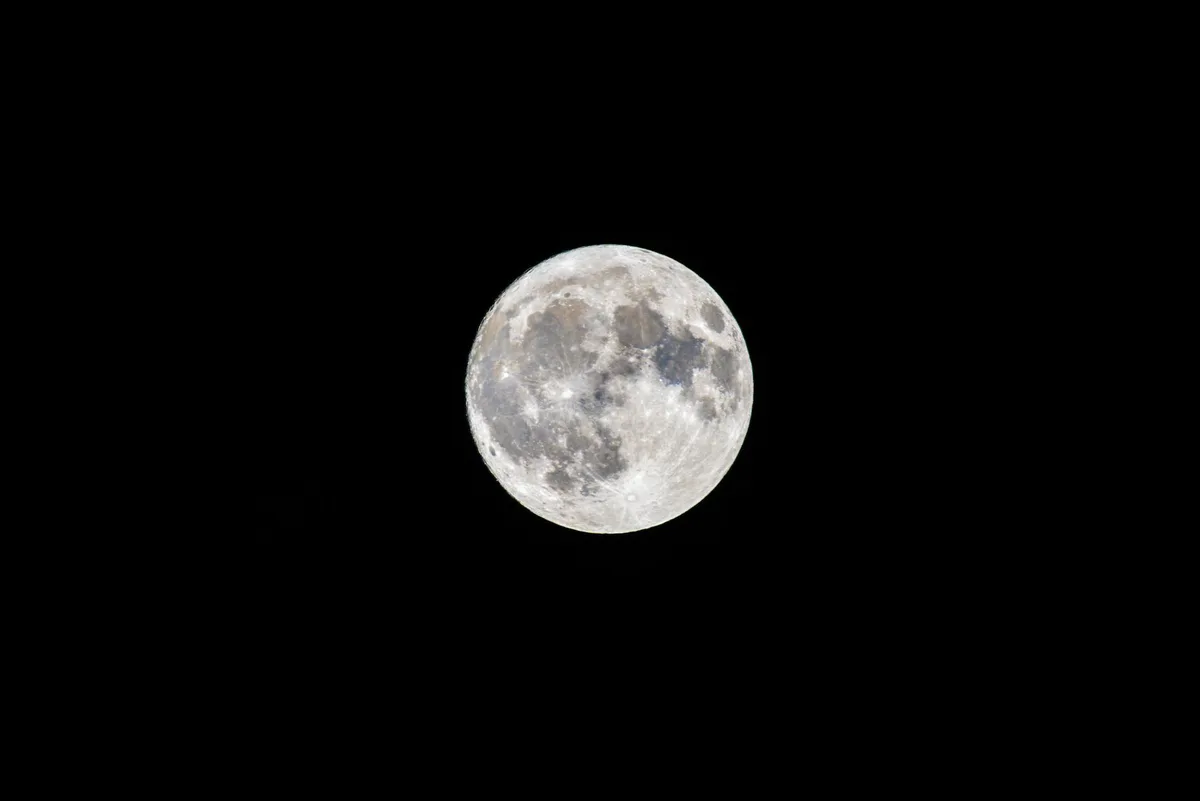
This collision marked the second known accidental spacecraft crash on the moon. In 2022, a Chinese rocket segment created a pair of craters on the lunar far side. However, experts note that the upcoming moon missions present growing challenges for orbital debris management. With the United States and China racing to land astronauts on the moon in the coming years, and private companies like SpaceX and Blue Origin competing to provide lunar landers for NASA’s Artemis program, scientists emphasize the need for improved debris monitoring and traffic control. Retired astrophysicist Jonathan McDowell stated that “in a future where there are long-term bases on the moon, similar impacts would be an issue and we need not to leave rocket stages in chaotic orbits of this kind.”
Sources
- CNBC — Impact confirmation, speed, crater predictions, expert commentary from Bill Gray and Benjamin Fernando
- USA Today — Impact timing, location, crater size estimates, mission history, observational opportunities
- CBS 12 — NASA confirmation of 2:35 a.m. ET impact time and location near Einstein and Bell craters