Samsung is set to report record Q2 profit of approximately 86 trillion won ($56.35 billion) when it announces earnings on Tuesday, marking an 18-fold jump from the prior year as surging artificial intelligence infrastructure demand continues to strain global memory chip supplies and push prices higher, according to Reuters.
The expected result would mark Samsung’s third consecutive quarter of record operating profit, reflecting a prolonged memory shortage as booming demand for AI inference infrastructure continues to outpace supply growth from global memory manufacturers. Up from 4.7 trillion won in Q2 2025, the forecast underscores the historic scale of the current memory market cycle.
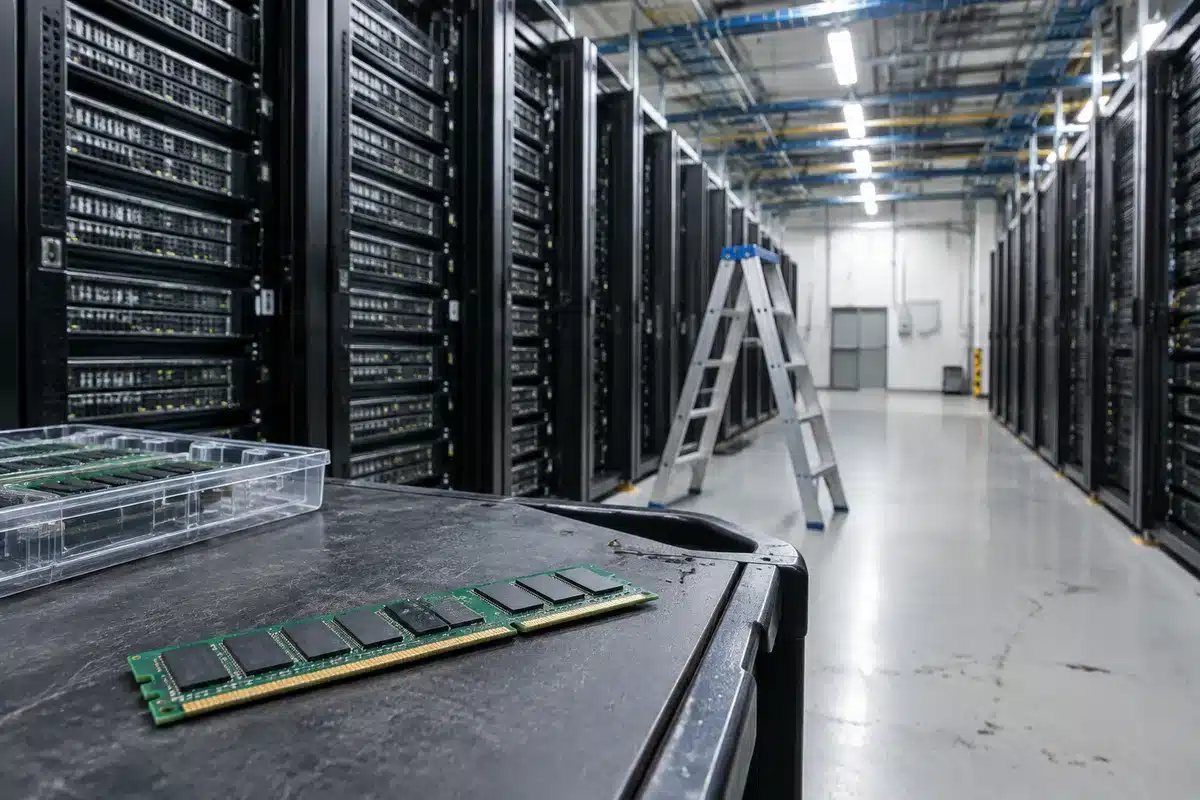
Strong demand extends beyond high-bandwidth memory (HBM) to conventional DRAM and NAND products as AI applications, particularly agentic AI systems, expand into a broader range of computing workloads. Agentic AI performs complex, multi-step tasks requiring additional memory for server processors and greater storage capacity during inference, according to Reuters. Citi Research reported that average selling prices for DRAM and NAND rose 44% and 53% quarter-on-quarter, respectively, in the second quarter.
The memory shortage has fueled a rally in semiconductor stocks. Samsung Electronics, SK Hynix, and Micron have soared 158%, 273%, and 242%, respectively, this year, with all three companies reaching market valuations above $1 trillion, according to Reuters.
Samsung’s Q1 2026 results, reported in April, set the stage for this momentum. The company posted operating profit of 57.2 trillion won, more than eight times the year-earlier figure, with revenue reaching 133.9 trillion won. The semiconductor division alone generated 53.7 trillion won in operating profit, accounting for 94% of the company’s total earnings that quarter, according to Samsung’s official announcement.
Analysts expect the memory market to remain undersupplied at least through next year. However, Reuters noted that some analysts caution Samsung’s Q2 earnings could fall short of consensus if the company books larger-than-expected provisions for employee bonuses. In late May, Samsung reached a wage deal allocating 10.5% of the semiconductor division’s operating profit to special bonuses for chip workers, with some analysts estimating cumulative provisions could exceed 40 trillion won.
Looking ahead, potential delays to AI infrastructure investment pose the biggest risk to the memory boom. JPMorgan noted in a recent report that while investors broadly agreed memory supply-demand fundamentals remained tight, many questioned whether AI memory’s rapidly rising share of cloud service providers’ capital expenditure—estimated at 52% this year and expected to exceed 70% next year—would be sustainable, according to Reuters.
Sources
- Reuters — Q2 profit forecast, 18-fold year-over-year jump, memory shortage persistence, DRAM and NAND price increases, stock market rallies, analyst commentary on risks and bonuses
- Samsung Global Newsroom — Q1 2026 official earnings announcement, operating profit, revenue, semiconductor division breakdown