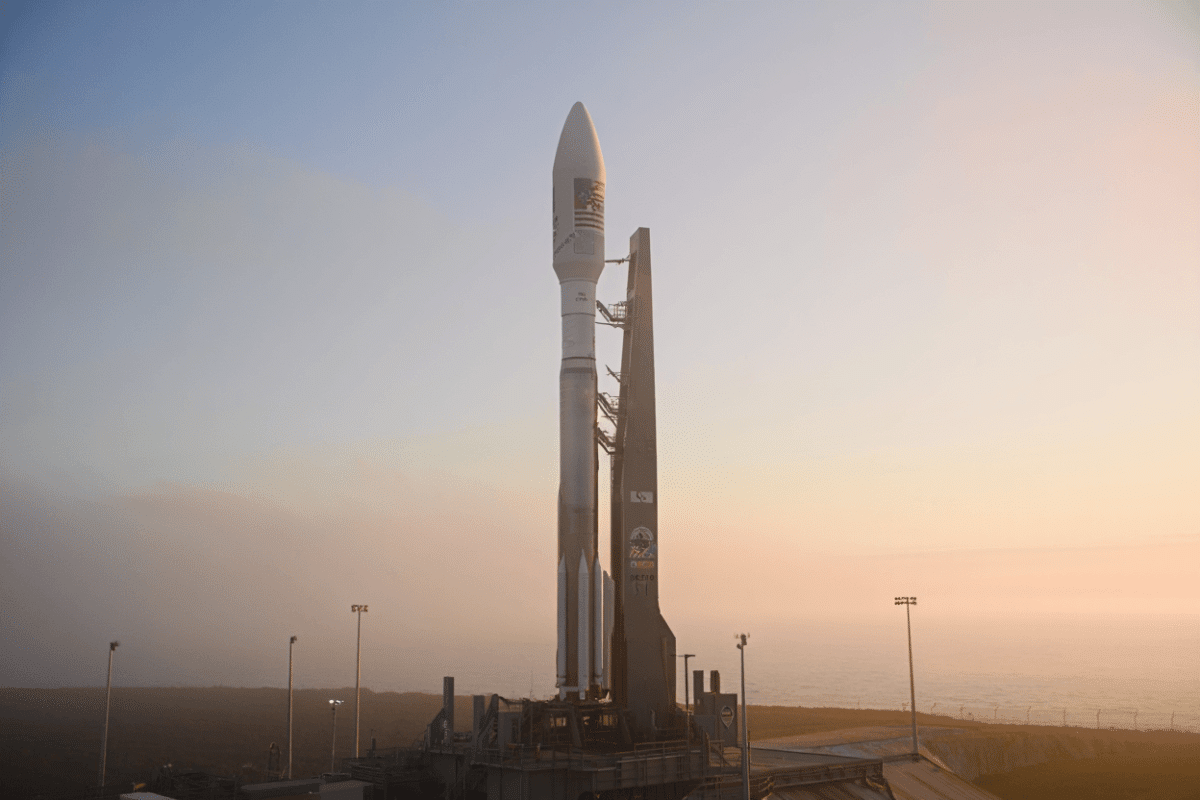
United Launch Alliance’s Atlas V 551 rocket launched 29 Amazon Leo broadband satellites into orbit early Thursday morning from Cape Canaveral Space Force Station, marking the final satellite mission for the venerable launch vehicle that has served American spaceflight for nearly a quarter century.
The rocket lifted off at 12:30 a.m. EDT on July 2, 2026, from Space Launch Complex 41, completing what ULA confirmed as the last Atlas V flight to carry a non-spacecraft payload. The 9th Amazon Leo mission on Atlas V successfully deployed all 29 satellites to low Earth orbit, continuing Amazon’s build-out of its broadband internet constellation.
The Atlas V 551 configuration—featuring five side-mounted solid rocket boosters and a 5.4-meter payload fairing—has been the workhorse of ULA’s commercial and national security portfolio since the rocket’s inaugural flight in 2002. Over its operational lifetime, the Atlas family has accumulated more than 600 launches across all variants, according to ULA.
All remaining Atlas V rockets in ULA’s inventory are now reserved exclusively for Boeing Starliner crewed and cargo missions to the International Space Station. The company has not yet announced a timeline for those flights. Atlas V will be succeeded by ULA’s Vulcan rocket, which represents the next generation of the company’s launch capabilities.
The July 2 launch capped a productive period for Amazon Leo deployments on Atlas V. The constellation has conducted nine separate launches on the rocket since beginning operations, with each mission delivering 29 satellites. As of June 2026, Amazon Leo had deployed 367 production satellites across all its launch vehicles, according to publicly available mission data.
Sources
- Florida Today — Launch recap, mission details, and confirmation that this was the final Atlas V 551 satellite mission
- United Launch Alliance — Mission information and Atlas program heritage
- Spaceflight Now — Launch coverage and mission timeline