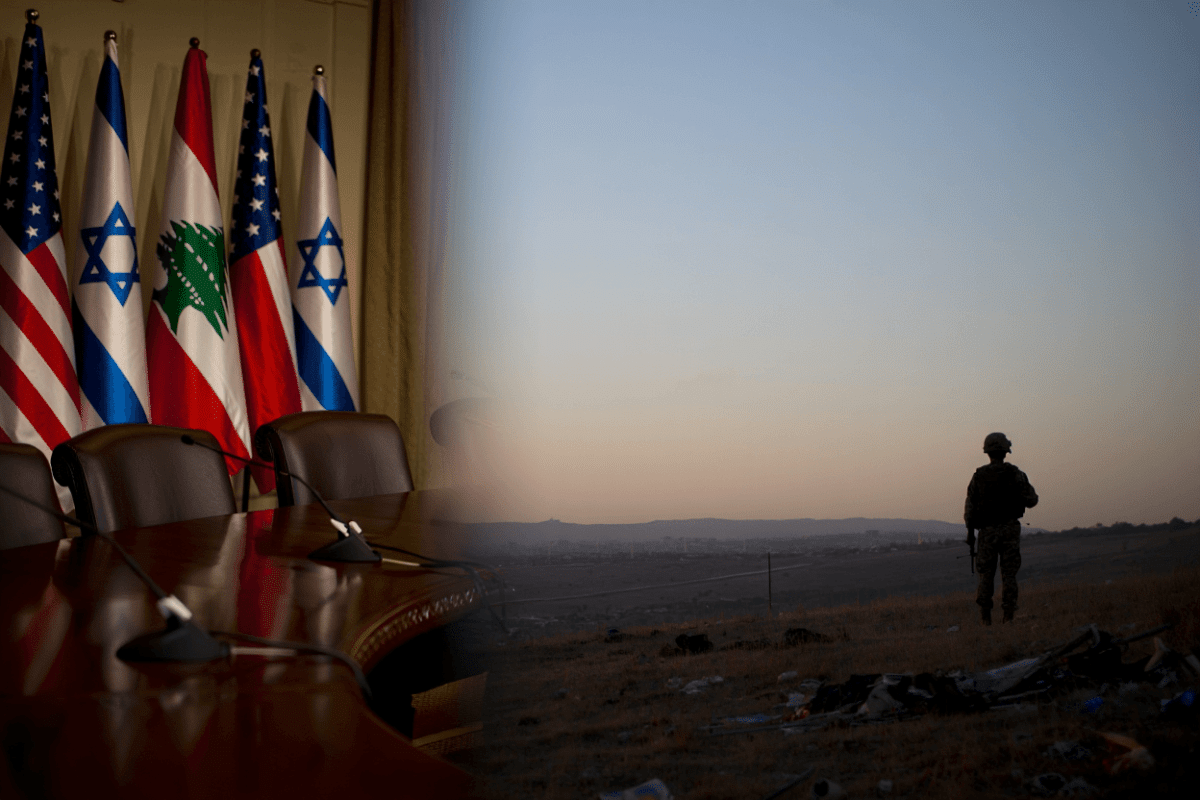
Secretary of State Marco Rubio announced a framework agreement between Israel and Lebanon on June 26, 2026, calling it a “first step” toward ending months of conflict between the two countries. The trilateral agreement, signed in Washington, DC, follows four days of intensive US-mediated negotiations and aims to establish lasting peace and security through a structured process of Israeli military withdrawal, Lebanese Armed Forces deployment, and Hezbollah disarmament.
The framework agreement emerged after five rounds of talks between Israeli and Lebanese representatives, mediated by the Trump administration. Rubio stated the agreement represents “a framework for lasting peace and security” and emphasized the importance of the moment, saying it was “the beginning of the beginning” with significant work still ahead.
The agreement establishes a reciprocal, sequenced process in which the Lebanese Armed Forces will gradually restore sovereign control over Lebanese territory as Israel verifies the disarmament of non-state armed groups, particularly Hezbollah. The framework includes the creation of “pilot zones” in southern Lebanon where the Lebanese military will assume exclusive control, replacing Israeli forces. Two initial zones have already been agreed upon by both militaries, with additional zones to be established by mutual consent.
As part of the framework, the United States committed to immediate financial support. The Trump administration pledged $100 million in humanitarian assistance coordinated through the United Nations and $30 million to support the Lebanese Armed Forces’ capacity-building efforts. The agreement also envisions broader international support for Lebanon’s reconstruction, including economic recovery programs and investment initiatives to help the country recover from years of conflict.
The framework explicitly requires the disarmament of Hezbollah and dismantlement of its military infrastructure as a condition for Israel’s full withdrawal. Israeli Prime Minister Benjamin Netanyahu stated that Israel would maintain its position in southern Lebanon’s security zone until Hezbollah is fully disarmed, signaling that implementation depends entirely on verification of the militant group’s compliance.
However, Hezbollah immediately rejected the agreement. The Iranian-backed militant group was not included in the negotiations, and its leadership demanded that Israel withdraw from Lebanon unconditionally. Hezbollah MP Hassan Fadlallah criticized the framework as “unilateral, gratuitous concessions” that would undermine Lebanese sovereignty and serve Israeli interests.
The conflict that prompted these negotiations began in early 2026, following Israel and the United States’ military campaign against Iran in late February. On March 2, 2026, Hezbollah launched retaliatory rocket strikes on Israel, triggering a major Israeli military response. Israel subsequently occupied nearly a fifth of Lebanon and conducted extensive airstrikes, leading to months of fighting that threatened regional stability.
The framework agreement is part of broader US efforts to de-escalate Middle Eastern tensions. A June 17 memorandum of understanding between the US and Iran required the immediate and permanent termination of military operations on all fronts, including in Lebanon. The Israel-Lebanon framework represents a key step in implementing that broader ceasefire agreement.
Lebanese Ambassador to the United States Nada Hamadeh called the trilateral framework “long and difficult” negotiations but expressed optimism, stating it was “a first step on the road to restoring Lebanese sovereignty and territorial integrity, securing a permanent and final cessation of hostilities.” Israeli Ambassador Yechiel Leiter praised the agreement as putting “the train back on the tracks” toward peace.
Expert analysis suggests the framework’s success depends on implementation details not yet made public. Rami Khouri, a fellow at the American University of Beirut, noted that while a framework is “not something very significant” by itself, the real challenge lies in Hezbollah’s potential cooperation. He emphasized that the Lebanese armed forces cannot disarm Hezbollah alone and that the process requires treating both countries as equals rather than prioritizing Israeli security before addressing Lebanese rights.
The full terms of the framework agreement remain to be detailed in a Security Annex, which will outline verification mechanisms, security arrangements, and the specific conditions for Israeli redeployment. Both governments committed to establishing a military coordination group with US participation to oversee implementation.
Sources
- Al Jazeera — Rubio’s announcement of the framework agreement, details about the signing ceremony, reactions from Hezbollah, and expert commentary from Rami Khouri
- CNBC — Framework agreement details, ceasefire conditions contingent on Hezbollah compliance, and pilot zone creation
- U.S. Department of State — Official trilateral framework document with 14-point agreement terms, US financial commitments, and implementation mechanisms
- BBC — Framework agreement signing and background on the Israel-Lebanon conflict
- Reuters — Netanyahu’s statement on maintaining Israeli presence in southern Lebanon until Hezbollah disarmament