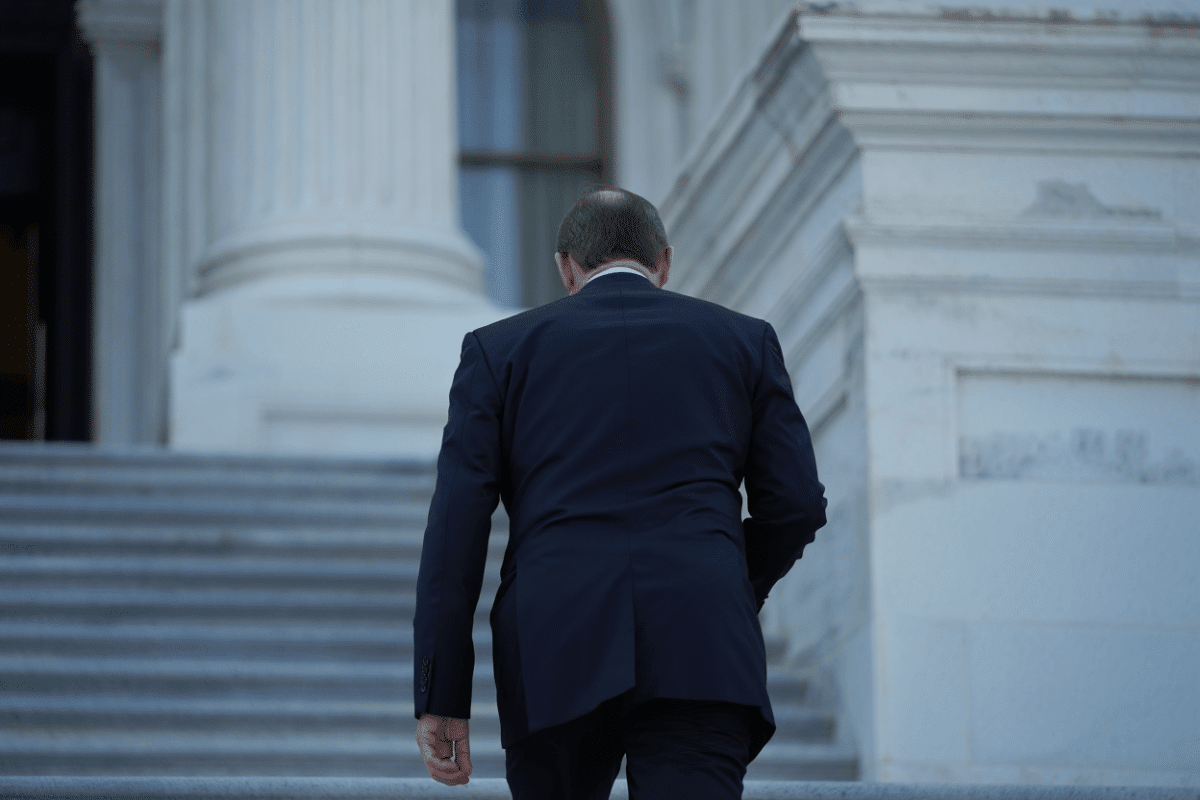
Rep. Tom Kean Jr., a New Jersey Republican, returned to Congress on Tuesday after a nearly four-month absence, revealing in a House floor speech that he had been hospitalized and treated for depression. The two-term congressman, who had not voted since March 5, disclosed the diagnosis for the first time, explaining that doctors recommended he remain in the hospital to address his illness.
“Several months ago, due to health concerns, I entered the hospital for some testing,” Kean said on the House floor. “I was given the diagnosis of depression. The doctors recommended that I remain in the hospital to address my illness.” He stressed that depression extends beyond emotional struggle: “It is physical, it is emotional, and until you experience it yourself, it is difficult to fully understand how powerful this illness can be.”
Kean’s absence spanned more than 140 missed votes in the chamber. His long disappearance from Capitol Hill had raised concerns among fellow Republicans about the fate of his swing seat in New Jersey’s 7th Congressional District, a battleground race expected to be competitive this fall. The GOP holds only a razor-thin majority in the House, making every member’s presence significant.
The congressman acknowledged his reluctance to speak publicly about his condition. “I am a private person by nature,” he said. “I’ve spent most of my life talking about the people I represent, the issues facing our communities, and the work that needs to be done. Talking about myself has never come naturally.” He added that he is now “healthier, stronger and excited to return to the work that I love.”
Kean’s disclosure follows a different path than that of U.S. Senator John Fetterman, a Pennsylvania Democrat who faced a similar mental health challenge. When Fetterman checked himself into Walter Reed National Military Medical Center for depression treatment in February 2023, his office announced the decision publicly and notified the public of his discharge six weeks later. By contrast, Kean remained silent for more than 100 days, missing over 100 votes without explanation to constituents or colleagues.
Ben Dworkin, director of Rowan University’s Institute for Public Policy and Citizenship, credited Kean for eventually coming forward. “Far too many people do not reveal their own personal challenges with mental health and whenever anybody in the public view does so, we’ll hopefully contribute to those who need to seek help to be able to get help both from their family and medical professionals,” Dworkin said. He suggested that the extended silence is unlikely to dominate the political landscape heading into the November election, noting that broader issues such as the sitting president’s record will take precedence.
Sources
- NBC News — Kean’s return to Congress, House floor speech, and missed votes since March 5
- The Washington Post — Kean’s depression diagnosis and return to work after missing votes since early March
- New Jersey Globe — Comparison of Kean’s delayed disclosure to Fetterman’s immediate public announcement; Kean’s quote about being a private person; Dworkin’s analysis of the political impact
- The New York Times — Confirmation of 117-day absence and depression diagnosis