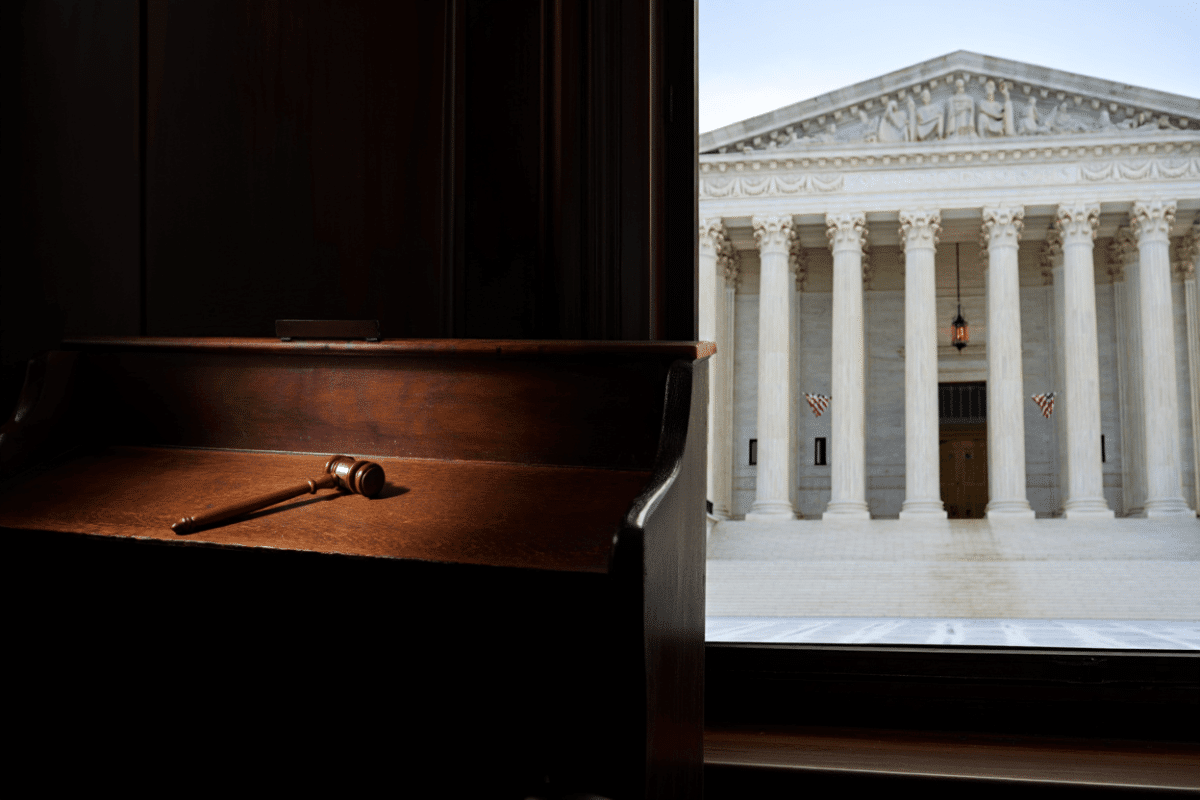
The Supreme Court issued final opinions of its term on June 30, wrapping up a landmark session with major rulings on transgender athletes and birthright citizenship that will reshape policy across the nation.
In the first decision, the court upheld state laws that ban transgender women and girls from competing on school sports teams. Justice Brett Kavanaugh, who has coached his daughters’ and other girls’ basketball teams, wrote the majority opinion allowing 27 states to enforce these bans.
The court reasoned that since Title IX, the landmark 1972 civil rights law barring sex-based discrimination in education, explicitly allows sex-segregated athletic teams, states are free to limit team participation based on sex at birth. The decision left unresolved whether such bans apply to grammar school, club sports, or recreational leagues.
One case involved Lindsey Hecox, a transgender college student barred by Idaho law from trying out for Boise State University’s varsity women’s track team. She had won in lower courts on equal protection grounds but ultimately decided not to pursue varsity sports after returning to school in 2025. The other case centered on Becky Pepper Jackson, a West Virginia middle school student assigned male at birth who became one of the state’s top shot-putters by eighth grade before being blocked from competing.
In the second major decision, the Supreme Court upheld birthright citizenship on constitutional grounds in a 6-3 ruling that dealt President Trump a significant loss. Chief Justice John Roberts wrote the opinion firmly rejecting Trump’s executive order, issued on the first day of his second term, which sought to bar citizenship for babies born to undocumented immigrants or those with temporary visas.
The court grounded its decision in the Fourteenth Amendment’s guarantee that “all persons born or naturalized in the United States and subject to the jurisdiction thereof, are citizens of the United States.” Chief Justice Roberts noted that the men who drafted the amendment after the Civil War deliberately chose broad language, rejecting views that would have limited citizenship.
The decision invoked the court’s landmark 1898 ruling in Wong Kim Ark, where the justices held that a child born in San Francisco to Chinese immigrant parents was automatically granted citizenship. That precedent has remained untouchable even during periods of intense hostility to immigrants, including World War II, when newborn children of Japanese detainees were automatically granted American citizenship because they were born on U.S. soil.
Justices Clarence Thomas, Neil Gorsuch, and Samuel Alito dissented from the birthright citizenship ruling. Trump had long maintained that the Constitution does not guarantee birthright citizenship and that the Fourteenth Amendment was intended only to apply to former slaves, but that interpretation has been rejected by courts and legal norms for 160 years.
The transgender athletics decision is unlikely to be the final word on transgender rights. Last year, the court’s conservative majority upheld a Tennessee law barring medical professionals from providing gender-affirming care for minors. Since then, 25 states have criminalized or banned such treatments for minors, and several states have restricted public funds from covering transition-related care for adults.
Sources
- NPR — Supreme Court ruling upholding bans on transgender athletes in sports, written by Nina Totenberg, and Supreme Court ruling upholding birthright citizenship, also by Nina Totenberg
- CNN — Live coverage of both Supreme Court decisions on June 30, 2026
- USA Today — Live updates on Supreme Court decisions regarding birthright citizenship and transgender athletes