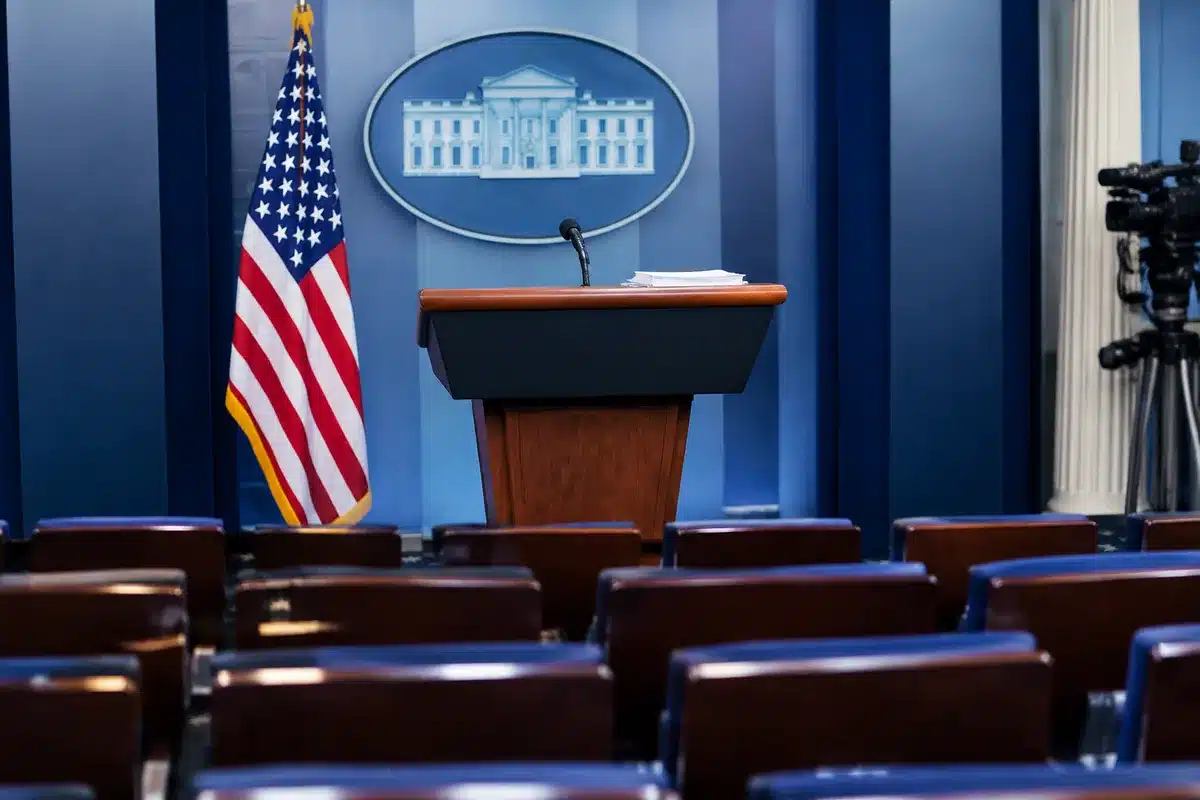
Russian President Vladimir Putin admitted on Sunday that no formal agreements were reached during his August 2025 summit with President Donald Trump in Anchorage, Alaska, reversing months of Kremlin claims that the meeting had produced a diplomatic breakthrough in the war in Ukraine.
“There were indeed no agreements reached in Anchorage,” Putin told journalist Pavel Zarubin in a carefully staged interview on June 28, according to multiple sources. Putin acknowledged that there were no signed documents outlining the so-called “spirit of Anchorage,” though he claimed Russia had agreed to U.S. proposals about ending the war.
The admission represents a significant reversal for the Kremlin, which had spent months insisting that the Alaska meeting produced tangible understandings between Moscow and Washington. Russian officials, including Foreign Minister Sergei Lavrov, had repeatedly referenced the “spirit of Anchorage” as evidence of a diplomatic path forward. U.S. Secretary of State Marco Rubio had already stated on June 25 that no official agreement was reached, describing the summit result as merely a “proposal” rather than a binding accord.
Putin’s acknowledgment comes as Russia’s military offensive in Ukraine has stalled significantly. According to the Institute for the Study of War, Russia’s rate of advance has slowed dramatically—from an average of 16.65 square kilometers per day in August 2025 to just 3.79 square kilometers per day in June 2026. Ukrainian counterattacks have liberated over 400 square kilometers of territory in southern Ukraine since January 2026 and successfully retaken much of Kupyansk in late 2025.
The Russian leader also acknowledged growing domestic pressure from Ukraine’s long-range strike campaign. Putin stated that Russia must minimize the impact of Ukrainian strikes on fuel supplies and called for measures including tapping gasoline reserves, banning fuel exports, and accelerating refinery repairs. Ukraine’s strikes have caused significant gasoline shortages across Russia and occupied territories, with trucking companies warning of tariff increases of at least 10 percent starting July 1.
Putin implicitly rejected two recent Ukrainian ceasefire proposals, claiming Ukraine sought a mutual halt to long-range strikes and a cessation of fighting outside four eastern oblasts. He stated that Russia would not grant Ukraine such “salvation,” continuing to emphasize Moscow’s maximalist war objectives, including the seizure of Donbas and the territories Russia calls Novorossiya.
Putin’s June 28 statement appears designed to avoid direct confrontation with the Trump administration while attempting to push the United States to resume negotiations based on the Alaska Summit proposals. However, the battlefield situation has transformed dramatically since August 2025, with Ukraine achieving significant territorial gains and successfully disrupting Russian logistics through sustained strikes on energy infrastructure and transportation networks.
The admission also comes amid reports that Trump expressed frustration with Putin at the G7 summit in France earlier this month, with Trump reportedly signaling he might walk back the “Alaska understandings.” The convergence of Putin’s acknowledgment, Trump’s apparent cooling toward the summit framework, and Russia’s stalled military progress suggests the diplomatic opening that emerged from the Alaska meeting has effectively closed.
Sources
- Institute for the Study of War — Russian Offensive Campaign Assessment, June 29, 2026; detailed analysis of Putin’s statements, battlefield advances, and domestic fuel crisis
- The Washington Post — “As war stalls, Putin concedes he never cut a deal with Trump in Alaska”; context on Kremlin messaging and war stalling
- Raw Story — “Putin admits to failure that blows up Trump’s big Alaska win”; reporting on Putin’s public disavowal of formal agreements
- Reuters — “Russia says US hasn’t followed through on Trump-Putin ‘understandings'”; background on Russian claims and U.S. response
- The Kyiv Independent — “Trump ‘skeptical’ of Putin, may dismiss Russia’s Alaska summit demands”; reporting on Trump’s G7 statements and frustration with Putin