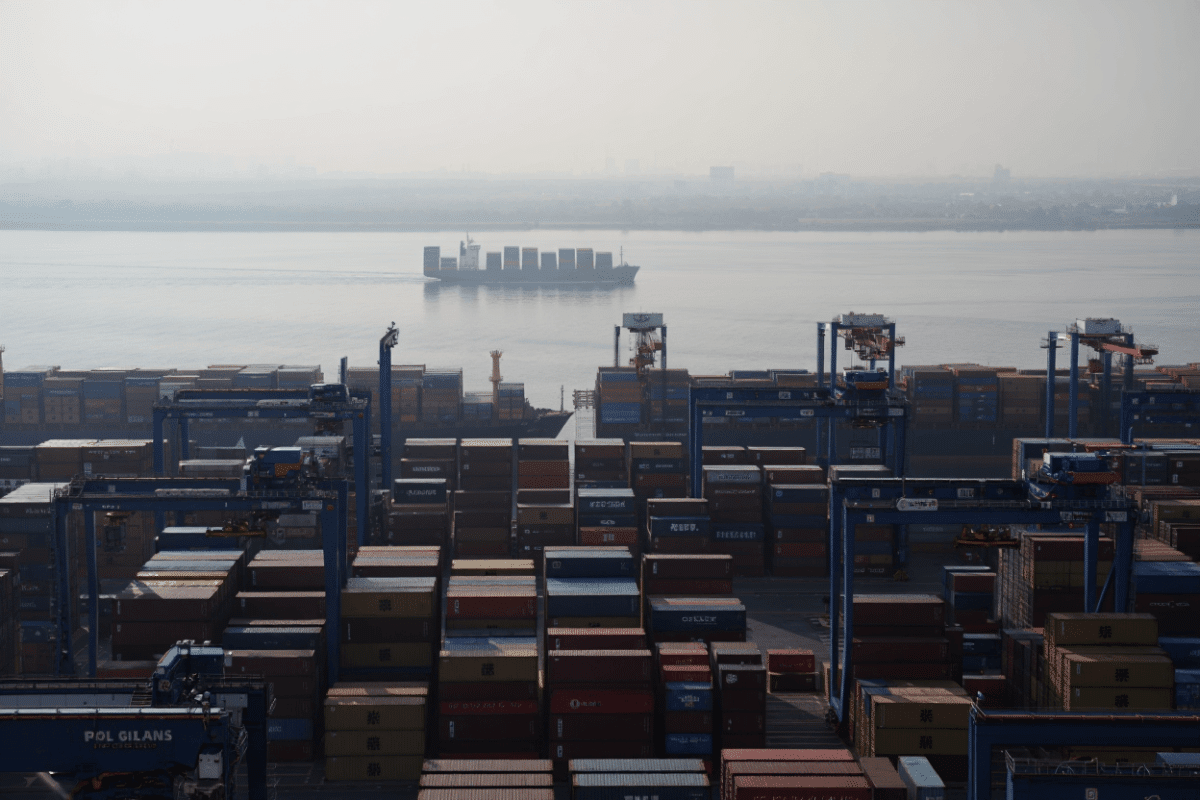
The United States and Iran have reached a comprehensive peace deal to end their nearly four-month war, with President Trump announcing the agreement is “now complete” on June 14 and ordering an immediate end to the U.S. naval blockade of Iranian ports. The deal represents a major diplomatic breakthrough after months of conflict that began on February 28, 2026, when U.S. and Israeli forces launched strikes on Iranian targets.
Trump announced the deal on Truth Social, stating that the Strait of Hormuz will reopen without a toll system and that the U.S. will end its naval blockade “immediately.” “Ships of the World, start your engines,” Trump wrote. “Let the oil flow!”
Pakistan Prime Minister Shehbaz Sharif said the U.S. and Iran have declared an immediate and permanent termination of military operations on all fronts, including Lebanon, according to CNBC. The two nations will officially sign the peace deal on June 19 in Switzerland. Sharif, who has served as a mediator between the two sides, said mediators will facilitate meetings this week to lay the foundation for technical talks and the official signing ceremony.
The deal includes a 60-day ceasefire extension during which nuclear negotiations will be held, according to multiple sources including PBS and Axios. During this period, Iran’s nuclear program will be addressed, with a final agreement focused on uranium enrichment, enriched nuclear material, and sanctions relief. The Strait of Hormuz, through which roughly 20% of the world’s oil supplies pass, was a critical point of contention after Iran closed it in response to the U.S. blockade.
The reopening of the strait triggered an immediate market response. U.S. crude oil futures fell 4.8% to $80.80 per barrel by 6:01 p.m. ET on Sunday, while Brent crude, the international benchmark, traded 3.9% lower to $83.89 per barrel, according to CNBC. The disruption to the strait in early March had triggered what analysts described as the biggest oil supply disruption in history.
The war that began on February 28 escalated rapidly, with Iran closing the Strait of Hormuz in April in response to the U.S. blockade. The conflict spread to neighboring countries, including Lebanon, and disrupted global energy markets. Negotiations had stalled multiple times before a tentative ceasefire agreement emerged in April, which was then extended in May as the two sides worked toward a broader settlement.
The deal with Iran marks a significant shift in Trump’s approach to the Middle East. The agreement addresses longstanding tensions over Iran’s nuclear program while restoring critical global shipping lanes and energy supplies. The 60-day window for nuclear talks will be a critical test of whether the two sides can reach a final comprehensive agreement on Iran’s nuclear ambitions and sanctions relief.
Sources
- CNBC — Trump’s announcement of the completed deal, oil price movements, Pakistan’s mediation role, and signing date in Switzerland
- PBS NewsHour — Deal structure including 60-day ceasefire extension and nuclear negotiations framework
- Axios — Memorandum of understanding terms and nuclear negotiation details
- Reuters — Deal announcement and signing confirmation
- NBC News — Strait of Hormuz reopening terms and naval blockade end
- The New York Times — War timeline and blockade lift details