
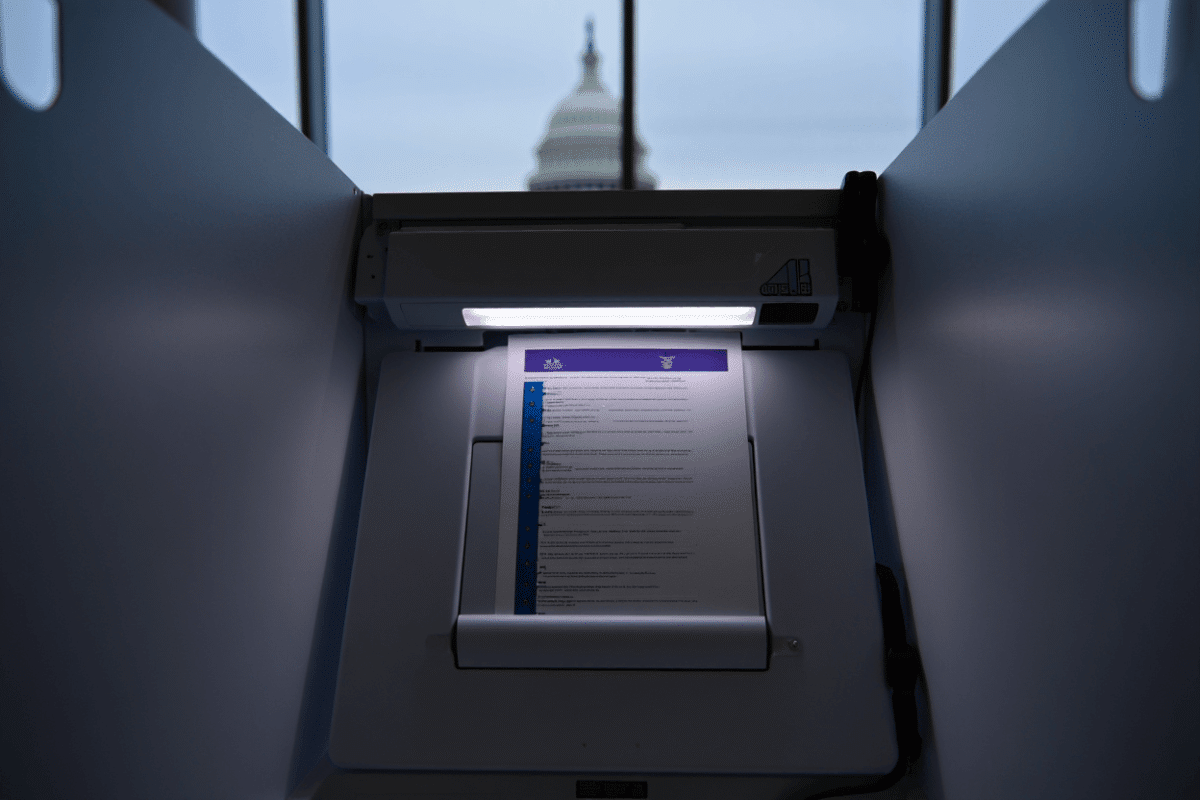
Georgia lawmakers return to the Capitol this week for a special session to fix a ballot QR code crisis of their own making, with just two and a half weeks left before a July 1 deadline that has left the state’s election system in legal limbo.
In 2024, the Republican-controlled legislature passed a law banning the use of QR codes on ballots for official vote tabulation starting July 1, 2026. But lawmakers adjourned earlier this year without providing counties with an alternative method or any funding to implement one.
The problem stems from Georgia’s current voting system, which uses touchscreen ballot-marking devices that print paper ballots with voter choices in plain English alongside a QR code. Scanners currently read the QR code—not the printed text—to count votes. Republicans and Democrats both criticized this design, arguing voters cannot verify what a QR code says, only the text beside it. That complaint gained political traction after the 2020 election, and the legislature responded with the ban.
Gov. Brian Kemp called the special session in May to address the deadline, instructing lawmakers to “address issues created” by the law. The session begins June 17, one day after primary runoffs conclude.
State election officials have issued conflicting guidance on how to proceed. The Secretary of State’s office last week directed the six counties involved in a July 28 special election to fill the seat of the late U.S. Rep. David Scott to continue using current machines but switch to optical character recognition software to read the printed text instead of QR codes for tabulation. The State Election Board, controlled by a Trump-aligned majority, contradicted that guidance on June 4 by passing a non-binding resolution allowing counties to switch to hand-marked paper ballots if lawmakers fail to act.
“Obviously it would cause confusion for elections superintendents if they are getting differing instructions from two agencies, both of which have some authority over what they’re doing,” said Elizabeth Young, a lawyer with the state attorney general’s office, during the election board meeting.
The legislature has several options. One is to extend the July 1 deadline, allowing continued use of QR codes while the state develops a longer-term solution. A compromise bill that would have permitted this approach passed the House earlier this year but died in the Senate. Lawmakers could also approve funding for a new voting system, though estimates to modify the current system range from $25 million to $26 million, and replacing it entirely could cost up to $300 million. The legislature has appropriated nothing.
Local election officials are caught in the middle. Henry County Elections Director Axiver Harris said his office is aware of the conflicting guidance and is “awaiting further clarification from the state.” Some candidates running in the July special election have raised concerns about potential legal challenges if a new vote-counting method is implemented with insufficient time to prepare.
“I would ask that legislators do the right thing, leave well enough alone for the special election,” said Carlos Moore, one of six candidates in the special race. “Otherwise, it’s almost certain there will be challenges in court.”
Sources
- Newsday — reporting on the special session, the 2024 law, conflicting state guidance, and local election officials’ concerns
- Votebeat — analysis of how the legislature left counties without a replacement system and the cost estimates for alternatives
- Georgia Recorder — coverage of Gov. Kemp’s special session announcement, the State Election Board resolution, and conflicting guidance from state agencies










