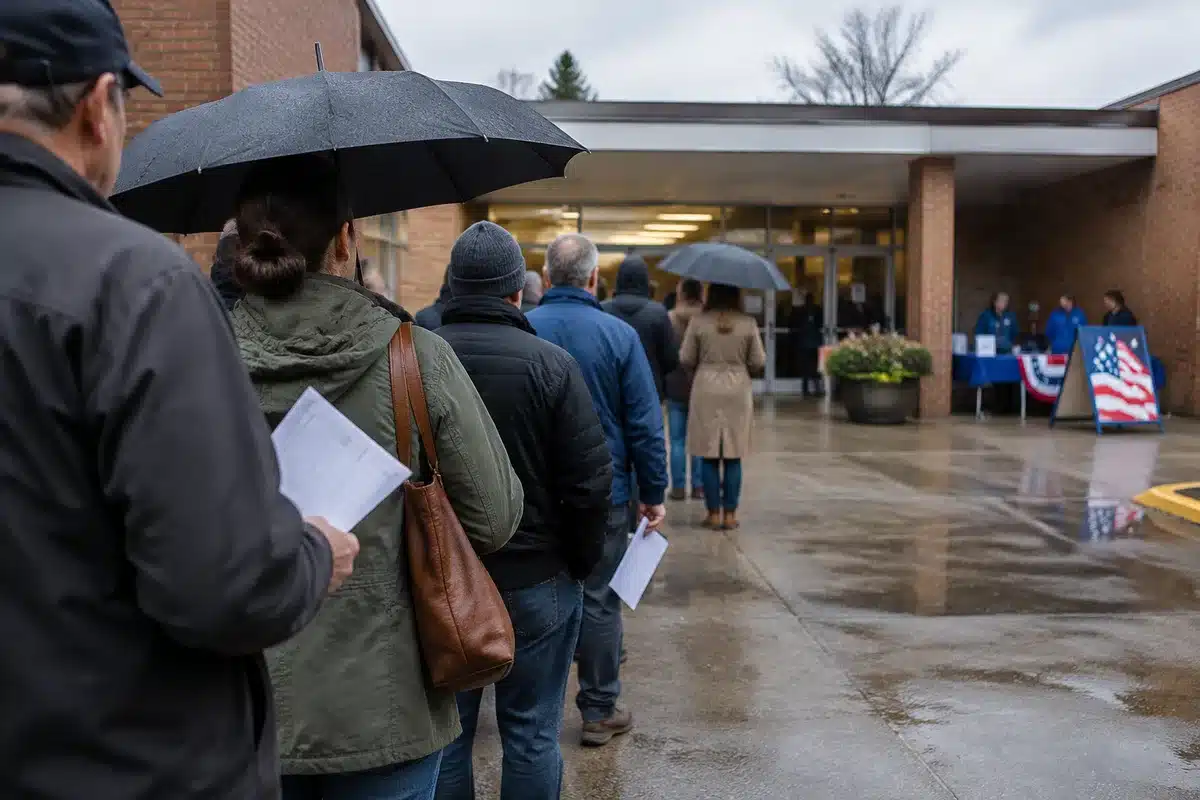
Michigan voters head to the polls tomorrow to select nominees for governor, U.S. Senate, and Congress in a primary election that has drawn national attention, particularly a contentious Democratic Senate race between moderate Haley Stevens and progressive Abdul El-Sayed. The August 4 primary will decide the party nominees who advance to November’s general election, when Michigan will choose its next governor for the first time since 2018, as incumbent Democrat Gretchen Whitmer is term-limited.
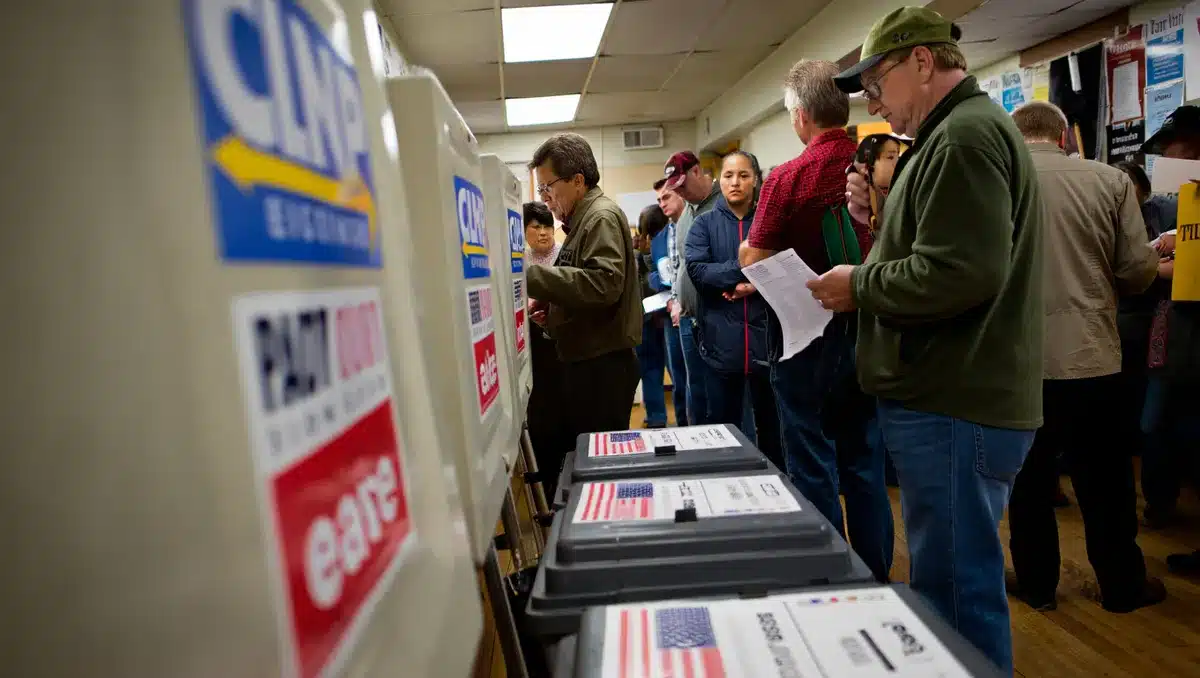
By late Monday, more than 1.2 million voters had already cast ballots through mail-in absentee voting or early in-person voting, signaling strong early engagement. The primary is part of a five-state election day that also includes Kansas, Missouri, Virginia, and Washington, making August 4 a significant test of voter sentiment heading into the midterm elections.
STOCK: voting booth primary election
On the Democratic side of the governor’s race, Secretary of State Jocelyn Benson holds a commanding lead over Genesee County Sheriff Chris Swanson. In a July poll by Lansing-based Glengariff, Benson led Swanson 72 percent to 12 percent, with roughly 16 percent of Democrats undecided. Benson is a former dean of the Wayne State University Law School who has served eight years as the state’s top election official. Swanson, the Genesee County sheriff, has positioned himself as an alternative candidate in the race.
The Republican gubernatorial primary features a crowded field with U.S. Representative John James, businessman Perry Johnson, former Michigan Secretary of State Aric Nesbitt, and former Michigan Attorney General Mike Cox competing for the nomination. James has secured an endorsement from President Donald Trump, while Johnson has spent more than $30 million of his personal fortune on the race in an attempt to build name recognition and support among GOP voters.
Senate Race Divides Party on Progressive vs. Moderate Strategy
The Democratic U.S. Senate primary has become a battle between two wings of the party over the best path to victory in the general election. Stevens, backed by prominent Michigan Democrats including Governor Whitmer, U.S. Senator Gary Peters, and former U.S. Senator Debbie Stabenow, argues that a more moderate candidate will perform better with independents against Republican Mike Rogers, the presumptive GOP nominee who narrowly lost Michigan’s 2024 Senate race.
El-Sayed, a progressive candidate and former Detroit public health official, has emerged as a strong contender despite facing a significant spending disadvantage. Outside interest groups have spent an estimated $60 million on the primary, with much of that money going toward advertising promoting Stevens or attacking El-Sayed in Detroit and other major metropolitan areas. The United Democracy Project, a political action committee affiliated with the pro-Israel group American Israel Public Affairs Committee, has been among the largest funders supporting Stevens.
Yet El-Sayed has led in recent surveys of likely primary voters, suggesting that despite the lopsided spending advantage, many Democrats may be tuning out or rejecting the advertising onslaught. El-Sayed’s support is particularly strong among younger voters, a demographic that saw the largest increase in participation nationwide during the 2024 election cycle. Stevens maintains an edge among Black voters and seniors, both historically reliable voting blocs in Democratic primary campaigns.
The intensity of the Senate primary has laid bare divisions within Michigan’s Democratic Party that could complicate the general election, according to political analysts. When a close and highly divisive primary occurs, research shows it generally doesn’t bode well for a candidate in the general election. Some Stevens supporters have said they would not vote for El-Sayed in a general election, and many progressives could also be disillusioned if Stevens wins.
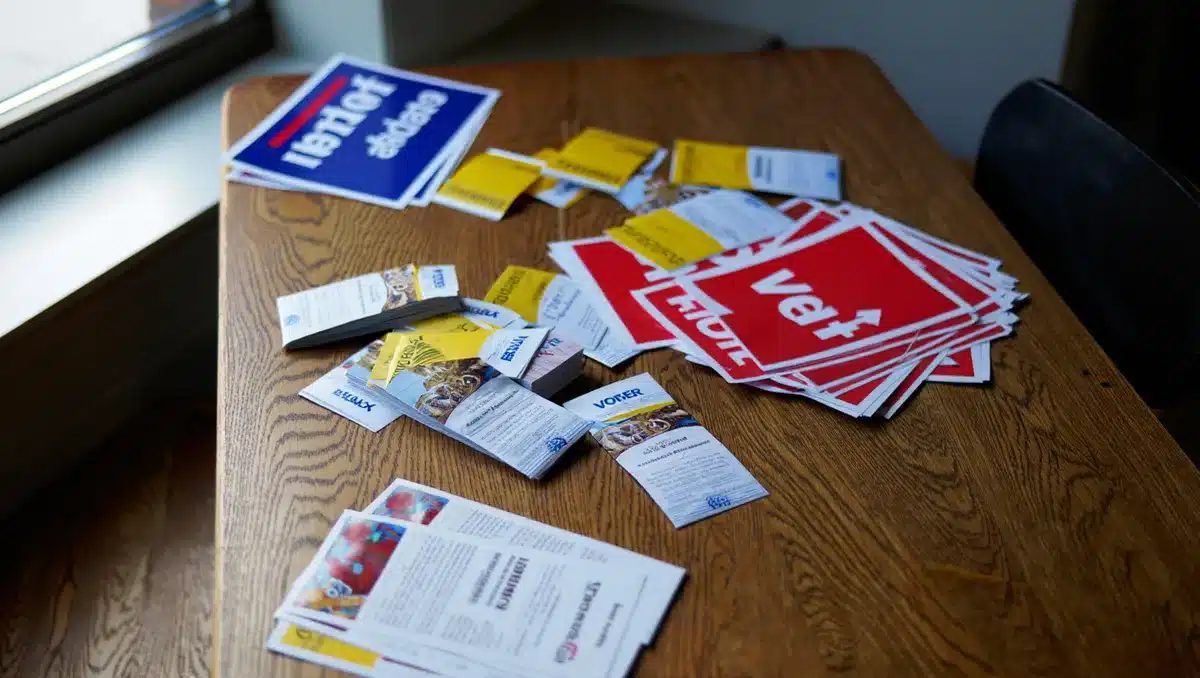
STOCK: campaign materials primary election
The Democratic Senate nominee will face Rogers, who lost to Democrat Elissa Slotkin by a narrow margin in 2024, when she won with 48.6 percent of the vote to Rogers’ 48.3 percent. Democrats view Michigan as critical to their chances of regaining Senate control in November, making the outcome of Tuesday’s primary particularly significant for the party’s national strategy.
Beyond the top races, Michigan voters will also decide on hundreds of local tax proposals and bond measures. Communities across the state have placed 286 proposals to increase taxes and 588 millage renewals on the ballot, with many focusing on public safety and education funding. Additionally, voters in Washtenaw County’s Augusta Township will decide whether to overturn a zoning ordinance that would allow a hyperscale data center development, marking another significant local issue on the August 4 ballot.
Sources
- Bridge Michigan — comprehensive coverage of Michigan’s August 4 primary races, turnout figures, and analysis of Senate and gubernatorial dynamics
- Ballotpedia — candidate lists and filing information for Democratic and Republican primaries in Michigan
- Detroit News — July 15 poll showing Benson leading Swanson 72-12 in Democratic governor primary
- Fox 2 Detroit — primary election coverage and candidate information
- Wikipedia — 2026 Michigan gubernatorial and Senate election details, including incumbent term-limit information and 2024 general election results