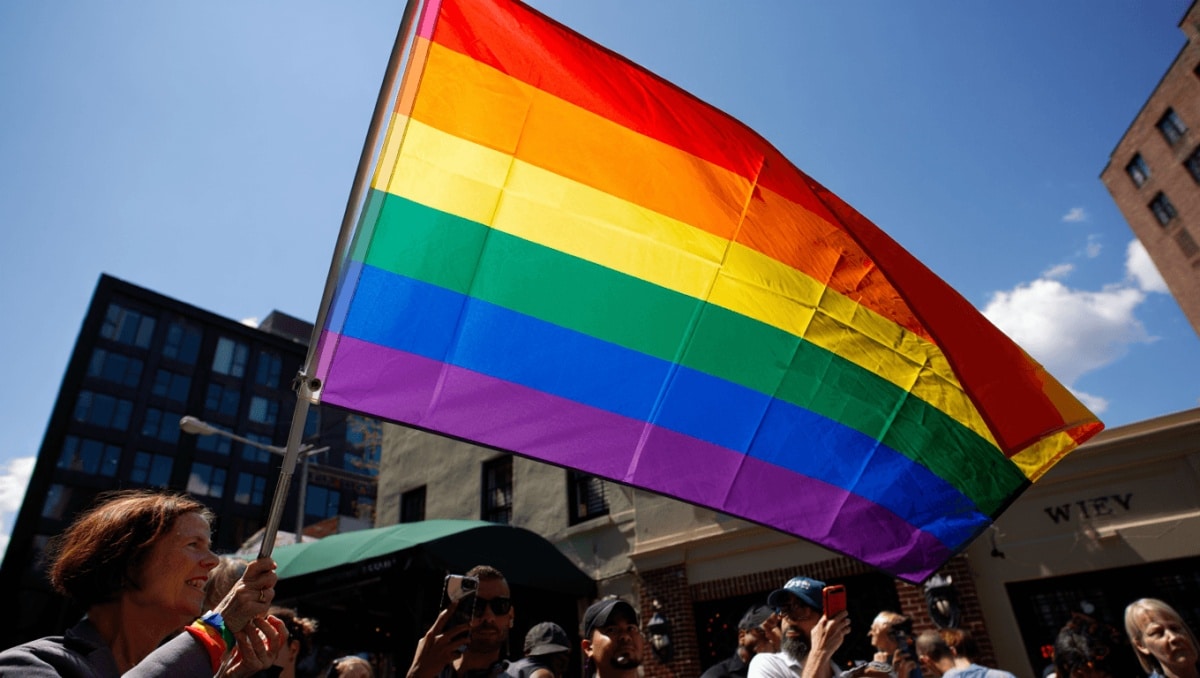
The Trump administration has agreed to allow a Pride flag to remain at the Stonewall National Monument in New York City, resolving a recent dispute over the flag’s display on federal land. The decision ends weeks of uncertainty for advocates who view the flag as a symbol of the site’s central place in LGBTQ history.
Federal park officials, who manage the site, reached the agreement after consultations with city leaders and advocacy organizations, according to multiple sources familiar with the matter. The move avoids a protracted legal fight and signals a rare conciliatory posture from an administration that has often clashed with LGBTQ advocacy groups.
Stonewall’s designation as a national monument in 2016 cemented its role in the public memory of the LGBTQ rights movement. The controversy began when a Pride flag was raised near the monument and questions quickly arose about whether it could remain on federal property without formal authorization. Officials initially weighed rules governing flags on federal grounds against the site’s cultural and historic significance.
Advocates and local officials framed the issue as more than a matter of protocol. To many, the flag is a visible acknowledgment of the protests that began at the Stonewall Inn in 1969 and the ongoing struggle for equal rights.
What the agreement changes
– Immediate outcome: The Pride flag will stay at the monument while federal and local officials work out display policies.
– Policy review: Park authorities have agreed to review existing flag guidelines to avoid similar disputes going forward.
– Community relations: The decision eases tensions between the Department of the Interior and local LGBTQ organizations and New York City leaders.
– Legal risk: By settling the matter administratively, the government reduces the risk of lawsuits that could set a wider precedent for flags on federal sites.
Reactions were predictably mixed. LGBTQ groups issued statements welcoming the pragmatic resolution and stressing the flag’s symbolic importance. Some conservative commentators argued that rules on federal properties should be enforced consistently, regardless of a flag’s message. City officials said they will continue to work with the National Park Service to clarify what kinds of displays are permitted at the monument.
Why this matters now
The outcome affects how federal agencies balance strict rules with the cultural significance of historic sites. For the Stonewall community, it’s an affirmation that the site can reflect the legacy it commemorates without getting entangled in an extended regulatory fight. For federal managers, the case highlights the need for clearer guidelines so that symbolic gestures do not trigger repeated controversies.
Officials say the agreement is a temporary resolution while a formal policy review proceeds. Observers will be watching whether the final policy enshrines a permanent allowance for symbolic flags at nationally protected sites or imposes stricter limits to prevent ad hoc displays in the future.