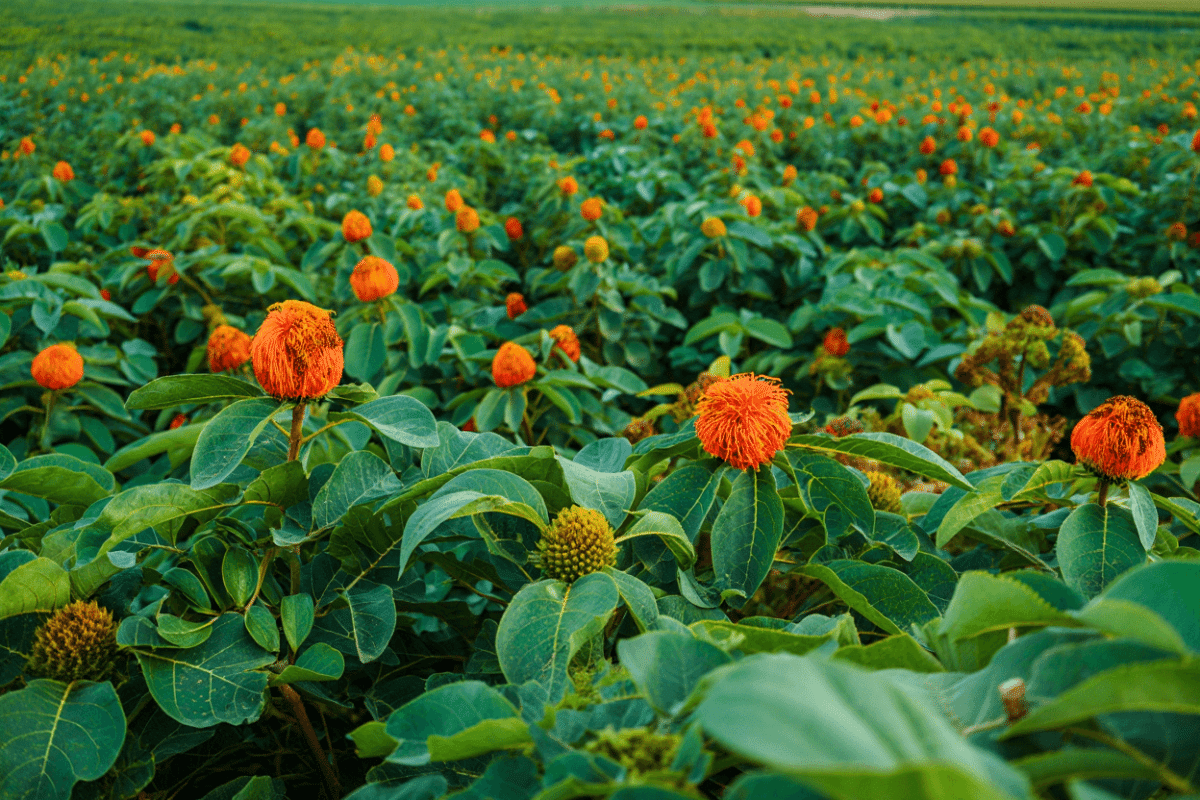
A comprehensive UN-backed report released in September 2023 quantifies what economists and ecologists have long suspected: invasive species cost the global economy at least $423 billion annually. This figure represents only documented, quantifiable damages—the true cost likely exceeds this significantly as many impacts remain unmeasured. The economic burden has surged dramatically over recent decades, revealing a systemic failure in prevention and early detection worldwide.
🔥 Quick Facts
- Global annual cost: $423 billion according to the Intergovernmental Platform on Biodiversity and Ecosystem Services (IPBES)
- US-specific impact: $137 billion annually in agricultural damages alone, per U.S. Department of Agriculture estimates
- 60% of extinctions worldwide involve invasive species as a contributing factor
- Acceleration rate: 1,883 kilometers per year when human activity spreads invasive species—over 1,000 times faster than natural dispersal
How the $423 Billion Figure Breaks Down Across Sectors
The IPBES report analyzed economic impacts across agriculture, forestry, fisheries, infrastructure, human health, and ecosystem services. Agriculture bears the heaviest burden, accounting for the majority of documented losses. In the United States alone, invasive species have cumulatively cost the economy $1.22 trillion since the 1960s, according to a comprehensive 2022 study. The historical trajectory reveals accelerating costs: invasive species cost North America approximately $2 billion annually in the early 1960s, but this figure ballooned to over $26 billion per year since 2010—a thirteen-fold increase in just five decades.
The economic ripple effects of invasive species extend beyond direct crop losses. Water utilities face mounting expenses treating aquatic invasive plants; aquaculture operations lose yields to invasive fish species; and timber industries combat invasive forest pests. Between 1975 and 2020, invasive aquatic and semi-aquatic plants alone cost the global economy over $32 billion. A 2024 study found that 65% of aquatic plant invasion costs occur in freshwater ecosystems, where irrigation infrastructure and fisheries depend on water quality.
Why Agriculture Suffers the Most Severe Economic Damage
Agricultural losses constitute the single largest category within the $423 billion annual figure. Invasive crops pests—including fungi, insects, and competing plant species—reduce yields and force farmers to invest in costly management strategies. Invasive insect pests alone have driven hundreds of billions in damage to North American agriculture over the past 60 years. The economic model is brutal: farmers discover an invasive threat, then face years of containment costs before eradication becomes feasible or cost-prohibitive.
A critical economic insight emerges from prevention versus control analysis. Research demonstrates that early detection and rapid response to new invasions yields dramatically superior cost-benefit ratios compared to managing established infestations. Some biocontrol programs targeting invasive species generate returns of $2 to $10 per dollar invested over 50-year periods. Yet most governments allocate far more funding to reactive control efforts than proactive prevention, creating a costly inefficiency in resource allocation across the economy.
Global Distribution of Invasive Species Costs and Extinction Risk
The $423 billion annual cost masks enormous geographic variation. Developing nations, which often lack the infrastructure and funding for prevention programs, absorb disproportionate losses relative to their GDP. Climate change is amplifying this disparity: invasive species are expanding their ranges northward and to higher elevations at unprecedented rates, shifting ecological pressure zones to regions unprepared for emerging threats.
The extinction component of invasive species impact adds another layer of economic urgency. Invasive species play a documented role in 60% of all recorded plant and animal extinctions globally. These extinctions eliminate genetic resources, disrupt ecosystem functions, and permanently reduce biodiversity that might have yielded pharmaceutical discoveries, agricultural breeding stock, or ecosystem services. While quantifying the economic value of prevented extinction is complex, economists increasingly recognize that unchecked invasive spread represents an irreversible loss of natural capital.
| Impact Category | Annual Cost (USD) | Primary Regions Affected |
| Agriculture & Horticulture | $220+ billion | North America, Europe, Asia |
| Forestry & Timber | $60+ billion | North America, Australia, Europe |
| Aquatic & Marine Systems | $45+ billion | Great Lakes, Pacific regions, Mediterranean |
| Infrastructure & Utilities | $40+ billion | Global waterways and urban zones |
| Human Health & Medicine | $20+ billion | Tropical and subtropical regions |
“Invasive species now constitute a leading driver of biodiversity loss and ecosystem dysfunction globally, with economic losses that exceed the combined annual spending of most environmental protection budgets worldwide.”
— Summary findings from IPBES Global Assessment, International scientific consensus on biological invasions
Accelerating Spread Rates and the Human Factor in Invasive Species Distribution
One of the most striking findings from recent research concerns the phenomenal speed at which invasive species now spread. Native species disperse naturally at approximately 35 kilometers per year. By contrast, non-native species introduced through intentional and accidental human transport spread at 1,883 kilometers per year—more than 50 times faster on average. This acceleration reflects increased global trade, travel, horticulture commerce, and the unintended movement of organisms via shipping containers, ballast water, and contaminated equipment.
The human facilitation of invasive spread creates direct economic losses in several ways: shipping delays result from zebra mussel infestations in water intake pipes; hotel and tourism industries suffer when aquatic recreation areas close due to invasive pathogens; forestry crews face extended harvest delays when invasive pests infest timber; and utilities spend millions removing invasive vegetation from power lines and water treatment infrastructure. The 2023 UN assessment explicitly identified human trade networks and climate-driven habitat shifts as primary vectors accelerating the global invasive species crisis.
Prevention Strategy Returns Far Superior Economics to Reactive Control
Economic analysis of invasive species management reveals a consistent pattern: preventing establishment costs far less than controlling or eradicating established populations. A notable case from Hawaii demonstrates this principle. Biocontrol programs targeting invasive insects and plants have cost approximately $2.5 million to implement while generating estimated benefits of $5.2 to $23.8 million over 50 years, representing a return of 2 to 10 dollars per dollar invested. These favorable ratios appear consistently across species and regions where prevention funding precedes establishment.
Yet paradoxically, government spending patterns worldwide prioritize reactive management of established invasive populations over prevention of future invasions. Early detection systems, border screening protocols, and rapid response teams require upfront capital investment with benefits spread across future decades—a timing mismatch that favors politically expedient but economically inefficient allocation of resources. The cumulative result: the $423 billion annual cost could potentially be reduced by 20-40% through optimized prevention spending, according to economic modeling by the U.S. Department of Agriculture and independent research institutions.
What Does the Rising Cost Trajectory Tell Us About Future Invasive Species Threats?
The exponential growth in documented invasive species costs—from $2 billion annually in the 1960s to $26 billion since 2010, and now $423 billion globally—raises critical questions about economic trajectory over the next decade. Climate change is expanding suitable habitat ranges for formerly tropical diseases and pests toward temperate zones. Warming winters allow overwintering survival of invasive insects at higher latitudes. Ocean acidification and temperature shifts create conditions favoring certain invasive marine species over native competitors. These biophysical changes suggest the economic cost curve will continue ascending unless prevention funding receives comparable priority to climate mitigation investments.
The United States’ agricultural sector exemplifies the challenge. Current estimates suggest invasive species cost U.S. agriculture approximately $137 billion annually in direct damage and management expenses. This figure exceeds the total annual funding for all U.S. Department of Agriculture research and development activities. The economic asymmetry—damage from invasive species outpaces prevention funding by orders of magnitude—indicates that current policy and investment frameworks are fundamentally misaligned with cost-minimization principles.
Sources
- Intergovernmental Platform on Biodiversity and Ecosystem Services (IPBES) — September 2023 report quantifying global economic costs of invasive alien species at $423 billion annually
- U.S. Department of Agriculture — Economic impact assessment showing $137 billion in annual agricultural damages from invasive species
- Crystal-Ornelas and Keller (2021) — Comprehensive economic analysis of invasive species costs in North America, 1960-2017
- Fantle-Lepczyk et al. (2022) — Meta-analysis of cumulative economic losses from biological invasions in the United States ($1.22 trillion since 1960s)
- Macêdo et al. (2024) — Global cost assessment of aquatic invasive plants, documenting $32+ billion in damage (1975-2020)
- University of Massachusetts Amherst Study (2024) — Non-native species spread rate analysis showing 1,883 km/year dispersal with human transport involvement