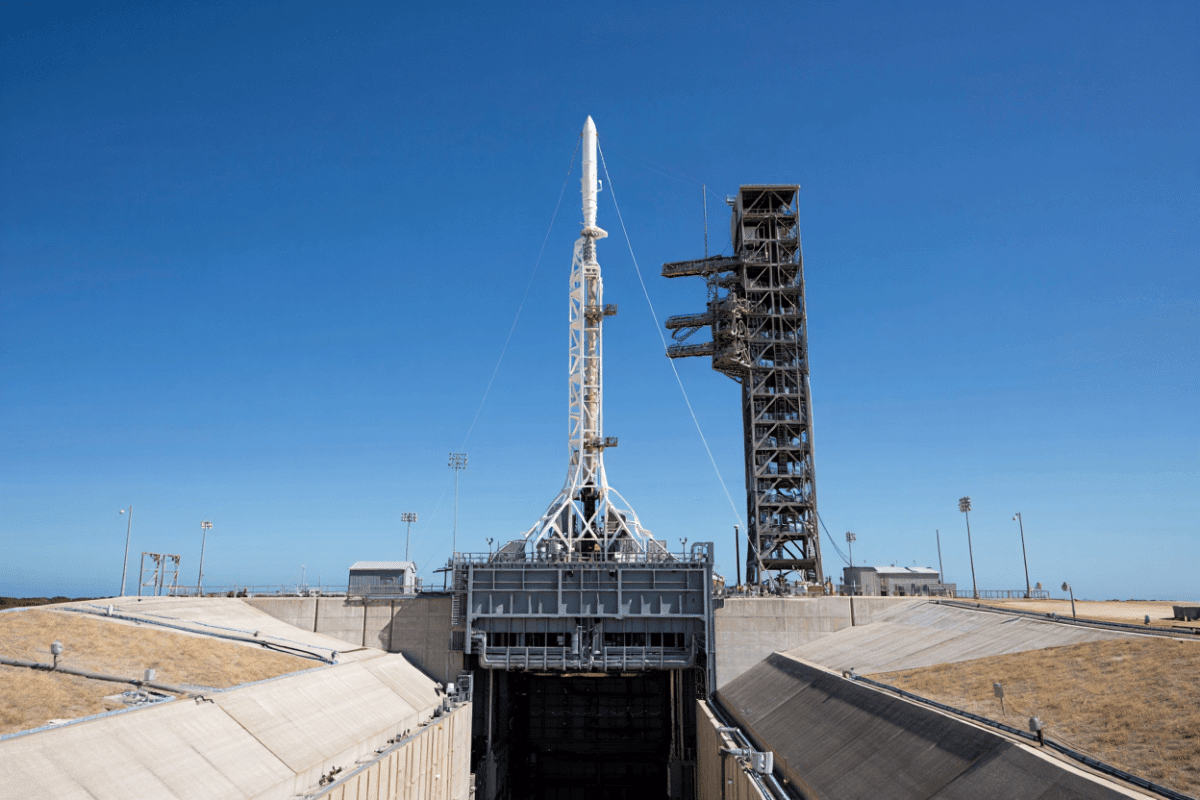
The U.S. Space Force has completed a comprehensive study concluding that a third heavy-lift launch facility is probably required to meet surging national defense and commercial space demands. The analysis, released in May 2026, presents the first official assessment addressing capacity constraints at Cape Canaveral Space Force Station in Florida and Vandenberg Space Force Base in California—currently the nation’s only two federal launch complexes for heavy cargo missions.
🔥 Quick Facts
- Space Force study concludes a third heavy-lift launch site is “probably required”
- Current infrastructure limited to Cape Canaveral and Vandenberg
- Launch demand projected to increase exponentially in coming years
- Air Force Secretary Troy Meink publicly confirmed need for additional capacity
- Potential sites under consideration include Wallops Island, Alaska spaceport, and New Mexico location
Why Launch Capacity Matters Now
The U.S. Space Force operates an increasingly dense constellation of national security satellites requiring reliable launch access. With SpaceX, United Launch Alliance, and Blue Origin competing for launch contracts, federal ranges face unprecedented demand. The study reflects strategic recognition that existing facilities cannot sustain both military and commercial launch rates while maintaining operational security protocols.
Historically, launch infrastructure expansion has taken decades. The last major facility addition—Space Launch Complex 41 at Cape Canaveral—underwent years of environmental review and construction. A new federal range would require significant capital investment, congressional approval, and likely 5-10 years of development before achieving operational status.
Study Details and Launch Infrastructure Analysis
The Department of the Air Force study examined capacity utilization across existing ranges. Cape Canaveral handles easterly launches for high-inclination orbits, while Vandenberg manages polar and sun-synchronous missions from California’s Pacific coast. Both facilities operate at or near maximum throughput, with launch scheduling now constrained by range availability rather than rocket manufacturing capacity.
Launch activity at federal ranges continues accelerating, exemplified by competing heavy-lift programs and national security space constellation buildouts. The analysis specifically identified the absence of a third facility as a strategic vulnerability should either existing range face an extended outage from weather, maintenance, or operational incidents.
| Facility | Location | Orbital Inclination | Annual Launch Capacity |
| Cape Canaveral | Florida | Easterly (28-51 degrees) | 12-15 launches |
| Vandenberg SFB | California | Polar/Sun-sync (90+ degrees) | 10-12 launches |
| Proposed Third Site | TBA | Equatorial or intermediate | 8-10 launches (estimated) |
The launch cadence analysis revealed a critical finding: combined federal range capacity maxes out at approximately 22-27 missions per year, yet projections show demand climbing toward 40+ annual launches within the next five years. This gap creates a strategic risk, as commercial providers increasingly handle national security payloads and compete for limited federal range time.
Candidate Sites and Selection Criteria
Air Force leadership previously identified three potential locations: Wallops Island, Virginia (Atlantic coast upgrade); Pacific Spaceport Complex in Alaska (Arctic operations advantage); and Spaceport America in New Mexico (private partnership potential). Each candidate presents distinct trade-offs regarding national security, environmental impact, and infrastructure investment.
Wallops Island offers minimal new construction since NASA maintains existing launch infrastructure there. However, range restrictions and proximity to populated areas limit flexibility. Alaska’s location provides polar orbit access superior to existing federal ranges but requires substantial capital deployment in remote terrain. New Mexico’s Spaceport America represents a public-private model, potentially distributing costs but introducing commercial operator dependencies.
“The Space Force has determined it will likely need a third location to launch its most high-profile satellites as demand increases,” stated Air Force Secretary Troy Meink in remarks supporting the study’s conclusions during late May 2026 defense policy briefings.
— Air Force Secretary Troy Meink, U.S. Department of the Air Force
Economic and Security Implications
Construction of a federally operated launch facility typically costs $500 million to $2 billion, depending on scope and location. The Sentinel ICBM program modernization, now underway across missile fields, demonstrates the scale of military infrastructure reinvestment. A new space launch complex represents comparable strategic commitment but with broader peacetime utility.
The study’s “probably required” language signals confidence without certainty, leaving room for alternative approaches: expanded commercial capacity, international partnerships, or advanced launch vehicle concepts. However, senior Air Force officials view a dedicated federal facility as the most reliable long-term solution for safeguarding national security launch access.
Recent organizational changes at Kennedy Space Center include appointment of specialized leadership for launch operations, suggesting DoD preparation for expanded range management responsibilities.
What’s Next for U.S. Launch Infrastructure?
The Space Force study becomes the foundation for congressional discussions on fiscal year 2027 defense budgets. Lawmakers on the House and Senate Armed Services Committees must now evaluate whether to authorize site selection studies, environmental assessments, or feasibility analyses for new launch infrastructure.
Meanwhile, commercial launch providers continue expanding capability. SpaceX’s Starship program, Blue Origin’s New Glenn, and United Launch Alliance’s Vulcan offer alternative launch pathways for some missions. However, national security payloads—especially classified reconnaissance satellites—require federal range security clearance and restricted airspace, making diversion to commercial facilities incomplete as a solution.