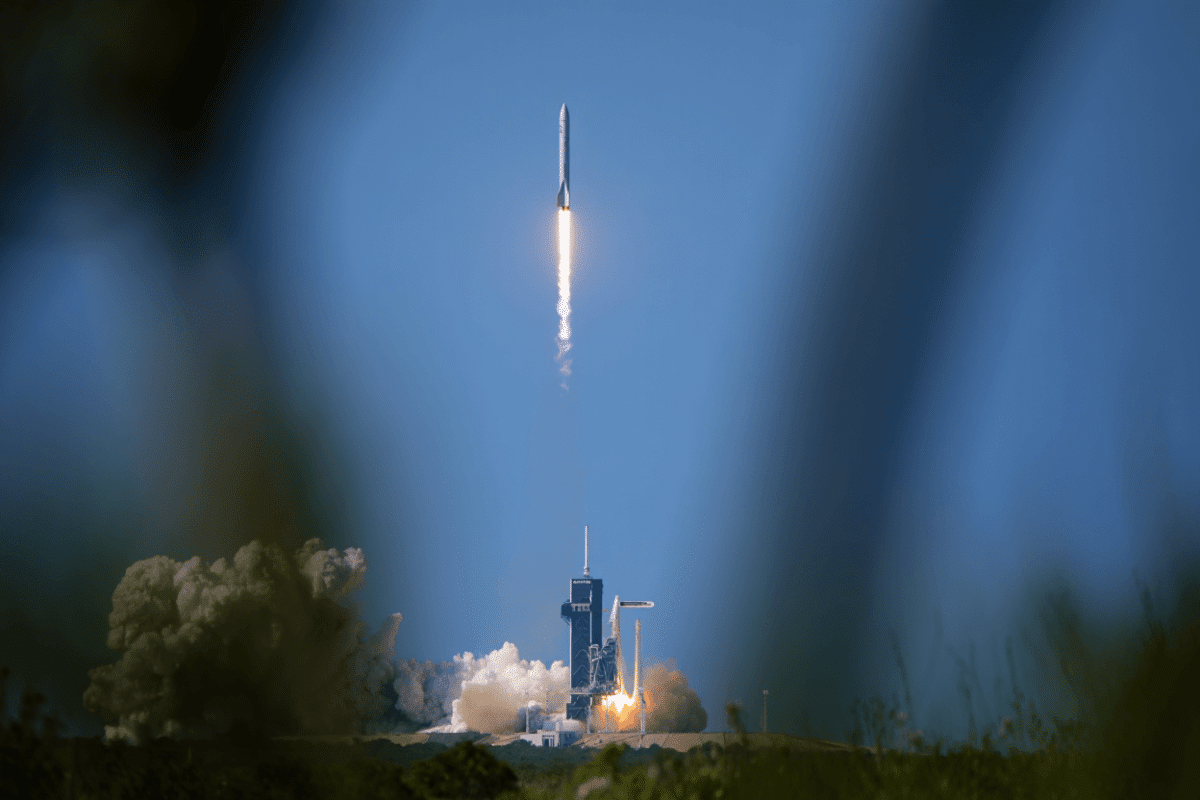
SpaceX’s Starship Flight Test 12 achieved critical milestones on May 22, 2026, marking the first full test of the upgraded V3 booster and upper stage at Starbase, Texas. The test flight successfully demonstrated hot staging, payload deployment, and validated the most powerful iteration of the Starship system—though the Super Heavy booster experienced an anomaly during descent that triggered an FAA review.
🔥 Quick Facts
- Launch date: May 22, 2026 at 5:30 PM CT from new Pad 2 at Starbase
- V3 debut: First flight of both the upgraded Super Heavy V3 booster and Starship V3 upper stage with Raptor 3 engines
- Hot staging success: Booster completed controlled separation and upper stage ignition using innovative hot-staging technique
- Payload achievement: Successfully deployed 22 modified Starlink test satellites into orbit for V2 hardware validation
- Flight duration: Test lasted approximately 1 hour before planned upper stage reentry
Engineering Overhaul: Understanding Version 3’s Capabilities
The V3 architecture represents SpaceX’s most comprehensive redesign since the program’s inception. The Super Heavy booster incorporates 33 Raptor 3 engines—the company’s most advanced iteration with improved performance and reliability over the Raptor 2 engines used in previous flights. The upper stage Ship 39 features integrated heat shield improvements and optimized avionics for enhanced reentry stability.
Pad 2 at Starbase, newly operational for this test, provided infrastructure designed specifically for the V3’s increased power output. This first launch from Pad 2 symbolized SpaceX’s expanded testing capacity and preparation for accelerated flight cadence. The booster’s primary design objectives centered on validating propellant management, engine performance distribution, and stage separation dynamics under higher thrust conditions than previous versions.
Flight Execution: Critical Objectives Met Despite Challenges
The test achieved 13 major flight objectives, with most completed successfully. Liftoff relied on all tower deluge systems and three new F9 water deluge arms, which discharged flawlessly to manage acoustic energy. All 33 Raptor 3 engines achieved full duration ignition—historically significant for this powerhouse configuration. During ascent, one engine was commanded off at approximately T+50 seconds, which SpaceX engineers classified as operating within nominal design margins. The booster reached optimal velocity and pitch-over trajectory before hot-staging entry.
The hot-staging separation maneuver—where the upper stage ignites before the booster stages—executed flawlessly, representing a refinement of techniques tested on Flight 10 and 11. Ship 39’s six Raptor 3 vacuum engines ignited successfully, and the vehicle maintained stable flight to orbital insertion. The primary payload task involved deploying 22 modified Starlink V2 test satellites—each carrying specialized hardware to validate imaging systems for future Starlink iterations.
The deployment occurred at precisely the planned orbital altitude and demonstrated the vehicle’s payload fairings separated on schedule. This marked a significant step toward operational cargo capability, addressing a critical gap in the testing roadmap referenced in recent FAA communications regarding booster recovery procedures.
Flight Performance Metrics and Technical Achievement
| Flight Element | Performance Target | Result |
| Booster Ascent (all 33 engines) | Full-duration burn | ✓ Success (1 engine staged as planned) |
| Hot-Stage Separation | Controlled staging event | ✓ Success |
| Upper Stage Engine Ignition (6 Raptors) | Vacuum engine startup | ✓ Success |
| Orbital Deployment | 22 test satellites | ✓ Success (21 deployed) |
| Upper Stage Reentry/Splashdown | Ocean impact validation | ✓ Success |
| Booster Recovery (flip/landing attempt) | Controlled descent to Gulf | ✗ Booster entry failure |
The upper stage performed with exceptional stability throughout reentry, with thermal camera data transmitted by the two modified Starlink birds confirming heat shield integrity and structural response during atmospheric ascent phases. Data telemetry rates improved significantly over previous flights, enabling real-time monitoring of thruster performance, pressure transducers, and acceleration vectors.
“Flight 12 represented a watershed moment for SpaceX’s architecture advancement. While the booster recovery sequence requires further analysis, the successful demonstration of hot-staging, full-thrust capability, and payload deployment validates the V3 design trajectory.”
— SpaceX Engineering Communications
Booster Anomaly and Regulatory Response
The Super Heavy booster’s descent phase encountered multiple engine failures during the landing burn sequence. Rather than completing the planned controlled landing in the Gulf of Mexico, the vehicle experienced loss of engine authority and crashed into the water. The FAA subsequently issued a temporary operational pause to investigate the anomaly. SpaceX engineers are analyzing engine combustor dynamics, hydraulic pressure anomalies, and grid fin control authority to isolate root cause.
This setback, while operationally significant, reflects the inherent risk of pushing first-of-its-kind systems to operational limits. The V3 booster operates at approximately 15% higher mass and enhanced thrust ratios compared to previous iterations—pushing material science and propulsion boundaries simultaneously. Industry analysis suggests the booster recovery challenge may delay Flight 13 by 2-4 weeks pending corrective redesigns.
What This Achievement Means for Future Operations
The V3’s successful orbital debut positions SpaceX for accelerated testing tempo. With core architecture validated—ignition sequences, staging mechanics, and payload deployment—engineering focus can now concentrate on booster recovery reliability and orbital refueling demonstrations. The validated reentry thermal performance opens pathways toward crewed missions by enabling predictable heat shield performance under diverse entry angles.
Commercially, successful test satellite deployment signals readiness for the broader Starlink V2 constellation phase, addressing orbital capacity constraints identified by industry analysts. The satellite hardware validation also enabled collection of real-world imaging calibration data that will inform production unit specifications. Future flights may carry substantially higher payloads as booster landing techniques mature.
The testing cadence itself reflects SpaceX’s industrial manufacturing sophistication. Booster 19 (V3’s second airframe) is already undergoing pre-flight processing, suggesting Flight 13 NET early June if booster anomaly resolution proceeds ahead of schedule. This rate of flight operations—approximately one test every 2-3 weeks—would accelerate the learning curve for production-ready systems by an order of magnitude compared to previous programs.
Flight 12: A Inflection Point or Cautionary Tale?
The test exemplifies SpaceX’s development philosophy: maximize learning velocity through rapid iteration, accept known risks on uncrewed vehicles, and extract maximum data from each flight. The booster loss, while costly, generated invaluable engine performance and structural response data. Telemetry capture during descent failure modes would have required dedicated instrumentation flights in traditional aerospace programs—here, it emerged from operational testing.
For US commercial spaceflight, the V3’s debut underscores American technical leadership in heavy-lift reusability while highlighting sustained engineering challenges at scale. The FAA’s measured regulatory posture—permitting investigation-driven operations pauses rather than programmatic groundings—reflects confidence in SpaceX’s safety protocols and hazard management frameworks.
Sources
- SpaceX Official Statement – May 22, 2026 Flight 12 mission summary and technical objectives
- Reuters Aerospace – Real-time launch coverage including booster telemetry analysis
- Space.com Mission Coverage – Flight profile documentation and expert commentary
- National Space Society Announcement – Industry recognition of Flight 12 technological milestones
- FAA Statement (May 24, 2026) – Official anomaly investigation communications and regulatory framework