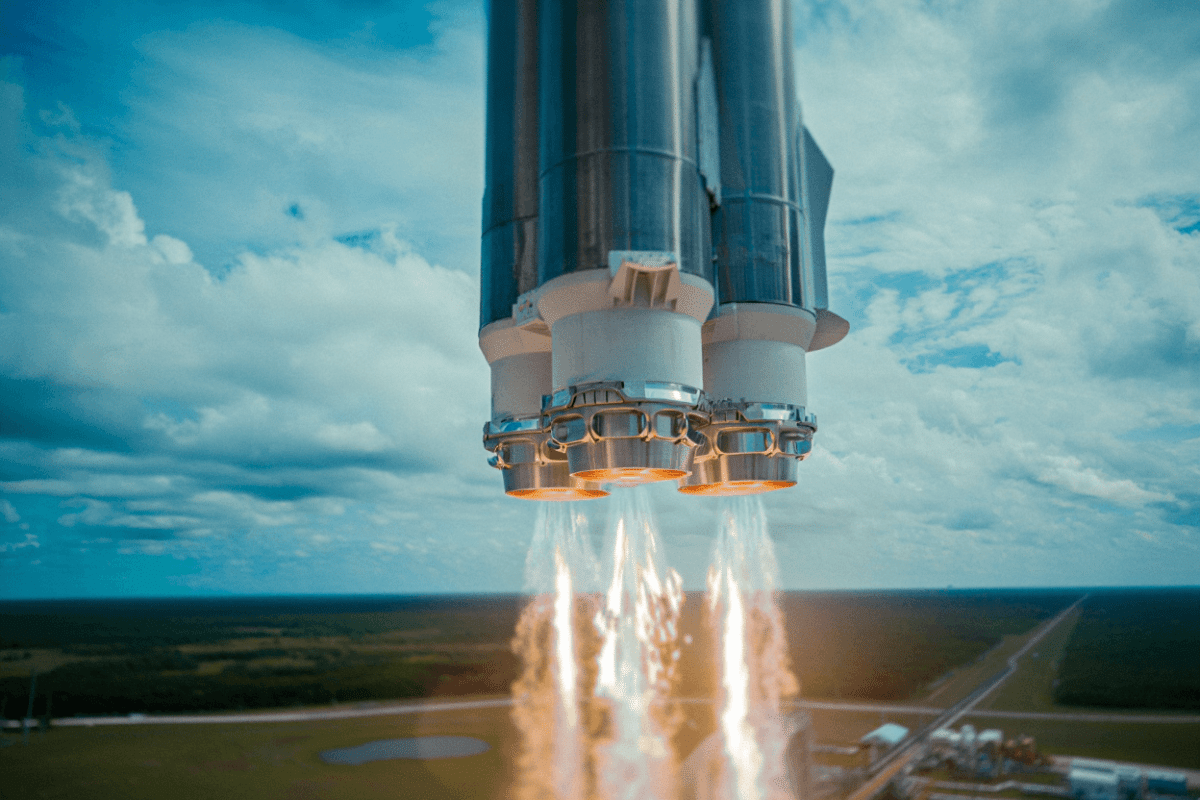
SpaceX’s Starship Super Heavy booster has been grounded by the Federal Aviation Administration following a critical engine failure during its first test flight on May 22, 2026. The FAA formally classified the incident as a “mishap” on May 27, 2026, requiring a comprehensive investigation before future launches can resume. Though the upper stage Ship 39 successfully completed its mission objectives, the booster’s catastrophic engine loss during descent prompted the agency’s swift action to ground both rockets pending findings.
🔥 Quick Facts
- FAA grounded Starship and Super Heavy on May 27, 2026
- Super Heavy booster lost multiple engines during return burn after Flight 12 launch
- Booster splashed down in the Gulf of Mexico instead of controlled landing
- Ship 39 upper stage completed all primary objectives including mock satellite deployment
- Investigation required before next Starship launch can proceed
What Happened During Flight 12
Starship Flight 12 launched on May 22, 2026, marking the debuts of the Starship V3 architecture with an upgraded Super Heavy booster featuring enhanced engines and control systems. The mission achieved several key technical milestones during ascent and stage separation. However, during the booster’s return phase—specifically the boostback burn over the Gulf of Mexico—the rocket experienced catastrophic multiple engine failures that prevented controlled descent.
The upper stage Ship 39 continued on its planned trajectory despite the booster setback. It successfully deployed mock satellites to test cargo deployment mechanisms, executed complex reentry maneuvers, and performed a soft splashdown in the Indian Ocean as designed. This partial success highlighted that Starship V3‘s airframe and reentry systems performed as expected, with failures isolated to the first-stage propulsion system during return-to-launch-site procedures.
The Engine Failure Root Cause
Based on preliminary telemetry data, the Super Heavy booster experienced sequential engine shutdowns during its critical return burn. Sources indicate that at least multiple Raptor engines failed to maintain proper combustion during the boostback phase, with some engines experiencing complete ignition loss. The exact sequence—whether one failure cascaded into others or simultaneous failures occurred—remains under investigation by the FAA and SpaceX engineers.
The engine configuration of Starship V3’s Super Heavy represents upgraded propulsion compared to earlier iterations, with newly designed engine mounts, gimbal systems, and fuel feed lines. The failures suggest potential issues with either the new engine design parameters, the thrust vector control systems, fluid dynamics in the propellant supply network, or thermal management during transonic descent conditions. An official mishap investigation will examine all components and systems systematically.
Technical Specifications and Flight Parameters
| Parameter | Details |
| Flight Designation | Starship Flight 12 (First V3 test flight) |
| Launch Date | May 22, 2026 from Starbase, Texas |
| Upper Stage | Ship 39 – Completed mission successfully |
| First Stage | Super Heavy Booster 18 (V3) – Lost to engine failure |
| Primary Objectives | Test hot-staging, Deploy mock satellites, Reentry validation |
| Booster Fate | Hard splashdown in Gulf of Mexico after engine loss |
| FAA Action | Mishap classification announced May 27, 2026 |
| Current Status | Grounded pending investigation results |
The distinction between Flight 12’s overall success and the booster failure is important to understanding SpaceX’s iterative testing approach. The Ship 39 validated multiple new systems in the V3 architecture, including improved thermal protection tiles, enhanced avionics, and more efficient engine performance during high-altitude flight. These successes provide valuable data despite the booster setback.
“The mishap involved the Super Heavy booster as it flew back to the Gulf of America after stage separation. There are no reports of public injury or damage to public property.”
Federal Aviation Administration, Official Statement
Ground Campaign Implications and Timeline
The FAA grounding means SpaceX cannot conduct any Starship or Super Heavy launches until the investigation concludes and corrective measures receive approval. The timeline for resumption depends on investigation complexity. Previous flight anomalies have resulted in investigation periods ranging from weeks to months, depending on root cause difficulty and the extent of design or manufacturing changes needed.
SpaceX’s Flight 13, originally scheduled for the coming weeks, is now indefinitely postponed. The company faces pressure to demonstrate corrective actions swiftly while maintaining the rigorous technical analysis the FAA requires. Hardware inspection of the booster’s recovered components, telemetry analysis, and ground testing of modified systems will form the investigation’s core activities.
This grounding affects SpaceX’s commercial satellite launch cadence, government contracts, and broader space industry timelines that depend on Starship availability. Companies anticipating payloads on upcoming flights—including satellite operators and scientific institutions—face delays. The incident also raises questions about the readiness of V3 systems for the demanding operational environment.
What This Means for Starship’s Development Path
Engine reliability during booster return remains one of the most technically demanding aspects of Starship’s development. Unlike traditional expendable rockets, the Super Heavy booster must accomplish controlled descent through transonic flight, maintain precision attitude control with minimal fuel reserves, and execute land-based or water-based recovery without propellant overflow or residual combustion chambers causing instability.
The V3 architecture made significant changes to engine mounting, gimbal response times, and fuel feed redundancy. Whether the failures stem from unforeseen interactions in these new systems or represent manufacturing deviations will determine the scope of corrective measures. If design flaws are identified, SpaceX faces the choice between incremental modifications for Flight 13 or deeper redesigns delaying return to flight significantly.
Industry observers note that booster reusability—central to SpaceX’s cost reduction strategy—demands near-perfect engine reliability during return phases. A single engine failure can cascade into loss of attitude control. The fact that multiple engines failed simultaneously suggests either a common-mode failure affecting all engines equally or a failure in a shared system feeding all engines. This distinction will guide investigation priorities and shape upcoming tests.
Will Flight 13 Attempt a Different Approach?
Speculation continues about whether SpaceX will modify Flight 13‘s plan or revert to known-good configurations. The company has demonstrated willingness to pivot test profiles based on flight data. Options include reducing booster return burn aggressiveness to lower thermal and propellant demands, deferring advanced Starship objectives to Flight 14, or implementing hardware modifications to the engine systems first.
SpaceX leadership has historically favored rapid iteration and learning from flight failures. However, the FAA’s requirement for formal mishap investigation introduces regulatory oversight that constrains how quickly design changes can be validated. The balance between SpaceX’s development speed and federal aerospace safety requirements will shape the investigation’s duration and the conditions for return to flight approval.
Sources
- Federal Aviation Administration – Official mishap classification and grounding statement
- Bloomberg – Real-time analysis of grounding impact and investigation scope
- Space.com – Technical flight data and booster performance telemetry
- TechCrunch – SpaceX statement and industry reaction coverage
- Reuters – Starship test flight history and V3 objectives
- Multiple space industry analysts – Engine failure mechanisms and recovery timeline estimates