
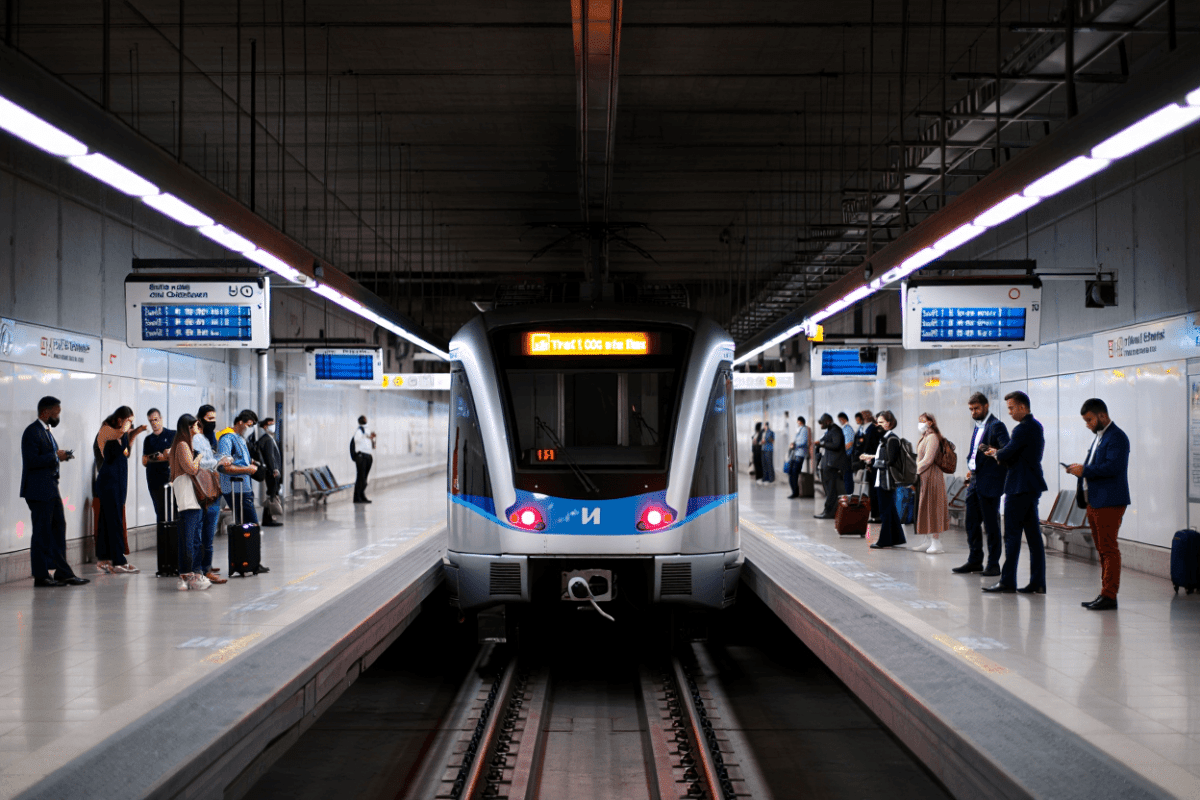
The Washington Metropolitan Area Transit Authority (WMATA) Board of Directors officially adopted a $4.8 billion fiscal year 2027 budget on April 23, 2026, delivering on a commitment to expand transit service across Washington, D.C., Maryland, and Virginia without raising fares for the region’s approximately 850,000 daily riders. The budget represents an increase in service investment while maintaining fare stability—a rare achievement in regional transit financing that positions the system for operational improvements and capital modernization through fiscal year 2027.
🔥 Quick Facts
- $4.8 billion combined operating and capital budget for FY2027
- Zero fare increase maintained for Metro Bus and MetroRail
- Orange, Silver, Blue lines will operate at 10-minute peak headway frequency
- 15% bus service expansion across the DMV region, starting December 2026
- $2.1 billion capital budget allocated to system renewal and modernization
The Budget Proposal and Regional Consensus
WMATA’s FY2027 budget approval required coordination across three jurisdictions—Virginia, Maryland, and Washington, D.C.—each with distinct funding mechanisms and economic pressures. The no-fare-increase commitment reflects regional consensus prioritizing access and ridership recovery over revenue generation through pricing. This decision contrasts sharply with peer transit systems like New Jersey Transit and New York City Transit, which have implemented increases in recent fiscal cycles.
The budget includes $57.2 million in increased subsidies from the FY2026 level, excluding debt service payments. This funding surge enables the authority to balance operational needs—staffing, fleet maintenance, fuel costs—while allocating substantial capital resources toward aging infrastructure renewal. The approval came after a formal public comment period beginning January 20, 2026, when Metro sought community feedback on service priorities and spending plans.
Critical Service Expansion and Rail Improvements
MetroRail enhancement represents a cornerstone of the FY2027 strategy. The budget funds reduced headways on three critical lines: the Orange Line (serving northern Virginia), Silver Line (connecting Dulles Airport to the downtown core), and Blue Line (serving Arlington and the eastern corridor). Moving from current 12-minute peak intervals to 10-minute frequencies will reduce wait times and increase system capacity during peak periods, particularly benefiting commuters in high-demand corridors.
Metrobus enhancements target a 15% service expansion throughout the region, with implementation beginning by December 2026. The strategy focuses on improving on-time performance, expanding operating hours, and increasing frequency on key routes. Washington, D.C. is receiving particular attention, with additional bus service improvements proposed to increase frequency and reliability on routes experiencing highest demand. These improvements build on the Better Bus Network—one of the largest service redesigns in over 50 years—approved earlier in the current fiscal cycle.
The budget also maintains MetroAccess paratransit service at FY2026 levels, ensuring consistent support for passengers requiring specialized transportation services.
Operating and Capital Budget Breakdown
| Budget Category | FY2027 Allocation | Key Focus Areas |
| Operating Budget | ~$2.7 billion | Labor, fuel, maintenance, staffing |
| Capital Budget | $2.1 billion | Track modernization, signaling systems, vehicle replacement |
| Service Expansion | 15% Metrobus | Frequency, hours, reliability across DMV |
| Debt Service | Excluded | Tracked separately from operating subsidy |
The capital improvement program reflects WMATA’s state-of-good-repair mandate—the federal requirement to maintain existing infrastructure before expansion. Major investments include track rehabilitation, signaling system modernization, tunnel ventilation upgrades, and rail vehicle replacement. These projects directly improve safety, reduce service delays, and extend asset lifespan beyond current deterioration curves.
“The FY2027 budget demonstrates our commitment to improving service quality and system reliability while maintaining affordability for all riders in our region.”
— WMATA Board of Directors, Budget Adoption Statement, April 23, 2026
Regional Economic and Strategic Implications
The no-fare-increase policy carries profound implications for regional economic competitiveness. The Northern Virginia chamber has emphasized the critical role of transit affordability in retaining tech talent and supporting workforce development. Similarly, Maryland jurisdictions view WMATA investment as essential to downtown revitalization and commercial corridor access. Washington, D.C. policymakers recognize that transit reliability directly impacts tourism, federal employee commuting patterns, and tax revenue stability.
The budget’s sustainability depends on steady federal support—currently representing approximately 25% of operating revenue—and predictable state/local funding from the three jurisdictions. Federal infrastructure grants through the Infrastructure Investment and Jobs Act provide critical capital funding, but competition for these resources intensifies annually as other transit systems compete for limited appropriations.
What Challenges Remain for WMATA in 2027 and Beyond?
Despite this positive budget adoption, WMATA faces persistent operational headwinds. Post-pandemic ridership recovery remains incomplete, with current weekday ridership approximately 75-80% of pre-COVID levels. This creates structural revenue pressure, as farebox revenue has not rebounded commensurately with capacity expansion investments. Additionally, aging infrastructure and deferred maintenance backlogs continue to constrarain operational reliability—track defects, signaling failures, and fleet limitations still drive service delays on multiple lines.
Workforce recruitment and retention present emerging challenges. Competitive regional labor markets, particularly for skilled transit operators and maintenance technicians, mean that WMATA must balance wage competitiveness against budget constraints. The agency’s investment in modern fleet management technologies reflects broader transit industry efforts to improve operational efficiency and reduce long-term labor intensity through automation and predictive maintenance.
Climate resilience represents another strategic consideration. The Metrorail system operates multiple stations in flood-prone areas, particularly near the Potomac and Anacostia rivers. Capital investments in station drainage systems, flood barriers, and resilient infrastructure will compete for resources alongside traditional state-of-good-repair needs, requiring difficult prioritization decisions through 2027 and beyond.
Sources
- WMATA Official — FY2027 budget adoption announcement, April 23, 2026
- Metro Magazine — Coverage of FY2027 budget approval and service expansion details
- Montgomery County Department — Regional budget analysis documents
- WMATA Board of Directors — Capital Improvement Program specifications and allocations
- Washington Post Archive — WMATA financial and operational reporting










