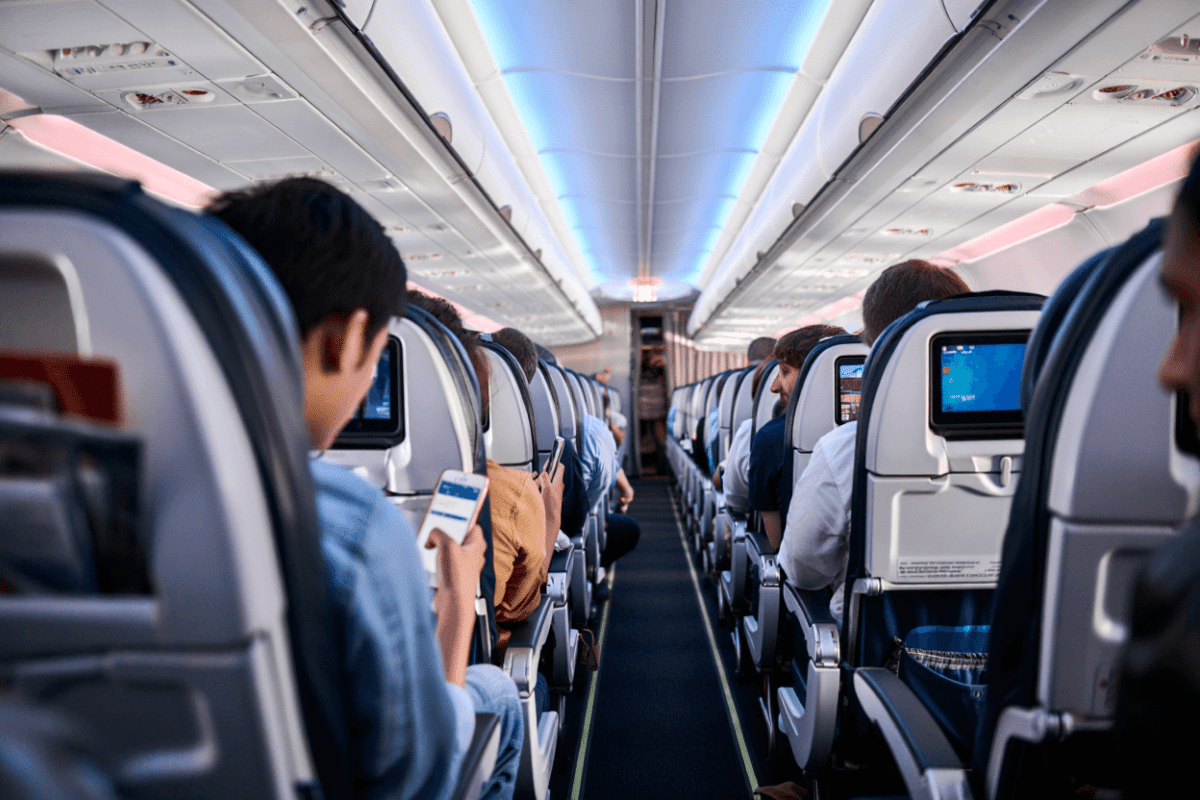
Hawaiian Airlines completed installation of Starlink Wi-Fi across its entire Airbus fleet in late 2024, making it one of the first major U.S. carriers to deploy this high-speed satellite internet free of charge. The rollout covers all 42 Airbus A330 and A321neo aircraft, delivering fast, low-latency connectivity to passengers on transpacific and domestic flights. This initiative represents a significant competitive advantage in an industry where in-flight connectivity has become essential to the modern travel experience.
🔥 Quick Facts
- Starlink Wi-Fi is free for all passengers on Hawaiian Airlines Airbus flights.
- 42 aircraft in the Airbus fleet now equipped with satellite internet capability.
- Service supports streaming, gaming, and work activities with low-latency performance.
- Hawaiian Airlines achieves 95.3% deployment rate of Starlink as of April 2026.
- Rollout completed in September 2024 across all Airbus A330 and A321neo models.
A Strategic Move in the Competitive Airline Landscape
Free in-flight connectivity has shifted from a premium amenity to a baseline customer expectation. Hawaiian Airlines recognized this market reality and partnered with SpaceX’s Starlink to eliminate Wi-Fi costs entirely on its largest aircraft. This decision differentiates Hawaiian Airlines from competitors offering metered or premium connectivity models.
The decision reflects broader industry trends. United Airlines began deploying Starlink on regional flights in May 2025, while Southwest Airlines, Air France, and Lufthansa Group announced similar commitments. For Hawaiian Airlines, whose passengers face extended transpacific flights spanning 5-12 hours, reliable internet connectivity directly enhances customer satisfaction and loyalty.
Technical Capabilities and Passenger Experience
Starlink’s low-Earth orbit (LEO) satellite network delivers significantly faster speeds than traditional aircraft Wi-Fi systems. Passengers can reliably stream video, conduct video conferences, and play online games without degradation—activities impossible on older geostationary satellite systems or ground-based cellular solutions at cruise altitude.
The Airbus A330, Hawaiian Airlines‘ workhorse for long-haul Pacific routes, carries up to 386 passengers depending on configuration. The Airbus A321neo, used for medium-haul regional flights, seats approximately 189 passengers. Both aircraft feature Starlink’s advanced antenna systems that maintain consistent connectivity across varying flight altitudes and geographic regions, including remote Pacific routes where traditional cellular coverage ends.
Fleet Details and Service Coverage Map
| Aircraft Model | Quantity in Fleet | Seating Capacity | Starlink Status |
| Airbus A330-200 | 24 aircraft | 298-386 seats | Equipped |
| Airbus A321neo | 18 aircraft | 189-240 seats | Equipped |
| Total Airbus Fleet | 42 aircraft | N/A | 100% Equipped |
Starlink connectivity is immediately available upon boarding, with automatic detection and login for most devices. Hawaiian Airlines passengers can seamlessly transition from gate area to cruising altitude without service interruption. This continuous connectivity experience sets Hawaiian Airlines apart in a market where competitors still segment connectivity by aircraft type or passenger class.
Industry Implications and Market Competition
Hawaiian Airlines’ early adoption of Starlink creates competitive pressure for other carriers. Industry data shows WestJet achieved 95.8% Starlink deployment as of April 2026, while Hawaiian Airlines follows closely at 95.3%. This reflects the accelerating timeline for satellite internet adoption across the industry.
The cost dynamics favor carriers offering free connectivity: Starlink per-aircraft installation and monthly service costs are offset by reduced customer churn, increased ancillary purchases during flights (as passengers stay longer on-board with working internet), and justified premium fares on competitive routes. This economic model explains why carriers that once charged $5-7 per flight for metered Wi-Fi have shifted to free models, as referenced in recent airline service announcements.
What This Means for Future Aircraft and Fleet Expansion
Hawaiian Airlines operates Boeing 717 regional aircraft and Boeing 787-9 Dreamliner widebodies, but currently has not announced Starlink Wi-Fi installation on these models. The focus remains on the Airbus A330 and A321neo core fleet, which handles the vast majority of transpacific leisure travel and revenue flights.
Future fleet expansion will likely include Starlink capability as standard. Airlines racing to replace slow plane Wi-Fi with Starlink in 2026 face a defining moment: early adopters gain market advantages, while laggards face passenger defection to competitors offering superior in-flight connectivity experiences. For Hawaiian Airlines, the installation on 42 aircraft represents a completed transition rather than an ongoing rollout, positioning the airline as a connectivity leader through 2026 and beyond.
“The fastest Wi-Fi in the sky” is how Hawaiian Airlines officially describes the Starlink service, emphasizing both speed and reliability compared to legacy in-flight connectivity providers.
— Hawaiian Airlines Official Marketing, In-Flight Wi-Fi Service Portal
How Does This Differentiate Hawaiian Airlines in a Crowded Market?
Price competition in Pacific routes has intensified as capacity has increased. Hawaiian Airlines uses free Starlink Wi-Fi as a non-price differentiator, allowing the airline to justify premium fares while delivering tangible value that competitors without Starlink cannot match. A passenger considering Hawaiian Airlines versus a competitor offering identical schedules and fares now has a clear reason to choose Hawaiian: superior in-flight internet for work, streaming, or communication.
This advantage compounds on long-haul routes. A 7-8 hour flight from Los Angeles to Honolulu becomes more tolerable with high-speed internet access to entertainment, business communications, and social connectivity. Hawaiian Airlines has effectively reduced the perceived pain of long flight times through technology, a strategy that yields measurable customer satisfaction improvements and loyalty metrics.
Sources
- Hawaiian Airlines Official — In-Flight Wi-Fi service information and Starlink partnership confirmation
- Alaska Air Group Press Release (September 24, 2024) — Announcement of Starlink Wi-Fi completion across entire Airbus fleet
- Yahoo Finance / Transportation (April 28, 2026) — Starlink adoption rates across airlines, Hawaiian Airlines at 95.3% capacity
- Simple Flying (May 1, 2026) — Industry analysis of airline Starlink adoption trends and competitive dynamics
- MarketWatch (February 11, 2026) — Elon Musk’s Starlink fueling airline growth through connectivity solutions