
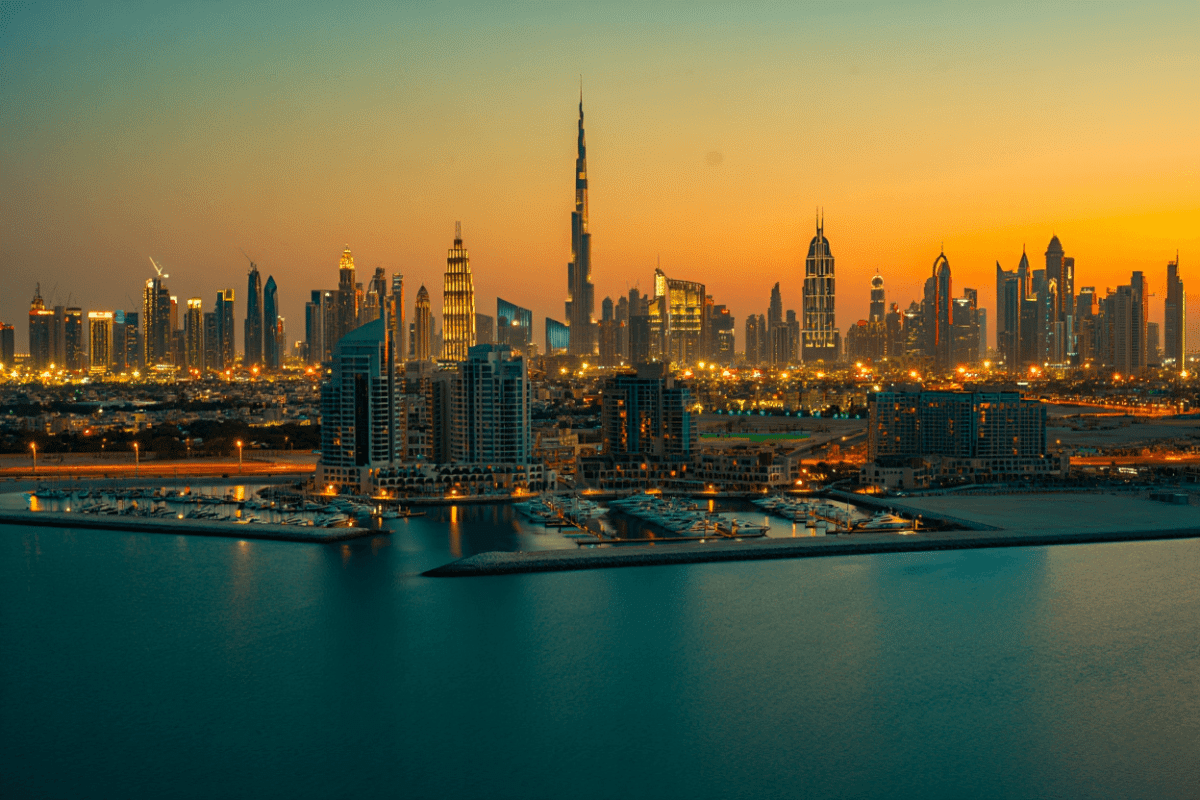
Dubai has approved a $408.4 million (AED 1.5 billion) economic incentives package featuring 33 distinct initiatives designed to reduce operating costs and stimulate growth across tourism, trade, hospitality, education, construction, and real estate sectors. The package, announced by Crown Prince Sheikh Hamdan bin Mohammed on May 21, 2026, represents the second major economic support intervention in two months, following an initial $272 million package approved in March. The initiatives span 3 to 12 months of facilitation measures, signaling Dubai’s commitment to navigating economic challenges while maintaining its position as a global business and tourism hub.
🔥 Quick Facts
- Total Package Value: AED 1.5 billion (approximately $408.4 million USD)
- Number of Initiatives: 33 distinct measures across multiple sectors
- Implementation Timeline: 3 to 12 months of facilitation relief
- Approval Date: May 21, 2026, announced by Crown Prince Sheikh Hamdan bin Mohammed
- Cumulative Support: AED 2.5 billion total when combined with the March 2026 package
Dubai’s Economic Strategy: Context and Strategic Intent
Dubai has emerged as one of the world’s most resilient city-economies, built on diversification beyond oil reserves. The latest incentive package reflects a deliberate strategy to sustain momentum in non-oil sectors, which now account for over 95% of Dubai’s GDP. The timing of this second package—just 7 weeks after the first $272 million initiative—demonstrates accelerated policy intervention, suggesting policymakers view current market conditions as requiring sustained support through mid-2026 and beyond.
Unlike generic stimulus spending, this approach targets facilitation over subsidies—allowing businesses to defer fees, reduce administrative burdens, and preserve cash flow during a period of regional economic pressure. This mechanism preserves long-term fiscal health while addressing immediate liquidity challenges for businesses across hospitality, retail, construction, and logistics sectors.
Core Initiatives: Tourism, Trade, and Hospitality Relief
The 33 initiatives concentrate on sectors that generate the highest employment and foreign exchange for Dubai. Tourism-related measures include exemptions and deferrals of municipal fees for hotels, postponement of sales tax on hotel rooms, and waiver of the Tourism Dirham levy (a per-night guest tax). These measures directly address the hospitality sector’s largest operating cost pressures, allowing 5-star and mid-range hotels to allocate capital toward maintenance, staffing, and customer experience improvements.
Trade facilitation initiatives reduce customs violations fines and lower civil penalties for commerce-related infractions, removing barriers for small and medium enterprises (SMEs) that form the backbone of Dubai’s supply chain networks. Similar to recent expansion in international travel partnerships that boost tourism corridors, these trade measures ensure Dubai remains competitive as a logistics and re-export hub connecting Asia, Africa, and Europe.
Education sector support includes fee deferrals for private schools and vocational institutes, improving affordability during an economically sensitive period. Construction sector relief involves municipal permit fee reductions and timeline extensions, enabling real estate projects to maintain schedules without acceleration costs. Real estate transactional fees are temporarily reduced, supporting property market liquidity—critical since real estate typically accounts for 20-25% of Dubai’s annual government revenues.
Sectoral Impact and Economic Multiplier Table
The following table illustrates estimated relief impact by sector, based on typical cost structures and transaction volumes in Dubai’s economy:
| Sector | Key Relief Measures | Estimated Annual Impact | Target Benefit Period |
| Hospitality & Tourism | Hotel fee deferrals, room tax exemptions, Tourism Dirham suspension | AED 450-550 million | 3-6 months |
| Trade & Commerce | Customs fine reductions, penalty waivers, SME support | AED 200-300 million | 6-9 months |
| Real Estate | Transaction fee reductions, permit cost relief | AED 250-350 million | 3-12 months |
| Construction | Municipal permit deferrals, timeline flexibility | AED 180-220 million | 6-12 months |
| Education | School fee deferrals, vocational institute support | AED 80-120 million | 3-6 months |
The cumulative relief across all sectors preserves approximately AED 1.16 to 1.54 billion in business liquidity over the implementation period—directly injecting purchasing power into local supply chains without increasing government expenditure or public debt.
“The new package includes 33 initiatives offering facilitation measures ranging from three to 12 months across key sectors including tourism, trade, education, construction, and real estate, aimed at supporting business resilience and economic stability.”
— Dubai Executive Council Announcement, Official Government Statement, May 21, 2026
Macroeconomic Implications: Sustaining Regional Growth
Dubai’s economic environment reflects broader Middle East dynamics, including regional geopolitical pressures and global trade slowdowns. The AED 2.5 billion in combined stimulus (March + May 2026 packages) represents approximately 0.3% of Dubai’s estimated annual GDP of AED 800-900 billion. While modest in percentage terms, this targeted relief preserves momentum in high-employment sectors—tourism alone accounts for roughly 11% of Dubai’s GDP and 13% of total employment.
The three-to-twelve-month timeline creates a staged relief structure, allowing policymakers to assess economic conditions quarterly and decide on extension or additional measures. This flexibility contrasts with permanent subsidy programs, reducing long-term fiscal commitments while providing immediate breathing room for affected businesses.
Historically, Dubai’s stimulus packages have demonstrated multiplier effects of 1.4 to 1.8x in broader economic activity, as businesses freed from fee burdens reinvest in hiring, maintenance, and inventory. The hospitality sector’s relief, for instance, typically generates indirect employment gains in food supply, construction, retail, and transportation sectors within 2-3 months of implementation.
What This Means for International Businesses and Investors in Dubai
For multinational corporations and foreign direct investment (FDI), this package signals policy stability and pro-business governance during uncertain times. The fee deferrals and customs relief reduce operational friction, lowering the cost of doing business in Dubai relative to regional competitors like Singapore, Bahrain, or Qatar. The package’s sector-specific targeting—rather than broad tax cuts—demonstrates technical competence in economic policy, enhancing investor confidence.
Tourism-focused incentives will likely attract hotel chains, travel operators, and event management companies looking to expand regional footprints. Construction cost relief may accelerate dormant real estate projects, creating opportunities for engineering firms, supply chain providers, and professional service companies. Trade facilitation measures benefit logistics companies, freight forwarders, and import-export SMEs that leverage Dubai’s role as the UAE’s primary trade gateway.
The announcement also signals that further stimulus is possible if economic conditions deteriorate—a reassurance that helps stabilize business planning horizons through end-2026.
Can Dubai Sustain This Pace of Stimulus, or Does Another Package Loom?
The rapid succession of stimulus packages raises a natural question: Is Dubai’s economy facing structural headwinds requiring sustained intervention? Evidence suggests a mix of cyclical and precautionary factors. Global tourism demand, particularly from European and North American markets, has moderated due to macroeconomic uncertainty. Regional logistics volumes have softened alongside slower Asian trade growth.
However, Dubai’s tourism recovery trajectory remains positive—visitor arrivals for the first quarter of 2026 reached 4.2 million, up 8% year-over-year. This modest growth, combined with seasonal summer slowdowns (May-September), explains why policymakers are front-loading relief before the traditionally weaker tourism quarters.
The question facing observers and investors is whether this represents a mid-cycle adjustment or a new baseline. If global conditions improve by autumn 2026, the stimulus may prove sufficient. If regional pressures persist, a third package in Q3 or Q4 2026 is plausible. The government’s willingness to move quickly suggests decision-making structures are agile—a competitive advantage in fast-moving markets.
Sources
- Dubai Crown Prince Official Announcement – May 21, 2026, approved by Sheikh Hamdan bin Mohammed bin Rashid Al Maktoum
- Gulf News – “13 ways Dubai’s new Dh1.5b stimulus package affects businesses, residents” (May 21, 2026)
- Khaleej Times – Coverage of Dubai Crown Prince’s second economic incentives package (May 21, 2026)
- Peninsula Qatar – Reporting on AED 1.5 billion package structure and sector-specific measures
- Fast Company Middle East – Analysis of Dubai’s $408.4 million stimulus and economic positioning
- Business Traveller Magazine – “Dubai Introduces Economic Incentives to Support Hospitality and Business Sectors” (April 3, 2026)










