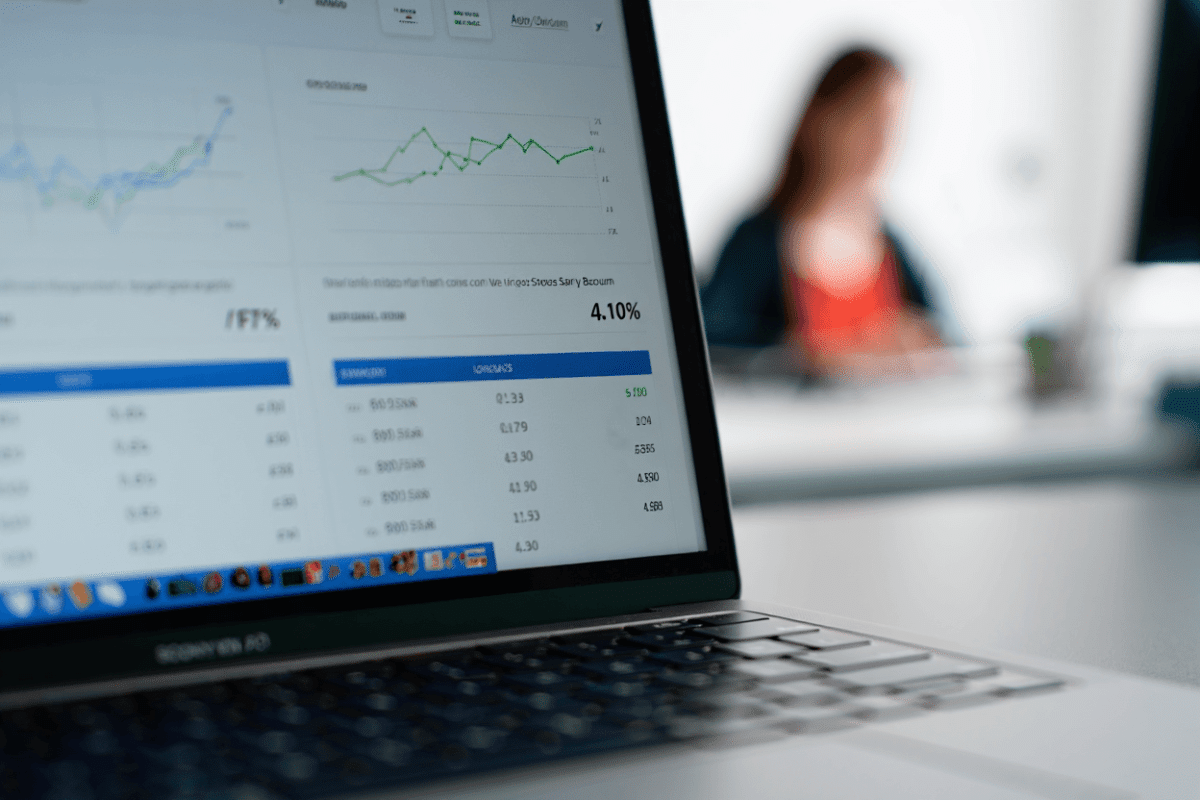
Top savings accounts are now paying 4.10% annual percentage yield (APY), far surpassing the U.S. national average of 0.38% for standard deposit accounts. This disparity—driven by competitive online banking and the Federal Reserve’s 3.50%-3.75% target range set in December 2025—creates a significant opportunity for savers to maximize earnings with zero additional risk through FDIC-insured accounts.
🔥 Quick Facts
- Top APY in May 2026: 4.10% at major online banks like CIT Bank Platinum Savings
- National average: 0.38% APY according to FDIC data as of May 2026
- Savings multiplier: Top rates are 10.78 times higher than average savings accounts
- Federal funds rate: Remains steady at 3.50%-3.75% since April 29, 2026
- Minimum deposits: Range from $0 (LendingClub) to $5,000 (CIT Bank) for best rates
Why Top Banks Are Paying More Than Ever
The gap between high-yield and standard savings accounts reflects how online banks operate. Traditional brick-and-mortar institutions like JPMorgan Chase, Bank of America, and U.S. Bank offer only 0.01% APY on savings, a legacy of their large overhead costs. Online-only lenders, by contrast, cut expenses dramatically by eliminating physical branches, allowing them to pass savings directly to depositors.
The Federal Reserve’s interest rate range—held steady since December 2025—creates a stable environment where online banks can afford competitive yields. As long as the Fed maintains rates between 3.5% and 3.75%, expect high-yield options to remain accessible across all account balance levels.
Comparing Top Providers: The 2026 Landscape
The high-yield market in May 2026 shows clear leaders. High-yield accounts continue hitting 5.00% APY as interest rates remain stable, with some specialty banks offering even higher rates on limited deposit amounts. Here’s how the major options stack up:
| Bank/Provider | APY | Minimum Deposit | Account Type |
| Varo Bank | 5.00% | $0 (first $5,000) | Online Savings |
| CIT Bank (Platinum) | 4.10% | $100 | Online Savings |
| Vio Bank | 4.03% | $100 | Online Savings |
| LendingClub | 4.00% | $0 | Online Savings |
| Traditional Banks (Chase, BofA) | 0.01% | Varies | Standard Savings |
The data reveals a stark reality: an online account with just $10,000 earning 4.10% generates $410 annually, versus only $1 per year in a traditional bank at 0.01%. Over five years, the difference compounds to $2,050 versus $5—a gap widening with every month of delay.
“The most significant trend in 2026 is how online-only institutions have forced traditional banks to compete on yield. Customers who move funds to high-yield accounts are essentially getting free money compared to their previous rates,” according to banking analysts tracking FDIC data on savings account trends.
— Banking Industry Analysis, May 2026
What a Conservative 4% APY Means for Your Money
For savers considering the move to high-yield accounts, the math is straightforward. Saving money becomes easier as tools help track interest-bearing accounts. A $50,000 emergency fund at 4.10% APY generates $2,050 in annual interest. The same balance at the national average of 0.38% produces only $190—leaving $1,860 annually on the table.
Even modest balances benefit meaningfully. A $5,000 savings buffer earns approximately $205 per year at top rates versus just $19 at average rates. Monthly, that’s the difference between $17 in free earnings and $1.58—small individually, but compounded across millions of savers, it represents billions in wealth transfer away from traditional institutions.
Why Rates Stabilized at This Level
The Federal Reserve’s decision to hold rates steady at 3.50%-3.75% since April 29, 2026 created predictability in the savings market. When the Fed maintains a stable target range, online banks can lock in profitable deposit rates without fear of sudden margin compression. This environment has persisted for several months, suggesting rates will remain competitive through mid-2026.
Historical context matters here: in early 2023, when high-yield savings accounts were rare, the Fed began raising rates to combat inflation. By 2025, competitive pressure forced online banks to offer 4%+ yields. Now in 2026, with inflation moderating and the Fed pausing rate increases, the 4%+ tier appears to be the new baseline for accounts without special conditions or balance limits.
What Should You Do With This Information?
The central question facing savers is simple—but the answer depends on your timeline and goals. If you maintain an emergency fund or money allocated for a purchase within the next 1-3 years, moving those dollars to a high-yield account is a no-risk decision. All major online banks listed above are FDIC-insured up to $250,000, providing the same federal protection as traditional banks.
For savers with longer time horizons (5+ years), certificates of deposit (CDs) may offer slightly better returns, though rates have not kept pace with savings account yields. The tradeoff: CDs lock your money for fixed terms, while savings accounts offer full liquidity. In an environment where rates remain stable but unpredictable over years, flexibility often outweighs marginal yield gains.
Sources
- Bankrate – Best High-Yield Savings Accounts Of May 2026 (rates compiled May 23)
- Investopedia – High-yield savings account rates and provider comparisons
- Federal Reserve – H.15 Selected Interest Rates (May 22, 2026)
- FDIC – National Rates and Rate Caps; St. Louis Fed FRED database (May 2026)
- Forbes Advisor – Best high-yield savings accounts 2026 comparison
- Wall Street Journal – High-yield savings account analysis (current rates vs. national average)