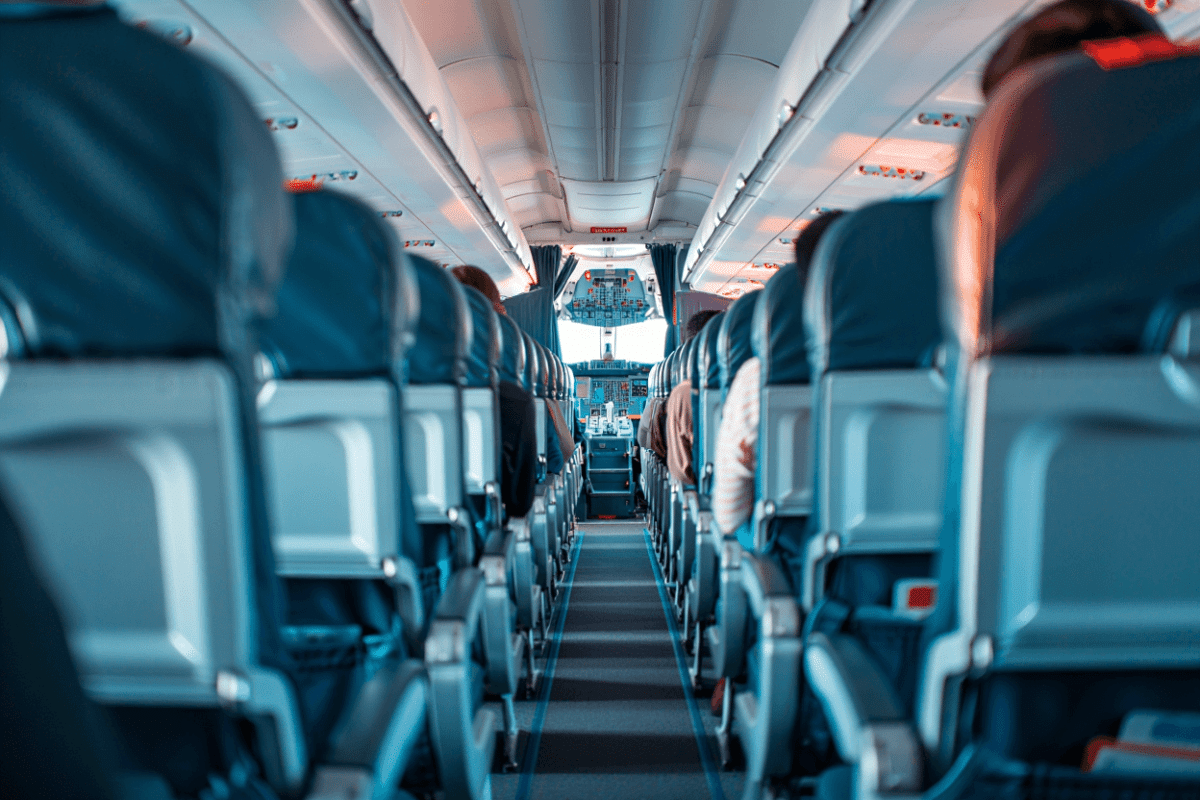
Spirit Airlines ceases operations after a second bankruptcy filing in less than a year, while Magnicharters in Mexico and Joy Air in China enter restructuring proceedings. The triple crisis exposes vulnerabilities in budget airline models as jet fuel prices surge to $4.51 per gallon—double the 2026 projections that airlines built their financial plans around.
🔥 Quick Facts
- Spirit Airlines shut down operations on May 2, 2026, after failing to execute a restructuring plan
- $217 million is budgeted for Spirit’s liquidation, with 150 employees retained during shutdown
- Jet fuel costs reached $4.51 per gallon, nearly 2x the $2.24 projected cost in Spirit’s restructuring plan
- Magnicharters (Mexico) and Joy Air (China) file for bankruptcy protection in May 2026 amid fuel cost surge
- Ryanair CEO warns that weaker European carriers face elimination without fuel hedging and cost controls
The Collapse of Three Low-Cost Airlines in May 2026
Spirit Airlines, once a poster child for the ultra-low-cost carrier (ULCC) model, became the bellwether of industry distress. Filed for bankruptcy on August 2025 as its second filing in less than a year, the airline operated through 2026 with hopes of restructuring. But when Spirit ceased operations after 34 years, it signaled a systemic breakdown in the budget airline playbook.
Magnicharters, Mexico’s low-cost regional carrier, filed for bankruptcy protection on May 19, 2026. The airline had canceled all flights until May, abandoning thousands of passengers stranded across Mexico’s domestic routes. Joy Air, a Chinese regional carrier based in Xian carrying a reported $734.9 million debt, entered formal restructuring proceedings on May 22, 2026, after a year-long grounding.
Fuel Price Shock Breaks the Budget Airline Model
The convergence of three bankruptcies reflects a single underlying crisis: jet fuel costs exploded beyond what ultra-low-cost carriers can absorb. Spirit’s restructuring plan, developed in August 2025, assumed fuel would cost $2.24 per gallon in 2026 and drop to $2.14 in 2027. Instead, prices climbed to $4.51 per gallon by late April—a 101% increase from projections.
The root cause: geopolitical tension in the Middle East disrupted global oil supplies and created spot-market premiums. Fuel comprises 25-35% of operating costs for low-cost carriers, meaning a doubling of fuel prices directly eliminates profit margins that already operate at 3-5% net margins. Traditional full-service airlines like Ryanair hedged 80% of fuel at $668 per metric ton, but carriers like Spirit had less hedging protection.
Spirit Airlines: A 34-Year Decline and Liquidation Reality
Spirit Airlines filed its first bankruptcy in May 2024 following failed merger negotiations with Frontier Airlines. The airline emerged from Chapter 11 in early 2025 with restructured debt and a refinancing deal. However, fuel costs and weakened domestic demand for ultra-low-cost travel made the recovery plan untenable by April 2026.
On May 2, 2026 at 3:00 AM, Spirit announced an “orderly wind-down,” canceling all flights immediately. Stranded passengers faced rebooking chaos. The airline’s liquidation budget totaled $217 million: $52 million for employee severance through July, $52 million for facility costs, and the remainder for aircraft parking, legal fees, and administrative wind-down. The company retained approximately 150 employees to manage the process, reducing to 40 by August.
A grassroots campaign to crowdfund Spirit’s rescue, launched by enthusiasts, drew $132 million in nonbinding pledges from 156,000 supporters by May 10—but failed to meet the $400-600 million needed for operational revival.
Comparative Bankruptcy Data Across Three Carriers
The scale of the crisis becomes clear when examining the three bankruptcies side by side. Each airline faced identical headwinds—fuel inflation, market saturation, and structural margin collapse—but with different regional impacts:
| Carrier | Country | Bankruptcy Filed | Debt / Loss | Fleet Size |
| Spirit Airlines | USA | May 2, 2026 (2nd filing) | TBA | ~60 Airbus A320s |
| Magnicharters | Mexico | May 19, 2026 | TBA | ~25 aircraft |
| Joy Air | China | May 22, 2026 (restructuring) | $734.9M | ~50 aircraft |
The data reveals a universal vulnerability: mid-sized ultra-low-cost carriers operating narrow-body jets (like the Airbus A320) lack pricing power when fuel costs spike. Unlike Southwest Airlines or Delta, which can absorb fuel volatility through network diversity and premium cabin revenue, ULCC models depend on sustaining fare compression—keeping fares below competitors while minimizing operating costs. When that equation breaks, bankruptcy follows.
“Weaker European carriers do not have hedges and are not putting planes in the ground. Some of them are insolvent and, you know, there will be more airline failures in North Africa, the Middle East, and in other regions, unless the fuel price issue eases. It’s that serious.”
— Ryanair CFO, on airline industry fuel crisis, May 18, 2026
Industry Implications: Is the ULCC Model Broken?
The simultaneous bankruptcy of three budget carriers raises a fundamental question: has the ultra-low-cost carrier business model become structurally unviable? Unit costs for ULCCs have risen 15-20% annually due to wage inflation, maintenance costs, and regulatory compliance, while fare pressures have compressed revenue-per-seat by 10-15%. Before the fuel crisis, margins were already razor-thin.
Industry analysts now separate surviving carriers into two categories: hedged carriers (like Ryanair, EasyJet) with fuel contracts locked in at pre-crisis rates, and unhedged or under-hedged carriers facing insolvency. Spirit belonged to the latter group. Frontier Airlines, by contrast, hedged fuel strategically and maintains profitability despite May 2026 challenges.
Major carriers are responding by cutting capacity. American Airlines, Delta, and Southwest all announced domestic flight reductions in April-May 2026 to avoid a race-to-the-bottom on pricing. The implications cascade: fewer flights increase load factors, pushing fares higher, which harms leisure travelers and validates the ULCC value proposition—except when ULCCs can’t offer that value due to fuel costs.
What’s Next: Consolidation or Mass Failure?
The May 2026 bankruptcies will likely trigger a consolidation wave. Viable low-cost carriers will acquire distressed assets at bankruptcy auctions. Spirit’s fleet of 60 A320s will enter the leasing market, temporarily increasing aircraft supply and reducing lease rates—but fewer airlines to rent them. Smaller global carriers in Southeast Asia, India, and Latin America may acquire Spirit’s used aircraft at depressed prices, reviving their fleets at reduced capital costs.
The broader question is whether governments intervene. Spirit sought a federal bailout in April 2026 but was rebuffed. Magnicharters attempted Mexican state support; Joy Air negotiated with Chinese provincial authorities. The absence of rescue packages signals market discipline: if ULCCs cannot survive normal market conditions, they should exit.
However, the global economy remains interconnected. Joy Air’s shutdown affects 1000+ regional flights in China. Magnicharters’ collapse removes a major carrier from Mexican leisure routes. Spirit’s closure tightens domestic US capacity and benefits larger rivals—but raises fares for price-sensitive leisure travelers.
Could These Bankruptcies Have Been Predicted or Prevented?
In hindsight, the three bankruptcies were predictable. Ryanair CEO Michael O’Leary publicly warned in April 2026 that weaker peers lacked fuel hedges. Moody’s and S&P downgraded Spirit‘s credit outlook in January 2026, citing fuel risk exposure. Magnicharters had been operating losses since 2023. Joy Air had been bankrupt once before in 2023.
The real question: why hadn’t these carriers hedged fuel? The answer combines hubris and financial constraints. Spirit’s creditors—holdout hedge funds seeking returns after the 2024 bankruptcy—resisted major hedging expenditures that would have reduced near-term cash flow. Magnicharters and Joy Air lacked access to capital to fund hedging instruments. The structural problem: small carriers can’t afford the leverage that hedging requires.
Sources
- CNBC – “Spirit Airlines starts dismantling company after collapse,” May 5, 2026
- Reuters – “Spirit Airlines stops flying, liquidation begins,” May 4, 2026
- The Street – “Another airline files for bankruptcy protection,” May 22, 2026
- Business Insider – “Ryanair CFO warns more airlines could go bankrupt,” May 18, 2026
- Fortune – “Ryanair has ‘armageddon’ fuel plan for airlines,” May 18, 2026
- Fortune – “Jet fuel crisis propels Spirit Airlines toward liquidation,” May 2, 2026