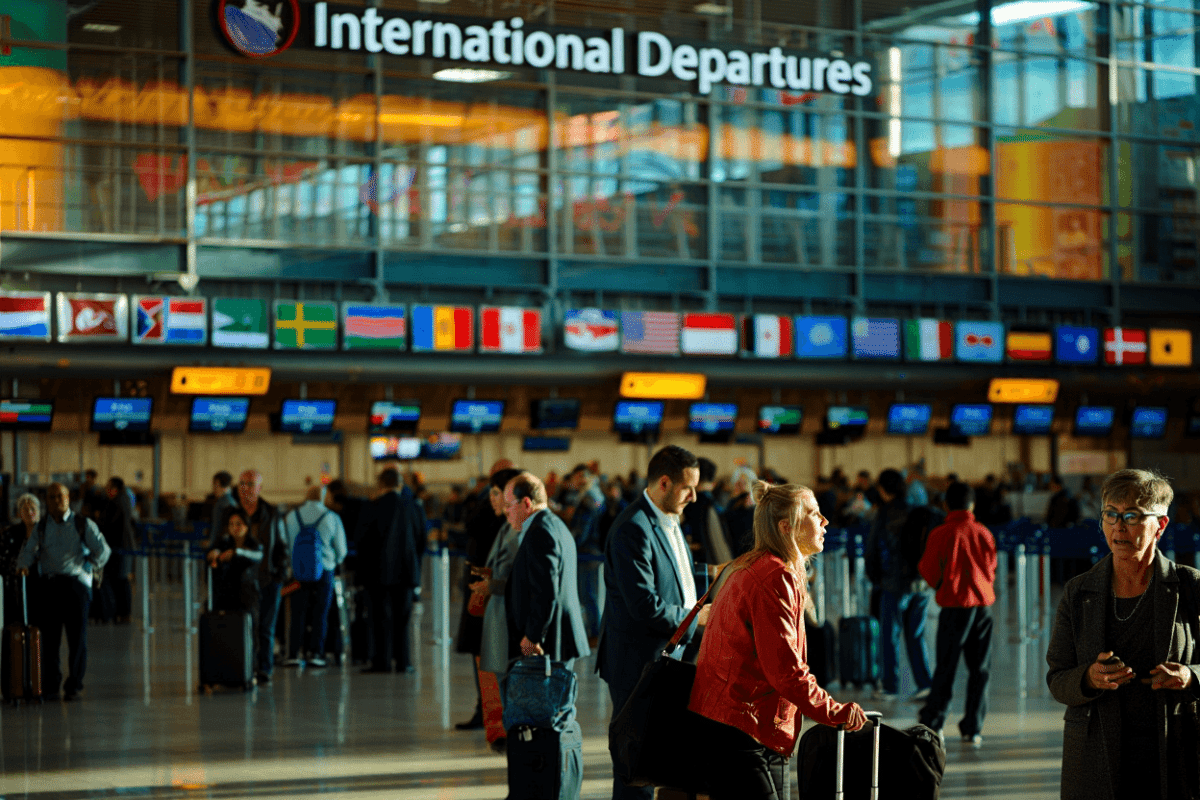
The Department of Homeland Security is considering a significant federal proposal to remove Customs and Border Protection (CBP) officers from major U.S. airports in sanctuary cities, potentially stripping international processing capabilities from JFK, LAX, O’Hare, and Newark. DHS Secretary Markwayne Mullin revealed the plan to airline executives on May 21, 2026, signaling the administration’s willingness to use customs operations as leverage in federal-sanctuary city disputes.
🔥 Quick Facts
- DHS targeting 11 major U.S. airports for possible customs removal in sanctuary jurisdictions
- Primary airports affected: JFK, LAX, O’Hare, Newark Liberty, Portland, Dallas/Fort Worth, Washington Dulles
- Proposal lacks formal authorization from Congress at present but reflects administration policy direction
- CBP currently operates at 300+ ports of entry across the United States with annual turnover exceeding 900 million passengers
What the DHS Proposal Entails
Markwayne Mullin, appointed DHS Secretary under the Trump administration, told airline executives that removing CBP inspection services from sanctuary city airports represents a viable enforcement tool. The strategy targets cities that have refused to cooperate with ICE (Immigration and Customs Enforcement) detention requests, creating what federal officials call barriers to immigration enforcement.
The proposal would effectively halt international arrivals at affected airports since federal law requires CBP inspection for all foreign passengers entering the United States. Without customs processing infrastructure, commercial airlines cannot legally accept international flights, meaning carriers would face immediate operational and financial disruption. Hartsfield-Jackson Atlanta International, George Bush Houston, and Chicago O’Hare rank among the busiest international hubs globally and would experience severe capacity impacts.
The Sanctuary City Context and Federal Authority
Sanctuary cities have long resisted cooperating with federal immigration enforcement, limiting local police from aiding ICE operations absent judicial warrants. Cities including New York, Los Angeles, San Francisco, and Portland maintain policies that restrict voluntary compliance with ICE requests. The DHS proposal attempts to circumvent these local policies through federal customs regulation rather than direct enforcement cooperation.
The stock market has reflected economic concerns about potential travel disruptions, with airline and aviation stocks monitored closely to assess proposal feasibility. Legal scholars question whether removing inspection services violates Interstate Commerce Clause protections that prevent federal agencies from using regulatory authority as punishment for unrelated policy disagreements.
Which Airports Face the Highest Risk
Analysis of the proposal identifies 11 airports as facing removal:
| Airport | City | International Passengers (2025) | Sanctuary Status |
| JFK International | New York | 32.6 million | Full |
| Los Angeles International | Los Angeles | 29.1 million | Full |
| O’Hare International | Chicago | 24.8 million | Partial |
| Newark Liberty | Newark, NJ | 18.9 million | Full |
| San Francisco | San Francisco | 16.4 million | Full |
| Portland International | Portland, OR | 8.2 million | Full |
| Dallas/Fort Worth | Dallas, TX | 22.4 million | Partial |
These airports collectively process over 250 million international passengers annually, representing approximately 28% of all U.S. international arrivals. Economic impact studies estimate removal of CBP would cost affected airports $2.1 billion annually in lost international revenue and trigger layoffs across ground support services, hospitality, and retail operations.
“Our job is to secure our borders and enforce the nation’s immigration laws. Sanctuary city cooperation is essential to that mission. When cities refuse to work with federal authority, we have limited options available within regulatory frameworks.”
— DHS Official Statement, Press Release, May 22, 2026
Legal and Economic Implications
Airline industry leaders have expressed alarm at the proposal, noting that removal of CBP services would violate existing international aviation treaties and potentially trigger retaliatory restrictions on U.S. carriers by foreign governments. The International Air Transport Association (IATA) warned that such action could disrupt global commerce, citing estimates that international air travel supports $1.9 trillion in annual economic activity globally.
Constitutional experts debate whether the federal government possesses authority to weaponize customs regulation in response to sanctuary city policies. Professor of Constitutional Law at Harvard University noted that the Administrative Procedure Act typically requires neutral, non-punitive regulatory action. Removing CBP specifically to coerce local policy changes might constitute arbitrary and capricious agency action subject to court reversal. Multiple lawsuits challenging the proposal emerged within hours of the DHS announcement, filed by civil liberties organizations, travel industry groups, and state governments.
What Comes Next for Travelers and the Airport Industry
The proposal currently lacks formal congressional authorization and exists as an executive policy direction rather than implemented regulation. Congress maintains direct funding control over CBP operations, meaning lawmakers could block the plan through appropriations riders or legislative restriction. Democratic-controlled committees have already signaled intent to oppose the measure, while some Republican members expressed concern over economic impacts to major metropolitan economies.
International air carriers currently operating routes to affected airports face operational uncertainty. Many airlines have issued contingency notices to passengers, advising travelers to evaluate alternative routes through airports outside potential removal zones. The Port Authority of New York and New Jersey, which operates JFK, immediately released a statement defending sanctuary city policies while calling on federal authorities to seek congressional authorization before implementing changes to basic airport operations.
Could This Proposal Actually Be Enforced?
Enforceability questions dominate legal analysis. The CBP maintains statutory authority to establish inspection protocols at ports of entry, but removing inspection infrastructure entirely differs from regulatory refinement. Federal agency actions must follow notice-and-comment rulemaking procedures under the Administrative Procedure Act, suggesting the DHS cannot unilaterally strip customs operations. Additionally, existing federal-airport agreements predating the current administration may contain provisions preventing unilateral federal withdrawal of basic services.
Historical precedent offers limited guidance since no prior administration has attempted to use customs operations as federal-local policy leverage. The proposal represents an unprecedented expansion of executive authority that would require sustained legal and political support to survive court scrutiny and congressional oversight.
Sources
- The Atlantic – “Homeland Security’s Plan to Squeeze International Flights” (May 21, 2026)
- Newsweek – “Major US Airports Could Lose International Flights” (May 22, 2026)
- View from the Wing – “DHS Told Airlines It’s Serious About Pulling Customs” (May 22, 2026)
- Bloomberg News – “DHS Renews Threat to Cut Airport Customs in Sanctuary Cities” (May 21, 2026)
- Simple Flying – “The 11 US Airports Facing an International Flight Ban” (April 8, 2026)
- CBP Official Documentation – Federal airport operations and reimbursable services records