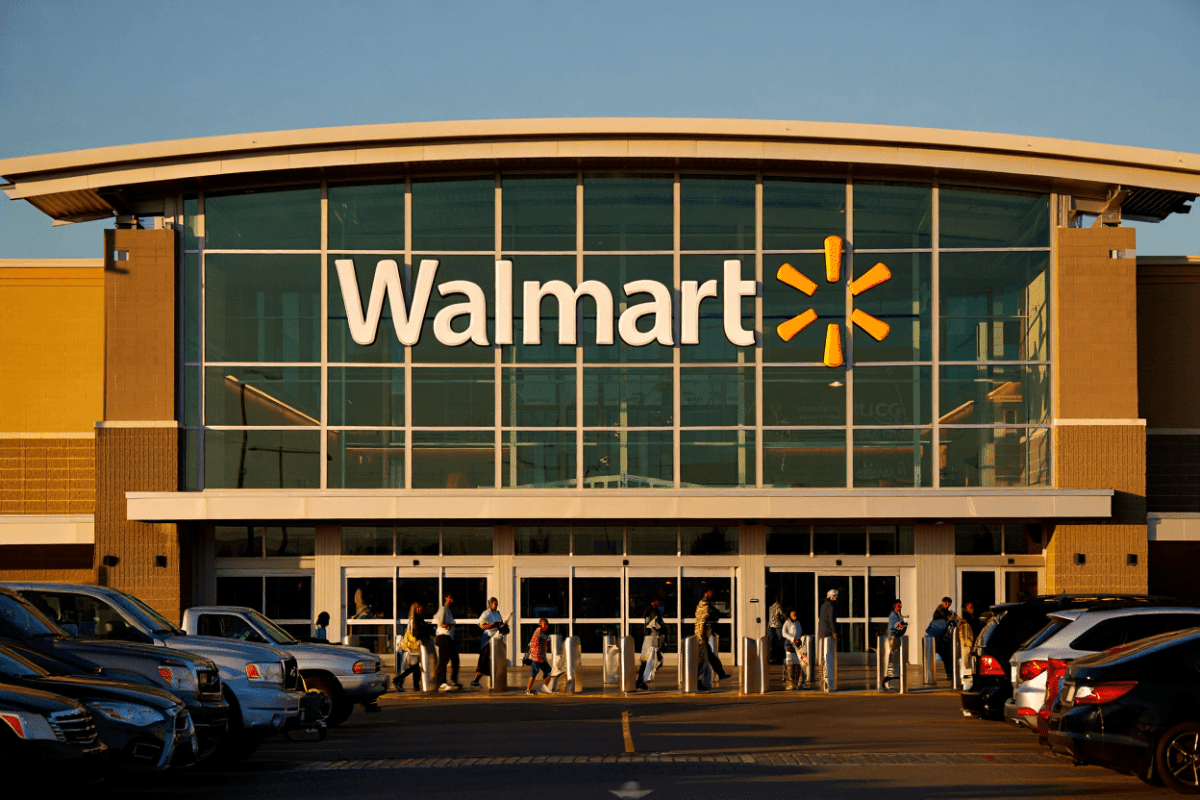
Walmart set to report Q1 2026 (fiscal 2027) earnings this morning at 7:00 AM CST, with stock up 19% year-to-date and investor expectations centered on continued strength in ecommerce and advertising revenue. Analysts project earnings per share of $0.65 to $0.66 and revenue growth of 5.3% to approximately $174.4 billion, building on momentum from 24% global ecommerce growth and a 37% surge in advertising revenue.
🔥 Quick Facts
- Walmart stock up 19% in 2026 compared to S&P 500’s more modest gains
- Global ecommerce sales surged 24% year-over-year, with Walmart’s digital penetration expanding across segments
- Advertising business grew 37% in Q4, becoming an increasingly high-margin profit driver
- Conference call begins 7:00 AM Central Time with CEO John Furner and CFO John David Rainey
Retail’s Digital Transformation: The Story Behind Walmart’s Stock Rally
Walmart stock’s 19% gain year-to-date reflects a fundamental shift in how analysts value the retail giant. Unlike traditional brick-and-mortar retailers facing traffic declines, Walmart has successfully bridged online and offline commerce, creating what executives call an “omnichannel” operation. This integrated approach allows the company to leverage its 4,700+ U.S. stores as fulfillment centers, enabling same-day and next-day delivery to customers.
The 2026 fiscal year marked a turning point for Walmart’s digital strategy. U.S. ecommerce achieved profitability for the first time in Q1 of last year, a milestone that surprised investors. Since then, the company has accelerated investments in automation, inventory management software, and marketplace capabilities. Total ecommerce sales exceeded $150 billion annually, a significant jump from prior years, positioning Walmart among the top three ecommerce players despite facing competition from Amazon’s massive $1+ trillion annual revenue base.
Dissecting the Earnings Forecast: Where Analyst Expectations Sit
Consensus earnings estimates of $0.65 to $0.66 per share represent a complex picture. Some analysts expect Walmart to beat on earnings but potentially miss on revenue guidance, citing consumer spending patterns shifting toward discretionary items in a mid-2026 economic environment. Others predict straightforward beats across both metrics. The key variable is comparable store sales growth—a metric that shows how existing stores are performing versus the prior year.
One critical nuance: Walmart’s fiscal year ends January 31st, so this Q1 2027 report covers the period February–April 2026, including Easter seasonal shopping. Easter timing varies yearly, so comparisons to year-ago figures require careful context. Analysts expect comps to range from 3.0% to 3.5% for Walmart U.S. and similar strength at Sam’s Club membership warehouse division.
The Advertising and Membership Revenue Surge: A Margin Transformation
Perhaps the most important story in today’s earnings report isn’t revenue—it’s profit margin expansion. Walmart’s advertising business grew 46% in fiscal 2026, reaching approximately $6.4 billion globally. This high-margin business (advertising typically carries gross margins above 80%) is reshaping Walmart’s overall profit profile. Q4 2026 advertising revenue specifically jumped 37%, accelerating from earlier quarters.
| Business Segment | FY2026 Performance | Growth Rate |
| Global Advertising Revenue | $6.4 Billion | +46% YoY |
| Global eCommerce Sales | $150+ Billion | +24% YoY |
| Membership Fee Revenue | TBA | +17.4% Globally |
| Walmart U.S. Advertising | Portion of $6.4B | +36% in Q4 |
| Expected Q1 Revenue Guidance | $174.4 Billion | +5.3% YoY |
Membership programs have also accelerated, with Walmart+ growing subscriber base steadily. Membership fee revenue jumped 17.4% globally last year, contributing predictable, recurring income streams. These high-margin businesses are critical because they reduce Walmart’s dependence on thin-margin merchandise sales, historically a structural challenge for traditional retailers.
“Our business momentum is undeniable. The combination of strong comparable sales, ecommerce growth, and our advertising and membership businesses creating higher-margin revenue streams is transforming how investors think about Walmart as a company.”
— John Furner, CEO, Walmart Inc. (CEO commentary, February 2026 earnings call)
What Analysts Are Watching: Three Key Metrics Today
First, comparable store sales—will Walmart U.S. maintain above 3% growth in a moderating consumer environment? Some economists worry about consumer spending cooling in mid-2026 as low-income households exhaust pandemic savings. Walmart’s value positioning should shield it from the worst downturns, but the number investors watch most is traffic growth (number of customers) versus basket size (how much each customer spends).
Second, guidance revision—management typically issues updated full-year earnings and sales guidance during earnings. Investors are curious whether Walmart will raise or maintain existing targets, signaling confidence in continued momentum. As noted, some analysts expect caution on Q1 revenue guidance despite strong underlying trends.
Third, advertising and segment commentary—will CEO John Furner provide color on how the advertising marketplace is evolving? Can Walmart continue 30%+ growth rates without cannibalizing merchant relationships? How does Walmart’s marketplace (where third-party sellers offer products) scale profitably?
The Stock Price Question: Room for Upside or Already Priced In?
Walmart stock at $134.20 (as of May 19, 2026) near a 52-week high of $135.16 suggests investors have already bet heavily on success. Valuation metrics show P/E ratio around 47, which is elevated by historical standards for Walmart (known as a defensive, dividend-focused play). This raises the question: has the market already priced in the advertising and ecommerce acceleration? Will today’s earnings deliver surprises, or have expectations converged with reality?
Previous earnings surprises provide context. When Walmart reported Q4 2026 results in February, the stock initially fell despite beating expectations because forward guidance disappointed relative to street expectations. Today’s earnings could follow a similar pattern—strong results, but cautious near-term outlook. Conversely, if management signals accelerating momentum, upside breakout beyond $135 is possible.
What Happens After 8:00 AM Eastern Time?
The earnings release typically drops at 6:30 AM Central Time (7:30 AM Eastern), followed by a call at 8:00 AM Eastern with analyst Q&A. Investors digesting the numbers have limited time to trade before U.S. stock market opens at 9:30 AM Eastern. Walmart stock could see 2-4% daily swings based on surprise magnitude. Downstream, the earnings could influence how other retail stocks trade, as Walmart is seen as a bellwether for consumer health and retail innovation.
Related earnings dynamics: insights from prior Walmart earnings reactions show that guidance misses tend to weigh more heavily than modest revenue beats. Additionally, strong earnings across tech and growth sectors today could shift investor focus away from retail, limiting Walmart’s upside.
Will Walmart’s Margin Transformation Justify the Stock’s 19% Run?
Ultimately, today’s results will tell if Walmart’s transition from merchandise retailer to tech-enabled, advertising-powered platform is sustainable. The company operates 2.1 million associates globally and wields enormous influence over supplier relationships and consumer behavior. If the advertising and membership businesses can deliver consistent double-digit or higher growth rates while traditional retail holds steady, Walmart’s valuation premium vs. historical norms becomes justified.
For long-term shareholders, today’s earnings report is less about the headline numbers and more about whether management conveys conviction in the omnichannel, high-margin services strategy. A beaten-down near-term outlook paired with long-term optimism could pressure the stock today but position it for outperformance in coming quarters.
Sources
- Walmart Investor Relations – Q1 FY2027 earnings call announcement and guidance data
- SEC EDGAR (10-K, 8-K filings) – Historical revenue, profit, and segment performance metrics
- Zacks Investment Research – Analyst consensus earnings and revenue estimates
- MarketWatch, Yahoo Finance – Real-time stock price and historical trading data
- Bloomberg, Reuters – Advertising revenue growth and ecommerce penetration analysis