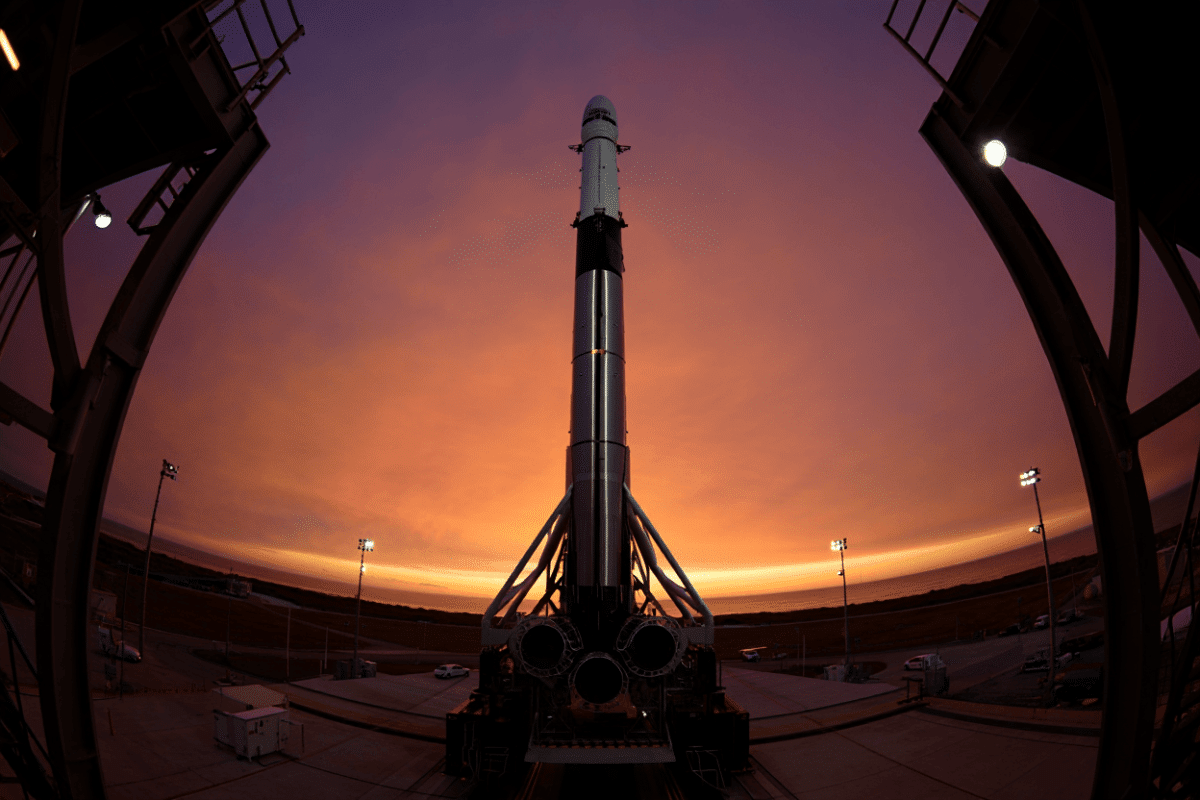
SpaceX has filed its public offering statement with the U.S. Securities and Exchange Commission, marking a historic moment for the aerospace industry. The company targets a $1.75 trillion valuation with a planned $75 billion capital raise, which would set the all-time record for IPO fundraising. Nasdaq listing is scheduled for June 12, 2026, following pricing on June 11. This filing opens a critical window into SpaceX’s financial performance and strategic roadmap.
🔥 Quick Facts
- Filing Date: May 20, 2026 (public registration statement)
- Target Valuation: $1.75 trillion, ranking SpaceX as the 7th most valuable publicly traded company globally
- Capital Raise Goal: $75 billion, surpassing Saudi Aramco’s previous IPO record of $29.4 billion
- Pricing Timeline: June 11, 2026; trading begins June 12, 2026 on Nasdaq
- 2025 financials: $15-$16 billion revenue, approximately $8 billion EBITDA
The Record-Breaking IPO in Context
SpaceX’s IPO represents the single largest capital raise in public market history. At $75 billion, the offering more than doubles the previous record set by Saudi Aramco in December 2019 at $29.4 billion. This magnitude reflects investor appetite for high-growth technology and aerospace exposure, particularly following SpaceX’s recent operational milestones with its Starlink satellite constellation and Falcon 9 launch dominance.
The $1.75 trillion valuation positions SpaceX ahead of major established technology firms. For context, this exceeds Tesla’s current market cap and approaches valuations of mature mega-cap companies like Apple and Saudi Aramco. The valuation reflects investor confidence in SpaceX’s revenue diversification and long-term growth potential, primarily driven by Starlink’s broadband ambitions and commercial launch services.
Financial Metrics and Business Performance
The SEC filing discloses that SpaceX generated approximately $15-16 billion in revenue during 2025, representing substantial growth from prior years. EBITDA (earnings before interest, taxes, depreciation, and amortization) reached approximately $8 billion, reflecting strong operational profitability despite the capital-intensive nature of aerospace manufacturing. These figures underscore SpaceX’s transition from a loss-making startup to a mature, cash-generative enterprise.
Starlink accounts for the majority of revenue growth, with estimates suggesting Starlink contributed $12.8 billion of the estimated $18.2 billion in 2025 revenue. Commercial launch services continue to diversify revenue, with contracts from government agencies, commercial satellite operators, and national space programs. The profitability metrics demonstrate SpaceX’s ability to fund capital-intensive programs like Starship development while maintaining strong returns.
| Metric | 2024 (Estimated) | 2025 (Reported) | 2026 (Projected) |
| Total Revenue | $13.1B | $15-16B | ~$25B |
| EBITDA | TBA | ~$8B | TBA |
| Starlink Revenue (est.) | ~$10B | ~$12.8B | ~$15B+ |
| Cash on Hand | TBA | ~$3B | TBA |
| Valuation (IPO Target) | N/A | $1.75T | Market-dependent |
The 43% year-over-year revenue growth from 2024 to 2025 demonstrates SpaceX’s scaling trajectory. Analysts project 2026 revenue could reach approximately $25 billion, assuming continued Starlink subscriber growth and sustained commercial launch demand. This growth profile justifies the premium valuation multiple investors are pricing into the IPO.
“SpaceX said in the filing that it expects Starship to begin payload delivery to orbit in the second half of 2026, leaving little room for error.”
— TechCrunch, May 20, 2026, citing SpaceX SEC filing
Starship Ambitions and Development Timeline
The SEC filing explicitly states that SpaceX expects Starship to begin commercial payload delivery to orbit in the second half of 2026. This represents a compressed timeline with minimal margin for test failures. Starship’s success is critical to SpaceX’s long-term value proposition, as it promises to dramatically reduce launch costs and enable ambitious missions including lunar supply runs and eventual Mars transportation.
The Starship program represents the company’s signature bet on fully reusable super-heavy launch vehicles. If realized, Starship would deliver an estimated 150-ton payload capacity to low-Earth orbit and become the highest-capacity launch vehicle in operation. The development risks are substantial—the transition from test flights to operational payload missions requires flawless execution in components, systems integration, and operational procedures.
Success with Starship payload delivery could unlock additional revenue streams and strengthen SpaceX’s competitive moat. Competitive alternatives remain distant, with Blue Origin’s New Glenn and international heavy-lift initiatives still in development. First-mover advantage in reusable super-heavy launch capability would position SpaceX as the dominant supplier for decades.
IPO Pricing Dynamics and Investor Implications
The $1.75 trillion valuation implies a Price-to-Sales multiple of approximately 109x-116x based on 2025 revenue—extraordinarily high relative to mature software companies, which typically trade at 8x-15x sales. However, high-growth aerospace and space infrastructure companies command premium multiples. SpaceX’s 43% growth rate and path to profitability support elevated valuation expectations among institutional investors.
The June 11 pricing and June 12 trading timeline follows SEC review of SpaceX’s registration statement. Underwriting syndicates will engage in roadshows beginning the week of June 4, meeting with institutional investors to build demand. The $75 billion raise will likely fund Starship production acceleration, Starlink expansion into underserved markets, and general corporate purposes.
Retail investor access will depend on broker policies and market conditions. Major brokers have indicated plans to support trading from day one, though fractional share availability and trading volume constraints may affect execution for smaller investors.
What This IPO Means for the Space Industry
SpaceX’s public listing signals maturation of the space industry as an investment asset class. The $1.75 trillion valuation legitimizes commercial spaceflight as central to global infrastructure—comparable to established sectors like telecommunications and transportation. Investor capital now flows to space-related opportunities, benefiting suppliers, competitors, and satellite operators in SpaceX’s ecosystem.
The IPO may pressure competitors to accelerate timelines and production. Blue Origin, Axiom Space, and Relativity Space will face investor comparisons and may pursue capital raises or public exits to compete for talent and resources. The space sector’s transition from niche aerospace to core investment portfolio category accelerates due to SpaceX’s scale and performance.
Government relationships remain critical. NASA contracts for lunar missions, U.S. Space Force missions, and Department of Defense payload delivery underpin SpaceX’s revenue stability and justify significant government support for the company’s development programs.
Will SpaceX’s IPO Valuation Hold?
The $1.75 trillion valuation depends entirely on execution—both near-term (Starship payload delivery in H2 2026) and long-term (Starlink profitability, Mars ambitions, and sustained launch dominance). Market conditions at pricing will determine whether SpaceX achieves this target or negotiates downward. Technology sector volatility, macro interest rate environments, and geopolitical factors could influence final pricing by ±20-30% from current guidance.
Historical precedent suggests first-day trading could produce significant volatility. Saudi Aramco’s 2019 IPO traded relatively flat post-listing, while recent mega-cap tech IPOs have shown both appreciation and depreciation depending on market sentiment. SpaceX’s insider lock-up provisions (typical 180 days post-IPO) will affect long-term price stability.