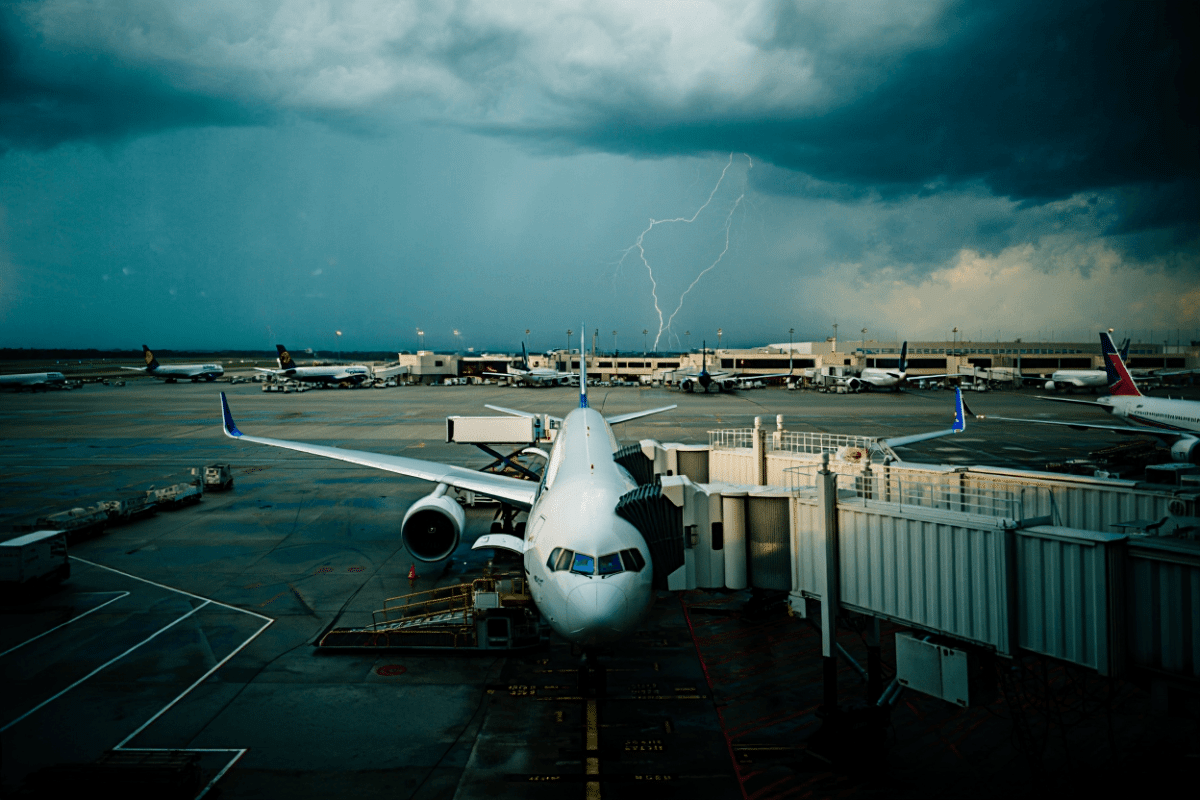
The Federal Aviation Administration issued a ground stop at Dallas Fort Worth International Airport on Tuesday, May 19, 2026, halting all departures due to severe thunderstorms sweeping across North Texas. The decision led to over 300 flight cancellations and cascading delays across the nation’s air network, affecting thousands of passengers and disrupting connections throughout the United States.
🔥 Quick Facts
- Over 300 flights canceled at DFW International Airport on May 19, 2026
- FAA ground stop issued until at least 2 p.m. CDT to manage severe thunderstorm activity
- Average departure delays reached 45 minutes as weather conditions prevented safe operations
- Dallas Love Field also affected with 55 cancellations and 90 delays recorded
- Large hail and damaging winds threatened the Dallas-Fort Worth metropolitan area
Understanding Ground Stops: How the FAA Manages Storm Disruptions
A ground stop is a critical air traffic control procedure that requires all aircraft destined for a specific airport to remain on the ground. The FAA implements ground stops when air traffic control cannot safely accommodate additional arrivals or departures due to weather, airport capacity, or other safety concerns. Unlike simple delays, ground stops create a complete halt in departures, preventing aircraft from leaving their origin airports until conditions improve or the FAA lifts the directive.
On Tuesday morning, wind shear alerts and hail risk forced air traffic managers to impose the ground stop at DFW Airport. Wind shear—a sudden change in wind speed and direction—poses a particular hazard during takeoff and landing phases when aircraft operate at lower altitudes with limited maneuvering room. The combination of thunderstorms producing microbursts and severe wind gusts near the airport made operations too dangerous to continue.
The Cascade Effect: Why One Hub’s Problem Becomes National Chaos
Dallas Fort Worth International Airport serves as the primary hub for American Airlines, one of the world’s largest carriers. The airport ranked among America’s busiest in 2026, handling hundreds of daily departures connecting passengers to destinations across the globe. When operations halt at DFW, the disruption ripples instantly through the entire air network.
An aircraft scheduled to depart from Los Angeles or Atlanta bound for a connection in Dallas suddenly cannot land as planned. That aircraft then needs reassignment to another flight, creating a shortage of planes for later departures. Crews become mispositioned. Passengers miss onward connections. Airlines must make difficult decisions: cancel flights preemptively or risk stranding passengers overnight in unexpected cities. By 1:30 p.m. local time, more than 300 flights had been scrubbed at DFW alone, with secondary impacts spreading to every major U.S. hub.
How North Texas Weather Triggers Winter-Like Operational Challenges
The National Weather Service’s Fort Worth Office issued urgent alerts ahead of Tuesday’s event, warning that “a line of thunderstorms along a cold front will push from north to south across North and Central Texas.” Meteorologists specifically highlighted isolated damaging wind gusts and large hail as the primary hazards, with some storm cells capable of producing hail stones that could damage aircraft and ground operations.
Thunderstorms produce convective wind shear—rapid, localized changes in wind velocity that form beneath storm cells. A phenomenon called a microburst can create downward winds exceeding 100 miles per hour, capable of pushing an aircraft toward the ground during landing or takeoff. Air traffic controllers cannot clear aircraft for departure until wind shear warnings clear. The combination of multiple severe cells moving through the Dallas-Fort Worth corridor meant safety officials had no choice but to implement a ground stop.
Passenger Impact and Airline Response During Extended Delays
| Airport Metric | DFW International | Dallas Love Field |
| Flights Canceled | 300+ | 55 |
| Flights Delayed | Hundreds | 90 |
| Average Delay Length | 45 minutes (increasing) | 30 minutes average |
| Primary Carrier | American Airlines | Southwest Airlines |
| Weather Threat | Wind shear, hail, damaging gusts | Thunderstorms (lifted by 1:30 p.m.) |
As delays accumulated, passengers experienced extended waits at gate areas and on tarmacs awaiting clearance to depart. For travelers at connecting airports waiting for inbound aircraft from Dallas, the situation grew increasingly dire. A flight from New York to Los Angeles with a connection in DFW faced potential cancellation once the aircraft failed to arrive as scheduled.
“Ground stops are particularly disruptive at DFW Airport, which is the central hub of Fort Worth-based American Airlines. More than 300 flights had been canceled at DFW by 1:30 p.m., according to flight tracking site FlightAware.”
— Dallas Morning News Aviation Reporting, May 19, 2026
Recovery Challenges: Why One Storm Day Disrupts Multi-Day Schedules
The operational challenge extends far beyond Tuesday’s 300 cancellations. When a single ground stop event displaces resources across multiple time zones, airlines face days of recovery. Aircraft out of position require multiple flight segments to return to their intended rotation schedules. An American Airlines Boeing 777 that should have flown Dallas to Tokyo instead sits grounded in Chicago, now unavailable for its assigned route.
Crew rest requirements add complexity. Federal regulations limit how long pilots and flight attendants can work consecutively. When a crew gets stranded in Denver due to missed connections, they cannot work again until they complete mandatory rest periods. Staffing shortages ripple forward, causing cancellations on Wednesday and Thursday flights that have no direct weather connection. Travel planning services anticipate that disrupted passengers will occupy seats on afternoon and evening flights for days, tightening capacity across popular corridors.
Spring Storm Season and Long-Term Network Resilience?
Tuesday’s event represents a pattern rather than an isolated incident. The spring and early summer months consistently bring repeated severe weather outbreaks across the central United States. North Texas remains particularly exposed due to its geography—a convergence zone where warm, moist air from the Gulf of Mexico collides with cold fronts pushing from the north. These collisions regularly produce thunderstorm complexes capable of generating damaging winds, large hail, and tornadoes.
Major hub airports in storm-prone regions face a fundamental trade-off between safety and schedule reliability. The FAA prioritizes safety absolutely—a ground stop that prevents even one wind shear accident is justified. Yet each ground stop event pushes airlines toward reconsidering their schedules during peak spring months. Some carriers now preemptively reduce flights during known severe weather windows, accepting lower revenue to improve operational reliability and minimize downstream cascades.
What Does This Mean for Passengers Traveling Through Dallas Ahead?
For travelers with upcoming flights through DFW Airport, Tuesday’s disruption offers practical lessons. First, monitor weather forecasts rigidly during spring months—severe weather watches and warnings often appear 24 to 48 hours in advance. Second, remain alert to airline notifications about schedule changes; airlines with strong forecasting teams often adjust flights preemptively rather than cancel day-of. Third, maintain flexibility in your itinerary if possible, avoiding tight connections through Dallas during forecast thunderstorm periods.
For business and leisure travelers already affected by Tuesday’s cancellations, airline policies differ on compensation and rebooking. While U.S. regulations do not require monetary compensation for weather-related cancellations, airlines must rebook affected passengers at no additional charge or refund optional fees. Consumer advocacy groups recommend documenting all cancellation communications and tracking rebooking offers to ensure fair treatment. The recovery from 300+ cancellations typically takes three to five business days, meaning Tuesday’s passengers may face limited seat availability through Friday.
Sources
- KERA News – FAA ground stop announcement and flight cancellation tracking data
- Dallas Morning News – Coverage of American Airlines impact and passenger disruptions
- The Traveler – Analysis of hub-effect cascades and nationwide network implications
- Federal Aviation Administration (FAA) – Official airport status updates and wind shear safety protocols
- National Weather Service Fort Worth Office – Severe weather warnings and meteorological analysis
- FlightAware – Real-time flight tracking and cancellation data