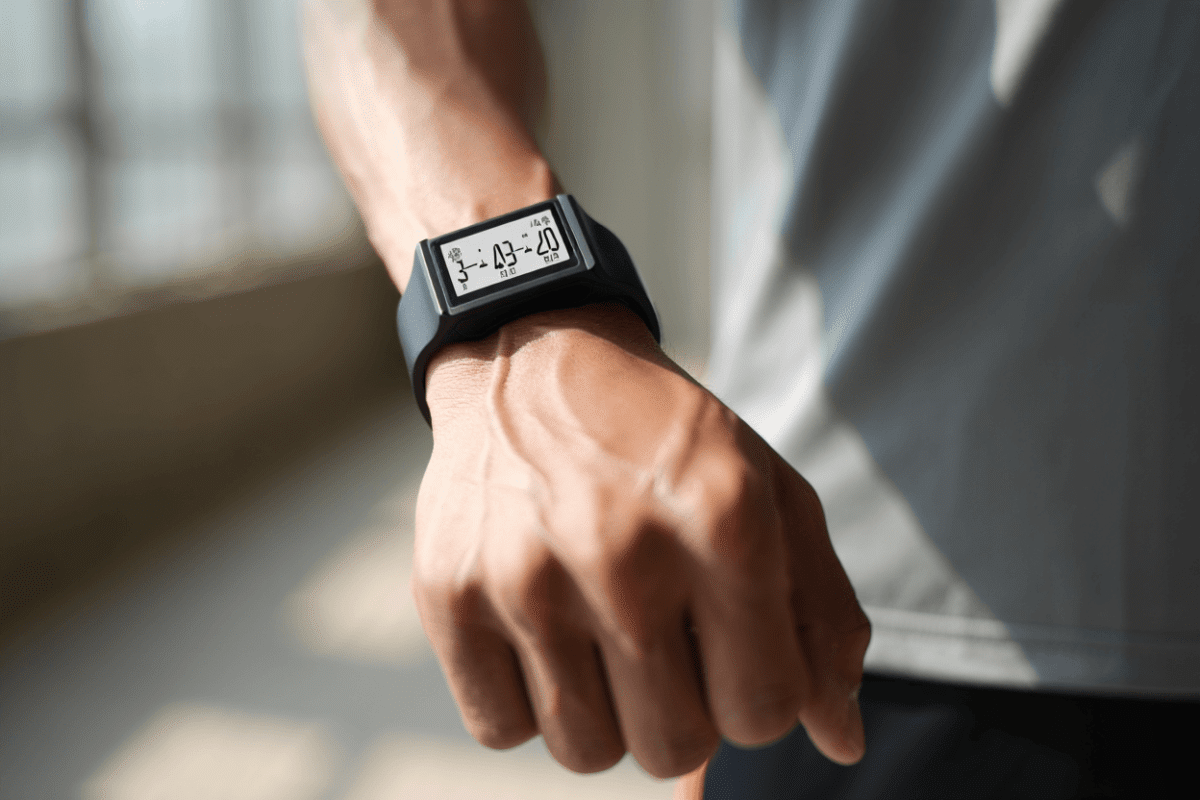
Wearable wristbands using photoplethysmography technology can detect cardiac arrest with 92% accuracy, according to a new study published today in Circulation: Arrhythmia and Electrophysiology. The groundbreaking research from the DETECT-1b trial conducted at Radboud University Medical Center in the Netherlands demonstrates that smart wristband devices may function as a “digital witness” to cardiac emergencies, potentially saving lives when sudden cardiac arrest occurs outside hospital settings.
🔥 Quick Facts
- 92% detection accuracy for cardiac arrest in 49 adult patients across multiple institutions
- 100% sensitivity for ventricular fibrillation and 90% for pulseless ventricular tachycardia
- Study analyzed 59 cardiac arrest events across 125.5 hours of continuous monitoring
- Only 9 false positives recorded, demonstrating high specificity and clinical reliability
How Photoplethysmography Technology Works
The breakthrough wristband studied uses light-based photoplethysmography (PPG) sensors attached to the wrist. These sensors measure blood volume changes in arteries with each heartbeat by detecting reflected light through the skin. When the heart stops pumping blood during cardiac arrest, blood flow ceases and the PPG signal pattern changes dramatically, triggering an automated alert.
Unlike traditional cardiac monitoring requiring hospital equipment or manual ECG interpretation, PPG-based wristbands enable continuous, unobtrusive monitoring during daily activities. This passive monitoring capability represents a significant advancement because it requires no active engagement from users and works seamlessly during sleep, exercise, or routine activities.
Study Design and Clinical Results
The DETECT-1b multicenter study enrolled 49 adult patients (median age 66 years; 84% male) undergoing cardiac procedures at institutions across the Netherlands. Researchers intentionally induced life-threatening heart rhythms during medical procedures to generate real patient data under controlled conditions.
Study participants underwent either ventricular tachycardia ablation (43 patients) or subcutaneous implantable cardioverter-defibrillator implantation (7 patients). During these procedures, physicians deliberately triggered pulseless ventricular tachycardia or ventricular fibrillation—the most serious abnormal heart rhythms. The wristband algorithm analyzed this data independently, blinded to when actual cardiac arrest occurred.
Key Performance Metrics
| Metric | Result | Clinical Significance |
| Total cardiac arrest events | 59 events | 50 ventricular tachycardia, 9 ventricular fibrillation |
| Overall detection sensitivity | 92% (54 of 59 events) | Algorithm caught 54 of 59 arrest events |
| Ventricular fibrillation sensitivity | 100% | Perfect detection of most dangerous rhythm |
| Pulseless VT sensitivity | 90% (45 of 50 events) | High accuracy on second most dangerous rhythm |
| False positive rate | 9 false alarms in 125.5 hours | Minimal false alerts reduces alert fatigue |
| Positive predictive value | 86% | High confidence when alert triggers |
The results demonstrate that photoplethysmography algorithms can distinguish true cardiac arrests from normal heart rhythms with remarkable precision. The algorithm earned particular praise from independent experts for its extremely low false positive rate—only 9 false alarms across more than 125 hours of continuous monitoring.
“Our findings are important because many out-of-hospital cardiac arrests are unwitnessed. A smart technology wristband capable of automatically detecting cardiac arrest and triggering an alert could function as a digital witness. With the device automatically notifying emergency services or nearby trained responders, help could arrive sooner, which may significantly improve survival chances.”
— Dr. Judith Bonnes, Senior Study Author, Cardiologist, Radboud University Medical Center, Netherlands
Why This Innovation Matters for Out-of-Hospital Cardiac Arrest
Survival rates from unwitnessed cardiac arrest remain devastatingly low—only about 10% of people survive cardiac arrest outside hospitals. Time is critical: every minute without CPR and defibrillation reduces survival chances by approximately 10%.
The current problem: Many cardiac arrests occur without witnesses, delaying emergency discovery and response. This new wristband technology could change that equation fundamentally. If integrated with emergency dispatch systems, the wristband could automatically alert 911 and nearby trained responders within seconds of detection, potentially reducing response time by critical minutes. The device could function as an automatic “alarm” system for cardiac emergencies, similar to how fall-detection watches alert medical professionals when elderly users experience falls.
Future applications may include integration with volunteer responder networks and automated alerts to community AED (Automated External Defibrillator) locations, creating a comprehensive ecosystem for rapid cardiac arrest response.
Study Limitations and Next Steps
Important limitations warrant acknowledgment: This was a controlled clinical study, not real-world validation. Participants were in medical facilities with optimal sensor placement and known medical history. Real-world conditions present challenges: poor sensor contact, movement artifacts, varying skin types, and diverse body habitats could affect performance.
Lead researcher Dr. Roos Edgar noted: “This is the first study to externally validate such an algorithm using patient data, which is an important step toward developing a reliable detection system for real-world use.” The team plans DETECT-1c and DETECT-2 studies to evaluate performance in real-world environments and assess detection of additional cardiac arrest rhythms.
Independent expert Dr. Cameron Dezfulian from Baylor College of Medicine highlighted that “what is more impressive than the ability of this technology to detect cardiac arrest is the fairly low frequency of false positives it detected.” He noted that studies in Canada and the U.S. show similar promising results, suggesting consistent technology reliability across different research groups.
What This Means for Men’s Health and Wearable Technology
Men represent higher statistical risk for sudden cardiac arrest, with men experiencing cardiac arrest at roughly twice the rate of women. In this study, 84% of participants were male, reflecting the higher prevalence of cardiac arrest in men. This wristband technology could prove particularly valuable for men at elevated cardiovascular risk.
The commercial implications are significant: Major smartwatch manufacturers already use similar PPG sensors for heart rate monitoring, but most don’t deploy cardiac arrest detection algorithms. Companies like Apple Watch, Garmin, and Samsung Galaxy Watch have the technical platform ready; integration of validated algorithms could rapidly expand this life-saving capability to millions of existing users.
Beyond wristbands, this technology could extend to smart rings (like the Oura Ring), chest straps, and patches—providing multiple form factors for continuous cardiac monitoring in daily life.
Will This Technology Save Lives in Your Community?
The critical question now becomes: How quickly will validated algorithms reach consumer devices? The DETECT research demonstrates technical feasibility and accuracy, but regulatory approval, manufacturing integration, and real-world validation remain ahead. Industry experts project 2-3 years before mainstream wearables incorporate this capability.
For individuals at risk of sudden cardiac arrest—those with prior cardiac events, family history, or diagnosed arrhythmias—this emerging technology represents genuine hope. The American Heart Association and participating research institutions are actively pursuing regulatory pathways to accelerate deployment. Early adoption in clinical settings and high-risk populations may occur within the next 12-18 months.
Sources
- American Heart Association – Newsroom announcement of DETECT-1b study findings (May 19, 2026)
- Circulation: Arrhythmia and Electrophysiology – “Automated Cardiac Arrest Detection Using Wrist-Worn Photoplethysmography: External Validation in Patients With Induced Shockable Cardiac Arrest” published April 14, 2026
- Radboud University Medical Center Netherlands – Principal research institution conducting DETECT project
- Corsano Health – CardioWatch wristband device developer