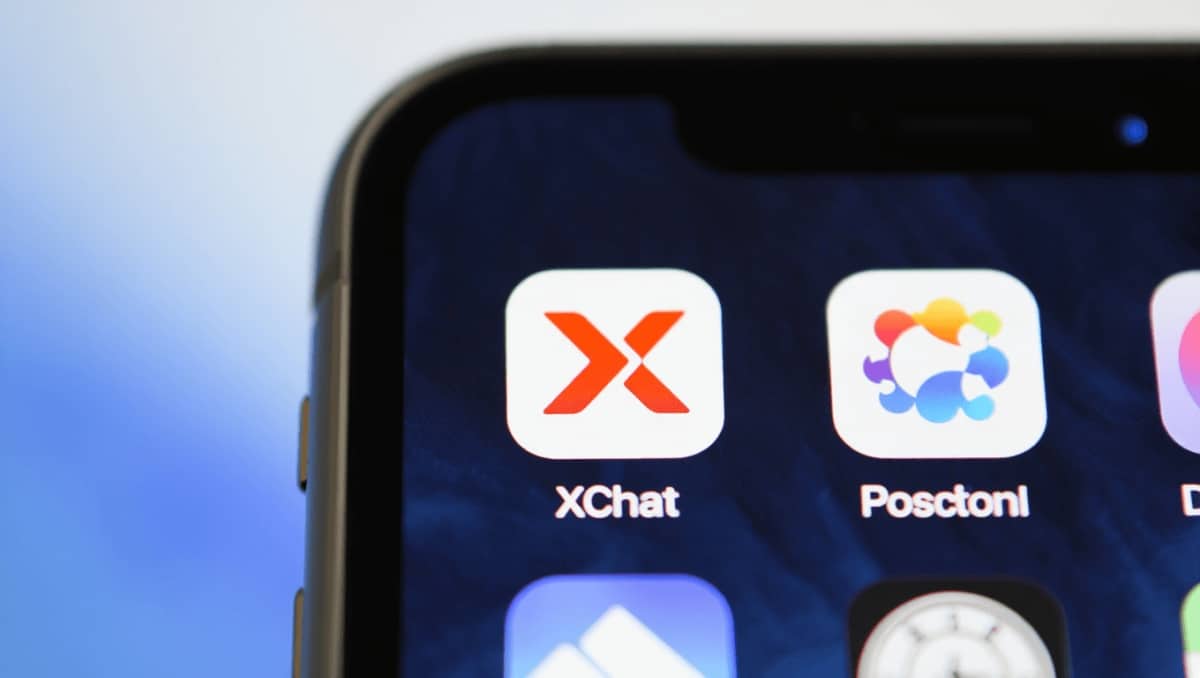
XChat — X’s new stand‑alone messaging app — went public on Friday, arriving first on iOS devices and immediately reshaping how users may interact with the platform. The release matters now because X is shifting from a single “everything app” concept to a family of targeted apps, a change with privacy, security and community implications for millions of users.
The company opened XChat to a small beta group earlier this year; this week’s public rollout expands access to direct messaging, file transfers, voice and video calls, and group conversations that were previously handled inside X itself.
What XChat offers — and what the company promises
At launch, XChat includes several features X is promoting as privacy protections: the ability to edit or delete messages for all participants, disappearing messages, and a screenshot‑blocking option. The company also says messages are end‑to‑end encrypted and protected behind a PIN, and it advertises no advertising or tracking inside the app.
| Feature | Company claim | Expert view / caveat |
|---|---|---|
| Messaging & group chats | Fully supported | Typical functionality; reviewers will test interoperability and reliability |
| Voice & video calls | Built into the app | Call quality and encryption details need independent verification |
| Privacy controls | Edit/delete, disappearing messages, screenshot blocking | Useful features, but not a substitute for robust protocol‑level security |
| End‑to‑end encryption | Enabled and PIN protected | Security researchers previously questioned X’s earlier claims |
| Ads / tracking | No ads, no tracking | Independent audits would clarify data handling |
Security analysts who examined X’s messaging efforts earlier raised concerns that those implementations were not as private as alternatives such as Signal. They have said X will need to publish technical details or let independent reviewers audit XChat to validate the company’s assertions.
A strategic pivot: one platform, many apps
Behind the product launch is a broader strategy shift. Elon Musk previously described X as aiming to be an “everything app” where messaging, payments, commerce and AI live under one roof. The arrival of XChat signals a different approach: building multiple dedicated apps that connect back to X, each focused on a distinct user touchpoint.
The corporate structure complicates matters. X is owned by xAI, which is in turn tied to Musk’s other companies, and the new app rollout appears to be part of that ecosystem expansion rather than a single unified platform push.
That has trade‑offs for users: specialized apps can provide clearer user experiences, but splitting services across separate downloads fractures the convenience of a single hub.
Communities closing — and a possible traffic boost for XChat
X is also winding down its existing Communities feature, citing low usage and heavy spam. The timing could drive some community members to install XChat as their new gathering place, giving the app an early surge in installs and engagement.
- Migration risk: community moderators will need to move members and re-establish norms in a new app.
- Spam control: XChat’s moderation tools and anti‑spam measures will be tested quickly if large groups relocate.
- Adoption speed: ease of onboarding and feature parity with Communities will determine how many users stay.
Design lead Benji Taylor signaled that the current release is an initial step rather than a finished product, saying the team views this as the start of a broader messaging roadmap. Users should therefore expect additional updates and feature rollouts in the months ahead.
For now, the immediate priorities for independent reviewers and privacy advocates are clear: verify encryption claims, test protections such as screenshot blocking, and assess how well the app defends against spam and abuse as former Communities migrate over.
As XChat moves beyond beta and into general availability, its success will depend not only on feature completeness but on transparent security practices and measurable improvements over existing encrypted messaging platforms.