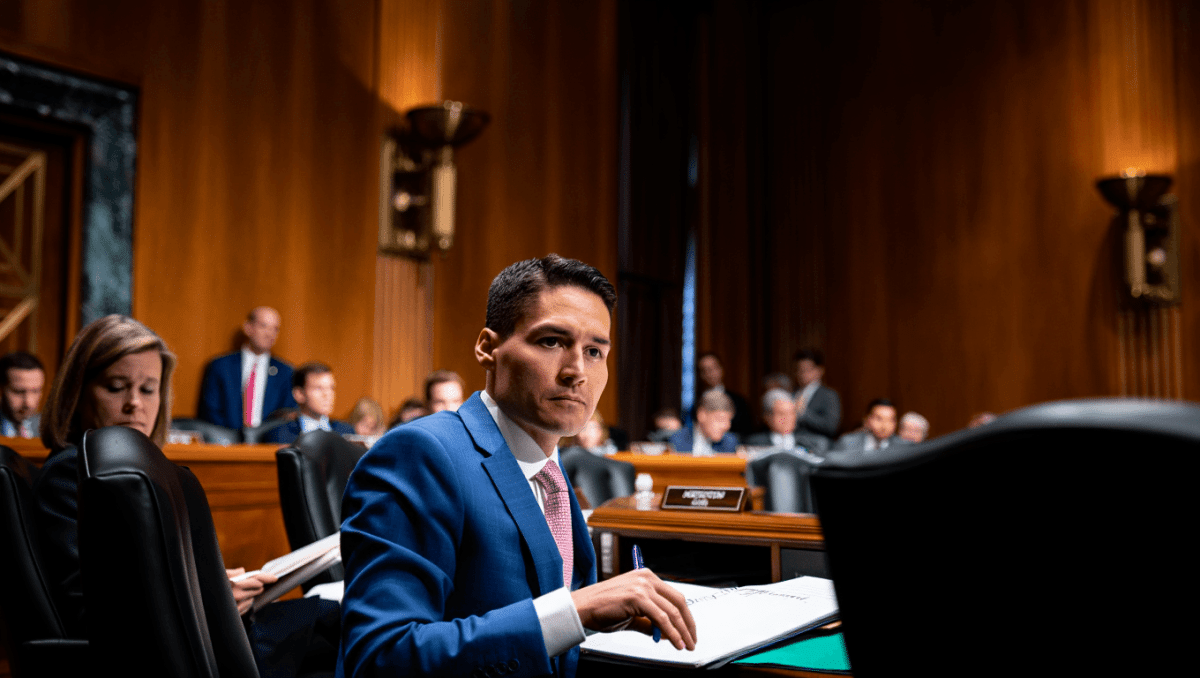
This morning, the Senate Banking Committee faces a historic onslaught of amendments as crypto regulation reaches its critical moment. Over 100 proposed amendments flood the chamber for the pivotal May 14 markup hearing, threatening to reshape the most significant digital asset legislation in US history.
🔥 Quick Facts
- Amendment Count: Senate members filed 100+ amendments ahead of today’s markup hearing
- Warren’s Opposition: Senator Elizabeth Warren filed 40+ amendments opposing the latest CLARITY Act text
- Bill Size: The 309-page proposal was released just after midnight on May 12
- Stablecoin Focus: Key debate centers on stablecoin yield product restrictions and Federal Reserve access
CLARITY Act Faces Historic Amendment Barrage Before Crucial Vote
The Digital Asset Market Clarity Act arrived at the Senate Banking Committee’s desk yesterday as a 309-page document intended to resolve years of regulatory confusion. Instead, it triggered the largest amendment push of the legislative session. According to multiple sources tracking the filing, the 100+ amendments represent an unprecedented challenge to the bill’s passage.
Senator Elizabeth Warren alone submitted 40 or more amendments, signaling deep Democratic opposition to the compromise text. Her filings target specific provisions the banking committee negotiators believed were settled. This morning’s markup will now become a lengthy debate session rather than a quick procedural vote.
Warren’s Federal Reserve Amendment Emerges as Dealbreaker
The most consequential Warren amendment would prevent the Federal Reserve from issuing master accounts to cryptocurrency firms. This move directly targets one of the bill’s core provisions designed to bring crypto companies into traditional banking infrastructure. Industry advocates argue such restrictions would cripple institutional adoption.
Warren’s position reflects labor union concerns and broader progressive opposition to crypto market integration. According to reports reviewed overnight, her amendments challenge stablecoin yield product restrictions and seek tighter consumer protections. The fight over Fed master accounts represents the ideological conflict driving today’s amendment deluge.
Amendment Landscape and Legislative Timeline
| Factor | Status |
| Total Amendments Filed | 100+ proposed changes |
| Warren Amendments | 40+ individual filings |
| Key Controversy | Fed master accounts for crypto |
| Markup Hearing Date | May 14, 2026 (today) |
The manager’s amendment released alongside the 309-page bill text includes the Tillis-Alsobrooks stablecoin compromise. This bipartisan agreement was supposed to unlock committee support. Yet within hours of publication, competing forces mobilized amendments to overturn specific provisions.
Banking industry lobbyists reportedly sent approximately 8,000 letters to Senate offices overnight, warning that crypto regulation could drain trillions from traditional deposit bases. This coordinated pressure demonstrates the high stakes surrounding the markup.
“After months of painstaking negotiations with stakeholders, the updated CLARITY Act language is a bipartisan compromise that will provide clear regulatory guardrails for digital asset market participants.”
— Chairman Scott and Banking Committee Republicans, official statement
What the CLARITY Act Actually Does
The bill splits regulatory authority between the SEC and CFTC, ending years of turf battles over crypto oversight. Securities that trade as tokens remain under SEC jurisdiction, while commodity tokens fall to CFTC supervision. This split framework represents the first federal attempt to define digital assets clearly.
The legislation establishes trade monitoring, recordkeeping, and customer asset commingling requirements. It provides an exemption from SEC registration called Regulation Crypto for ancillary digital assets. According to the bill text, this creates protections for consumers while facilitating responsible innovation with illicit finance safeguards built in.
Will Today’s Amendments Derail the Bill or Strengthen It?
The unprecedented 100+ amendment assault could produce three outcomes. First, amendments might be rejected en masse, allowing the original 309-page compromise to advance intact. Second, modest revisions could be negotiated, narrowing Warren’s objections while preserving core provisions. Third, the sheer volume could trigger calendar blockage that delays the vote into summer.
Prediction markets positioned the bill’s passage odds at 79 percent as recently as May 11, before the amendment flood. That confidence now appears tested. Committee members must decide whether today’s fight represents genuine policy dispute or political theater aimed at upcoming elections.
Sources
- Yahoo Finance – CLARITY Act amendment filing tracking and Warren amendment analysis
- Senate Banking Committee – Official bill text release and manager’s amendment documentation
- CoinDesk – Detailed CLARITY Act regulatory framework and implementation timelines