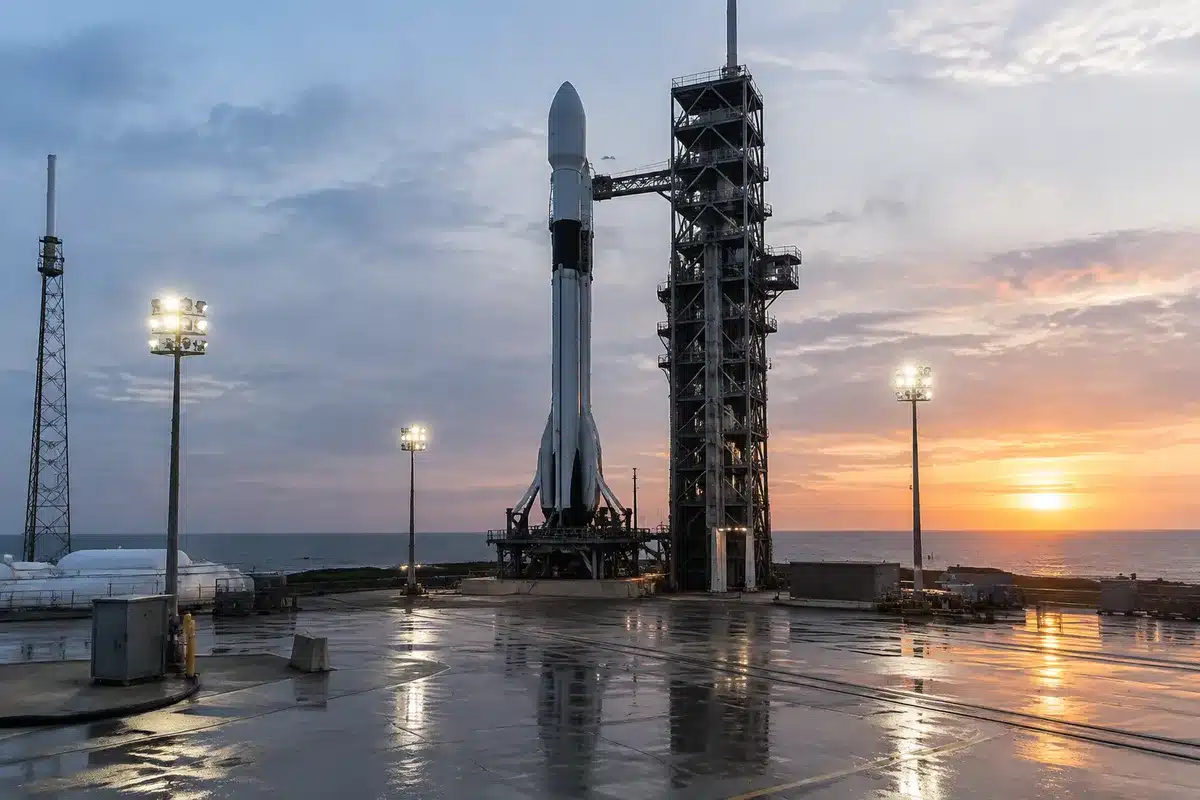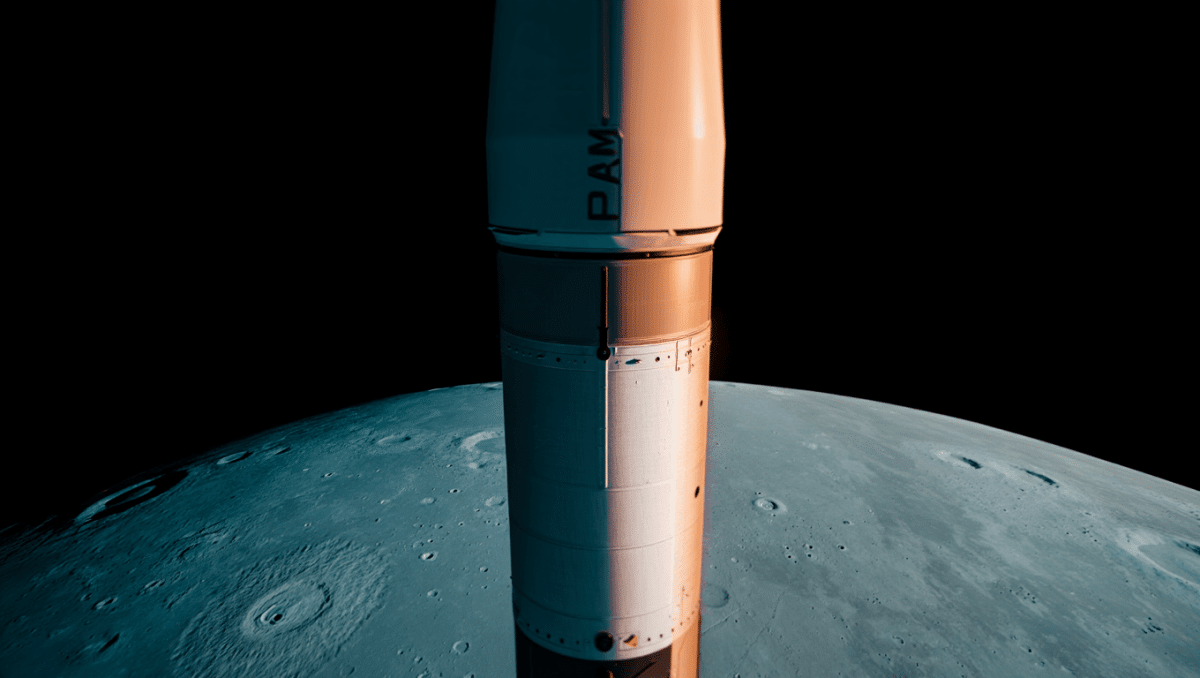
SpaceX’s discarded Falcon 9 upper stage is on a collision course with the moon coming this August. The 45-foot-tall rocket stage will slam into Einstein Crater at an incredible 5,400 mph, creating a fresh lunar impact that researchers have been tracking for months.
🔥 Quick Facts
- Impact Date: August 5, 2026 at 2:44 a.m. ET, traveling at 7 times the speed of sound
- Rocket Stage: Designated 2025-010D, launched from Florida in January 2025
- Dimensions: 13.8 meters tall, 3.7 meters diameter, orbiting Earth for 19 months
- Prediction Source: Bill Gray of Project Pluto, tracked via orbital calculations
A Year-Long Journey Ends in Lunar Impact
The Falcon 9 upper stage 2025-010D has been drifting in an unstable orbit around Earth since January 2025. This particular rocket launched a lunar lander payload to orbit but was left behind after its mission completed. Unlike most spent rocket stages that re-enter Earth’s atmosphere or remain in stable orbits, this one gradually deteriorated its trajectory over nearly 19 months. Bill Gray, an independent astronomer at Project Pluto, calculated that the stage would eventually collide with the Moon.
The impact is expected on August 5, 2026, making this a rare event. Rocket debris rarely reaches the Moon, and tracking such collisions helps scientists understand space debris accumulation near Earth’s only satellite. The notification came as a surprise to many, highlighting how uncontrolled rocket stages pose growing challenges to lunar exploration.
Mach 7 Collision in Earth-Facing Crater
The impact point is Einstein Crater, a heavily cratered region on the near side of the Moon. The stage will strike at approximately 2.43 kilometers per second, equivalent to 5,400 miles per hour or roughly 7 times the speed of sound. At this velocity, no soft landing is possible. The 45-foot aluminum structure will collide with tremendous force, creating a new crater from the initial impact.
Lunar surface composition in the Einstein Crater region is heavily cratered rock and regolith. Scientists expect the collision to excavate a fresh crater, but the flare of impact will likely not be visible from Earth without specialized equipment. The Lunar Reconnaissance Orbiter and other lunar satellites may be able to photograph the new impact site weeks later for comparison with pre-impact images.
Impact Specifications and Observable Consequences
| Parameter | Details |
| Rocket Stage ID | 2025-010D (Falcon 9 Upper Stage) |
| Impact Date | August 5, 2026 at 06:44 UTC |
| Impact Velocity | 2.43 km/s (5,400 mph) |
| Impact Location | Einstein Crater, Moon near side |
| Crater Visibility | Observable via orbital imaging, not Earth-based |
“We now have another upper stage due to hit the moon, this one on Aug. 5 and just barely on the near side of the moon.”
— Bill Gray, Project Pluto Astronomer
Why Space Debris Matters to Future Lunar Exploration
This collision highlights an increasing concern for the space industry. SpaceX, along with other launch providers, is generating more rocket debris as lunar missions accelerate. The Falcon 9 upper stage represents one of hundreds of stages in high-Earth orbit with unpredictable trajectories. Most burn up during re-entry, but some escape toward the Moon or remain in eccentric orbits for years.
Lunar surface cleanliness is becoming a conservation issue as missions increase. The Artemis program, China’s lunar missions, and private lunar landers all contribute to this debris population. Each impact creates permanent marks on a geologically fascinating but increasingly cluttered lunar landscape. Scientists worry that continued uncontrolled impacts could damage future landing sites.
Will We See This Historic Collision Happen?
The answer is technically no for most Earth observers. The impact occurs at 6:44 UTC, which translates to 2:44 a.m. Eastern Time on August 5. The impact flash is expected to be too faint for naked-eye observation from Earth due to lunar sunlight conditions at that moment. However, specialized telescope equipment and lunar orbital satellites will capture imagery of the fresh crater afterward.
NASA’s Lunar Reconnaissance Orbiter and other spacecraft monitoring the Moon will photograph the impact site within weeks. This provides scientists with valuable data about collision dynamics and crater formation on the lunar surface. The event also demonstrates why lunar impact prediction has become essential for future exploration planning and mission safety.