In a November 2004 videotape released by Al-Jazeera, Osama bin Laden stated that his goal was to “bleed America to the point of bankruptcy” through sustained military spending and conflict, drawing a parallel to the Soviet withdrawal from Afghanistan in the 1980s. The claim, which appeared prescient at the time, has now become the subject of serious analysis as experts examine whether his strategy—outlined over two decades ago—has actually unfolded as he predicted.
Bin Laden’s 2004 strategy rested on a specific economic argument. He claimed that every dollar al-Qaeda spent defeated a million dollars in U.S. resources, citing an estimate that the September 11 attacks cost his organization approximately $500,000 while the United States lost more than $500 billion in economic fallout and military response. “Every dollar of al Qaeda defeated a million dollars, by the permission of Allah,” he said in the transcript, adding that the U.S. federal deficit had reached “record astronomical numbers estimated to total more than a trillion dollars.”
Bin Laden also recognized that the U.S. invasion of Iraq, which began in 2003, would accelerate the economic bleeding he sought. He criticized President Bush for prioritizing oil and corporate interests, saying “the darkness of black gold blurred his vision and insight, and he gave priority to private interests over the public interests of America.” He predicted the wars would continue draining American resources even after his death.

The 2026 Assessment: Predictions Validated by Numbers
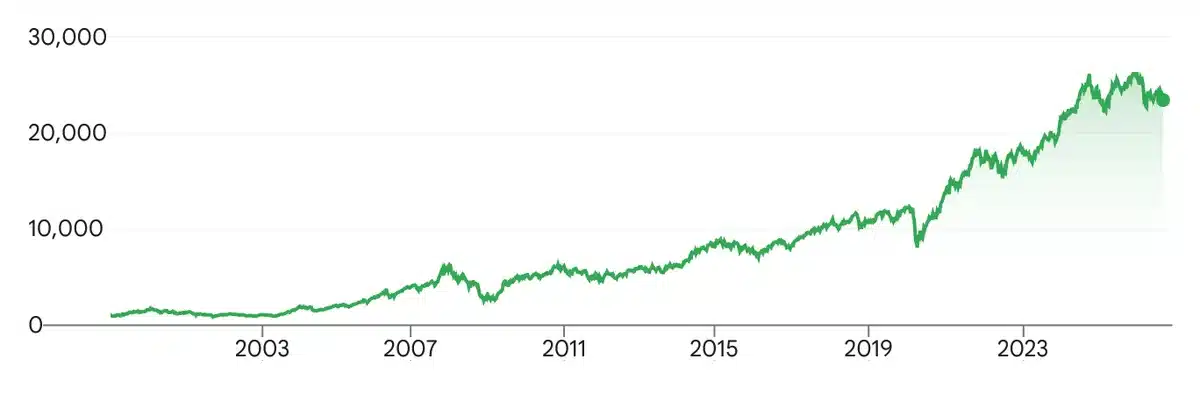
Twenty-two years later, analysis suggests bin Laden’s economic forecast has largely materialized. Post-9/11 military spending has exceeded $18 trillion cumulatively from 2001 through 2026, according to verified tracking of defense expenditures. The U.S. national debt reached $40 trillion in August 2026, and annual military spending now ranges between $1.5 trillion and $1.8 trillion depending on how defense costs are calculated.
Marine veteran and opinion contributor Joslin Joseph, writing in The Hill on August 24, 2026, argued that “25 years after 9/11, Bin Laden has achieved one of his major goals.” Joseph noted that despite the expansion of counterterrorism operations across multiple continents, terrorism has not been defeated. Instead, the wars have generated the economic consequences bin Laden predicted: mounting national debt, military contractors profiting while public interests suffered, and a permanent war economy that now requires $1.5 trillion annually in defense spending to maintain.
The scale of military commitment has created secondary fiscal pressures. Interest payments on borrowed money—much of it used to fund military operations—now cost $1.1 trillion annually, more than twice what the United States spends on Veterans Affairs medical and disability benefits despite the wars having tripled the number of veterans requiring care. The Department of Homeland Security, created in response to 9/11, has cost $1.2 trillion since its inception.

The ongoing conflict with Iran, which escalated significantly in 2026, has further strained military resources. The U.S. military is reportedly “dangerously low” on missiles, and billions are being spent on military contractors who have failed to deliver promised weapons systems. A war game exercise involving U.S. and Ukrainian forces revealed that modern drone warfare poses challenges the American military has struggled to counter effectively.
Joseph’s analysis aligns with bin Laden’s 2004 observation about the asymmetric cost of warfare. Bin Laden noted that Iran’s low-cost drones forced the U.S. to spend millions in defensive measures, validating his earlier boast that al-Qaeda’s small investments could provoke vastly larger American expenditures. “All that we have to do is to send two mujahedeen to the furthest point east to raise a piece of cloth on which is written al Qaeda, in order to make generals race there to cause America to suffer human, economic and political losses,” bin Laden said in 2004—a prediction that analysts now argue has held true across multiple theaters of conflict.
The mounting fiscal burden has raised questions about the sustainability of current defense spending levels. The Congressional Budget Office and military budget analysts have flagged the tension between rising defense costs and the nation’s overall fiscal health, with some experts warning that the permanent war economy may be structurally embedded in American governance and corporate interests.
Sources
- CNN — Full transcript of Bin Laden’s November 2004 videotape released by Al-Jazeera, including his statement on “bleeding America to the point of bankruptcy”
- The Guardian — Coverage of the 2004 tape, including Bin Laden’s financial analysis claiming every al-Qaeda dollar defeated $1 million in U.S. spending
- The Hill — Opinion analysis by Joslin Joseph (August 24, 2026) examining whether Bin Laden’s 2004 predictions have been validated by post-9/11 military spending and national debt levels
- U.S. Debt Clock — Verification of cumulative post-9/11 military spending exceeding $18 trillion (FY2001-FY2026)
- Brown University Costs of War Project — Documentation of total U.S. defense and security spending related to post-9/11 operations