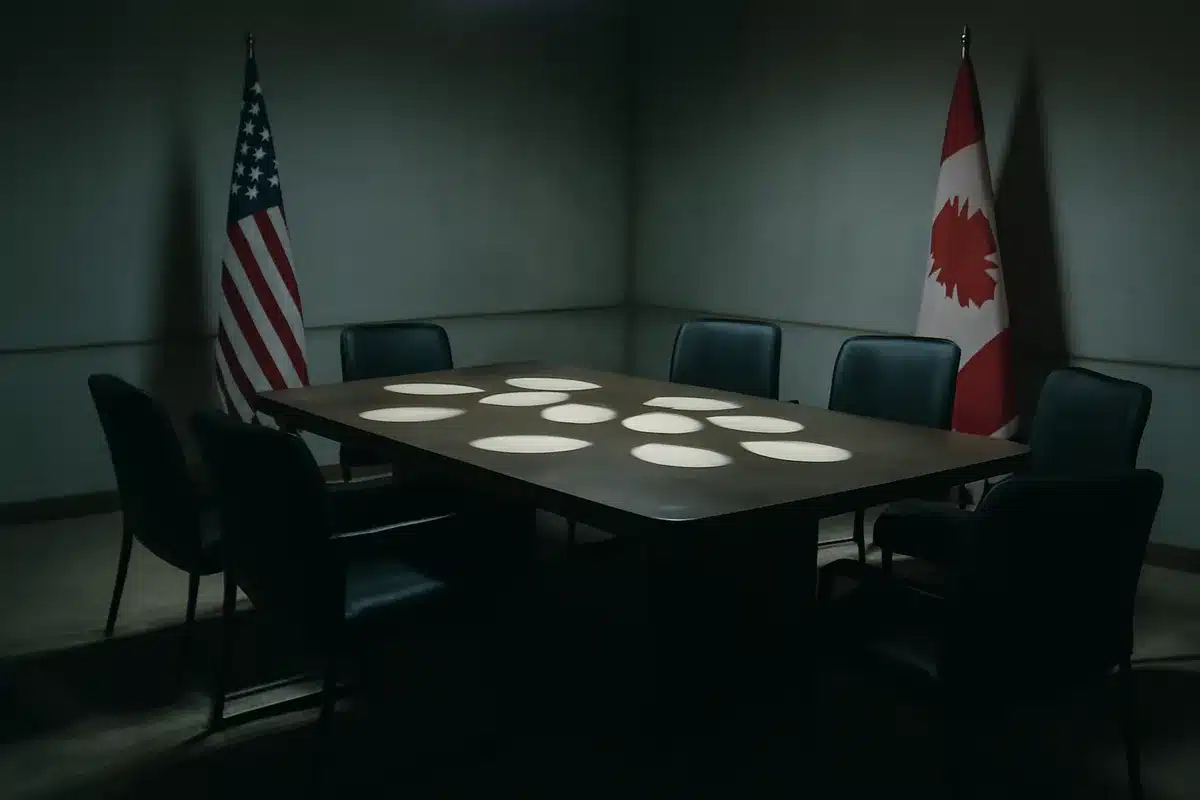
Canadian Prime Minister Mark Carney has told the Trump administration to “start being serious” about trade negotiations, urging US officials to stop what he characterized as performative posturing and return to substantive talks as Canada prepares retaliatory tariffs on hundreds of American goods.
Speaking on September 1, Carney criticized the tone of US negotiators, saying they should “stop doing memes, stop throwing shade and stop trying to be tough” before Canada could resume discussions. His remarks came days before Canada announced it would impose retaliatory tariffs on more than 700 US products at rates of 15%, 25%, and 50%, effective September 8.
The escalation follows the collapse of trade talks and Trump’s imposition of 50% tariffs on approximately $20 billion in Canadian goods, which took effect on August 22. Carney said the US had made last-minute demands that made a deal impossible, including unacceptable positions on auto trade and concerns about the French language in Canada. “In Quebec, these are rights,” Carney stated, according to reporting from The Guardian.

The retaliatory measures target a broad range of American products. According to the New York Times, Canada will hit items including steel, electronics, paper, lumber, alcohol, and dairy products. The tariffs represent Canada’s attempt to match Trump’s duties dollar-for-dollar, though the scale of the dispute has grown substantially since talks first broke down.
Economists warn the escalating tariff war carries significant costs for Canada. Trevor Tombe, director of fiscal and economic policy at the University of Calgary’s School of Public Policy, told The Economist that Trump’s new tariffs would push inflation to 4% and cost approximately 90,000 Canadian jobs. A broader analysis by economists cited in CBC News suggests the 50% tariffs on roughly $27 billion of Canadian goods represent a hit to Canadian GDP of about 0.4 to 0.5 percent.
The trade dispute has its roots in the Trump administration’s broader tariff agenda. In February 2025, Trump announced 25% tariffs on most Canadian imports, with rates adjusted for energy and other sectors. The situation deteriorated sharply in August 2026 when Trump threatened and then implemented 50% tariffs on specific product categories, citing concerns about auto manufacturing and what he claimed were unfair trade practices.
Carney, who became Canada’s prime minister in March 2025, has consistently resisted what he views as unreasonable US demands. He has accused Trump of wanting to “destroy” Canada’s auto industry and of treating Canada as if it should accept the status of a US subsidiary. The US trade representative, Jamieson Greer, countered by arguing that Canada “asked too much and offered too little” in negotiations, telling Politico that there are “no negotiations happening on trade right now.”
The dispute highlights the tension between Canada’s economic dependence on the US—which accounts for roughly 75% of Canadian exports—and its desire to maintain sovereignty. Economists interviewed by CBC News noted that while Canada has significant leverage through energy exports, using that leverage risks long-term damage to the relationship. Don Drummond, former chief economist for TD Bank, warned that Canada could employ export taxes on oil and natural gas or restrict critical mineral access, but such moves would escalate tensions further.
Christopher Ragan, founding director of McGill University’s Max Bell School of Public Policy, told CBC News that negotiating with “a party that appears to be unpredictable, volatile” makes it unclear what strategy will work. The Trump administration has also signaled it may impose additional tariffs in January 2026, adding uncertainty to Canada’s planning.
Carney has indicated that Canada will resume negotiations only when the US administration demonstrates a serious, respectful approach. For now, the two countries remain locked in an escalating trade war with no clear exit strategy, and Canadian consumers and businesses face mounting pressure from both US tariffs and the country’s retaliatory response.
Sources
- The Guardian — Carney’s statements on Trump’s administration, French language concerns, and auto industry threats; US tariff details and Lake Ontario renaming context
- AP News — Carney’s direct quote about “stop doing memes, stop throwing shade and stop trying to be tough”
- New York Times — Canadian retaliatory tariff details (700 products, 15/25/50% rates, Sept 8 effective date); product categories targeted
- Reuters — Confirmation of Canada suspending negotiations and retaliatory tariff announcement
- The Economist — Trevor Tombe’s analysis: 4% inflation impact and 90,000 job losses
- CBC News — Economist commentary from Tombe, Drummond, Ragan, and Alschner on leverage, costs, and strategic options; broader GDP impact (0.4-0.5%)
- Al Jazeera — Timeline and scope of Canadian retaliatory tariffs announcement