The U.S. military struck Iranian targets on Tuesday, September 1, as part of an escalating exchange that has reignited a conflict that has lasted more than six months, with President Trump vowing additional strikes if Tehran retaliates further. According to U.S. Central Command, the strikes targeted Iranian military facilities including air defense sites, radar systems, maritime assets, and mine-laying capabilities near the Strait of Hormuz, which Trump said Iran had attempted to seed with sea mines.
Trump said in a post on Truth Social that the U.S. had launched “large and powerful” strikes in response to what he described as a “failed attempt” by Iran at laying mines in the vital trade corridor. When asked about the strikes, Trump told Fox News that U.S. forces had waited until Iranian radar systems were nearly rebuilt before striking. “They tried to rebuild their radar because they can’t see anything,” he said. “We waited until it was almost built and then we hit it.”
The strikes resumed military action after a month without attacks, during which the Trump administration had pursued what it called economic isolation to pressure Iran into negotiations. Iranian President Masoud Pezeshkian had stated earlier Tuesday that the Islamic Republic was ready to return to a ceasefire deal reached in June if Washington did the same, but the U.S. strikes proceeded before any agreement could be reached.
In response, Iran launched a wave of ballistic missiles and drones targeting U.S. bases and allies across the region. The Iranian Revolutionary Guard claimed to have struck U.S. bases in Jordan, Iraq, Bahrain, and Kuwait. Jordan’s military said it intercepted 10 of the missiles fired at a U.S. base along the Gulf of Aqaba coast, with three others landing in unpopulated areas. Iran also claimed to have targeted U.S. forces in Bahrain, though that country reported all attacks were intercepted.
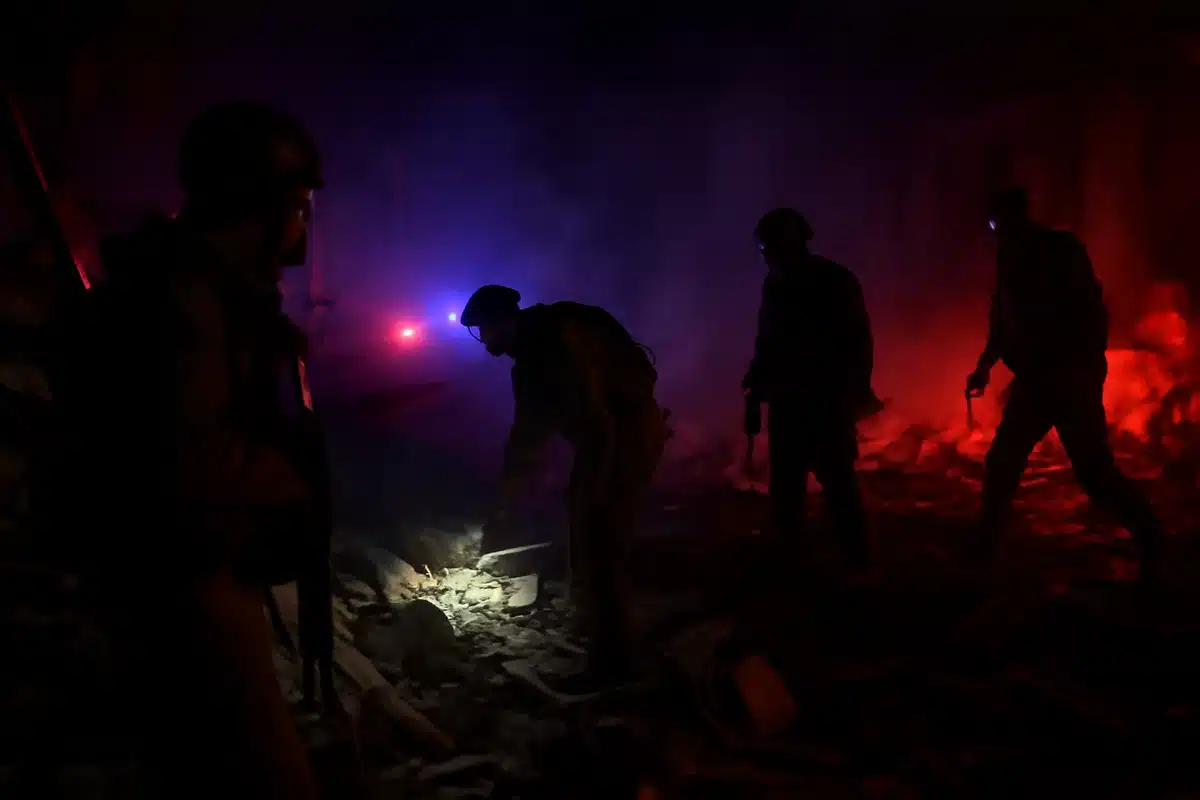
One U.S. strike hit a home hosting a wedding ceremony in Kuhestak on Iran’s southern coast, killing five people including a child and wounding at least 68 others, according to Hormozgan Province’s deputy governor Ahmad Nafisi. U.S. Central Command acknowledged awareness of civilian casualty reports but noted they “originated from Iranian state media” and stated that “the U.S. military never targets civilians, unlike the IRGC,” referring to Iran’s Islamic Revolutionary Guard Corps.
Ebrahim Azizi, chairperson of the Iranian parliament’s National Security and Foreign Policy Committee, responded on social media: “Make no mistake: these crimes will not go unpunished.” Iran’s Armed Forces General Staff warned of “crushing and devastating blows” against the United States.
Trump warned Iran of severe consequences for any further retaliation. “If they retaliate, they will be hit again at a much harder and higher level, but it will not be the biggest attack of them all, that is waiting in the wings,” he wrote. “When that is over, there will be very little left” of the country. Later, Trump posted that he had no interest in negotiating with Iran, stating: “I couldn’t care less if they sign a worthless, to them, agreement. I like our position now much better, with almost total control of the Hormuz Strait, and their economy totally collapsing.”
The renewed fighting has driven oil prices sharply higher. Crude oil has risen approximately 7 percent this week and more than 50 percent for the year. The U.S. average price for a gallon of regular gasoline reached $4.10 overnight, up from $3.19 a year earlier, according to AAA. The Strait of Hormuz, through which roughly 20 percent of the world’s oil normally flows, has been effectively closed by Iran since the war began in February 2026, disrupting global shipping and raising energy costs worldwide.
The strikes marked the resumption of direct military confrontation following a month-long pause. Prior military exchanges in late July had also prompted Trump to threaten escalation, establishing a pattern of tit-for-tat attacks and warnings that has characterized the intermittent conflict. Both sides have repeatedly signaled readiness for further action, with Iran’s armed forces pledging to impose costs on the United States and Trump maintaining that larger strikes remain available if needed.
Sources
- NPR — U.S. military strikes Iran on Tuesday, Iran retaliates with missiles and drones, civilian casualties reported in wedding strike, Trump warns of harder strikes, oil prices surge
- NBC News — Details of U.S. strikes on Iranian military targets, wedding casualty count (5 killed, nearly 70 wounded), Iran’s retaliation against U.S. bases in Jordan and other regional locations, Trump’s statements on Truth Social regarding negotiations and control of Hormuz Strait
- Al Jazeera — Iran’s claims of attacks on Bahrain, Jordan, Iraq following U.S. strikes, civilian impact reports