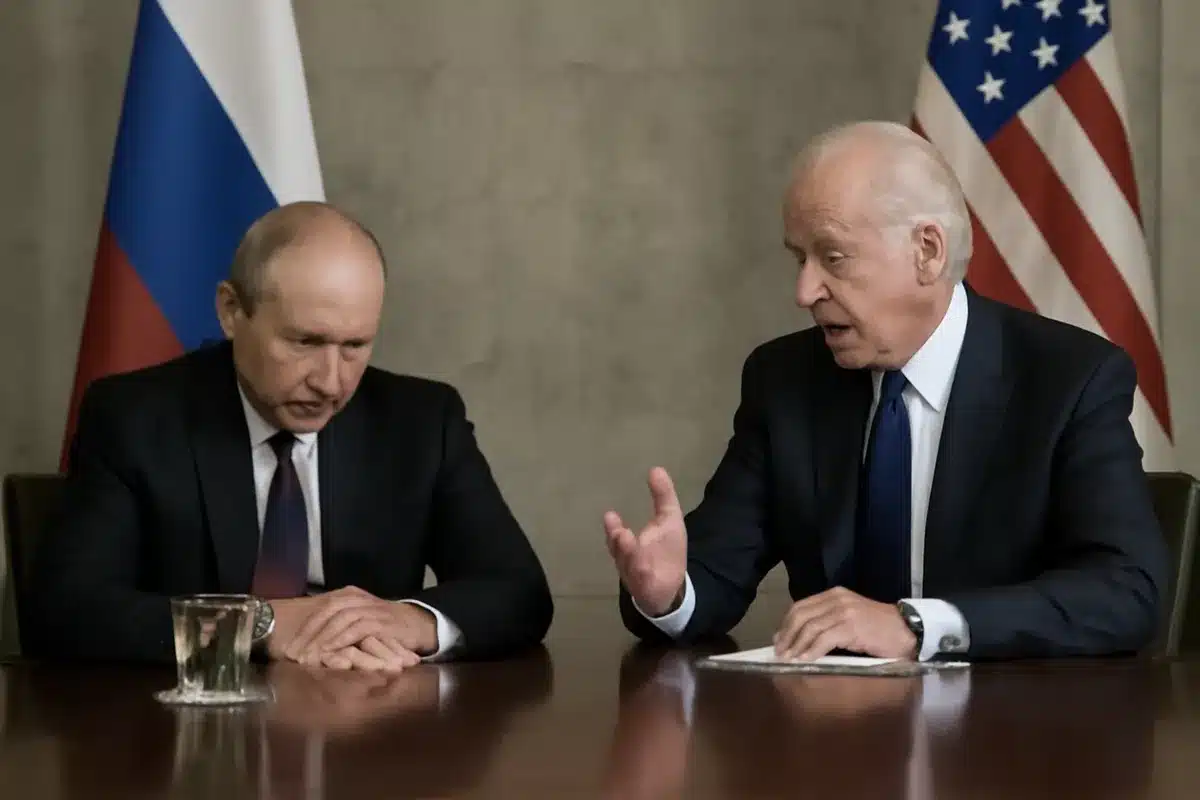
Indian Prime Minister Narendra Modi pressed Russian President Vladimir Putin to end the war in Ukraine during a bilateral meeting at the Shanghai Cooperation Organisation summit in Bishkek on August 31, marking one of the most direct public appeals to the Russian leader on the conflict.
At the start of their talks, Modi told Putin that “every day that the war continues, humanity is, in effect, set back a step, whilst every step towards peace gives all of humanity real hope for peace.” Modi called for a shift from “endless war” to an “end to the war” and “cessation of hostilities,” according to a Kremlin transcript of the exchange reported by Reuters.
Modi, who called Putin “my friend” and praised growing economic ties between the two countries, reiterated India’s longstanding diplomatic position. “As you are aware, India supports all peace efforts in this regard, and we shall continue to do so in the future,” Modi said. The Indian Prime Minister invoked the legacies of Mahatma Gandhi and Mother Teresa in his appeal for peace, according to Politico.

Putin appeared visibly uncomfortable during the exchange, looking at the floor and tapping his feet as Modi spoke, according to reporting from Politico. Putin responded briefly: “Thank you very much, Prime Minister. We are moving forward along this path,” according to state media.
The meeting took place on the sidelines of the 26th Shanghai Cooperation Organisation summit, held in Bishkek from August 31 to September 1. The SCO brings together Russia, China, India, and eight other member states for discussions on security, economics, and regional cooperation. Modi’s direct appeal underscores India’s effort to maintain its diplomatic position as a nation that has consistently called for peace while preserving its substantial economic ties with Moscow.
India has maintained a neutral stance on the Russia-Ukraine conflict since it began in 2022, repeatedly calling for dialogue and a diplomatic resolution. However, India is also one of the world’s largest buyers of Russian oil, a relationship that has intensified since Western sanctions limited Russia’s access to other markets. According to Reuters, India’s purchases of Russian crude have increased significantly, and New Delhi has also recently begun supplying gasoline to Moscow following Ukrainian attacks on Russian refineries.
Modi’s public call for an end to hostilities represents India’s attempt to balance its role as a growing diplomatic voice with its substantial commercial relationship with Russia. Despite his direct words to Putin, Modi made clear that India would continue focusing on traditional areas of cooperation. “Focus areas for Russia-India friendship remain energy, innovation, space, fertilizers and people-to-people linkages,” Modi said during the meeting, according to Politico.
The Kremlin said after the talks that Putin had briefed Modi on Russia’s military operation in Ukraine, describing it in Moscow’s preferred terminology as the “special military operation.” Russia has consistently stated it will only end the conflict on its own terms—a position Ukraine has rejected as a demand for capitulation. Attacks on Ukraine have intensified in recent weeks, with reports of Russian plans to mobilize additional troops and escalate ground offensives, while Ukraine has responded with increased drone strikes on Russian energy infrastructure.
Modi is expected to meet with EU leaders in December and will host Putin at the BRICS summit in Delhi on September 12 and 13, continuing India’s diplomatic engagement with both Russia and the Western alliance.
Sources
- Reuters — Modi’s statement to Putin at the SCO summit, the Kremlin transcript of their exchange, India’s position on supporting peace efforts, and India’s role as a major buyer of Russian oil.
- Politico — Modi’s invocation of Gandhi and Mother Teresa, Putin’s visible discomfort during the meeting, Modi’s statement on Russia-India cooperation areas, and context on India’s oil purchases and trade tensions with the U.S. and EU.