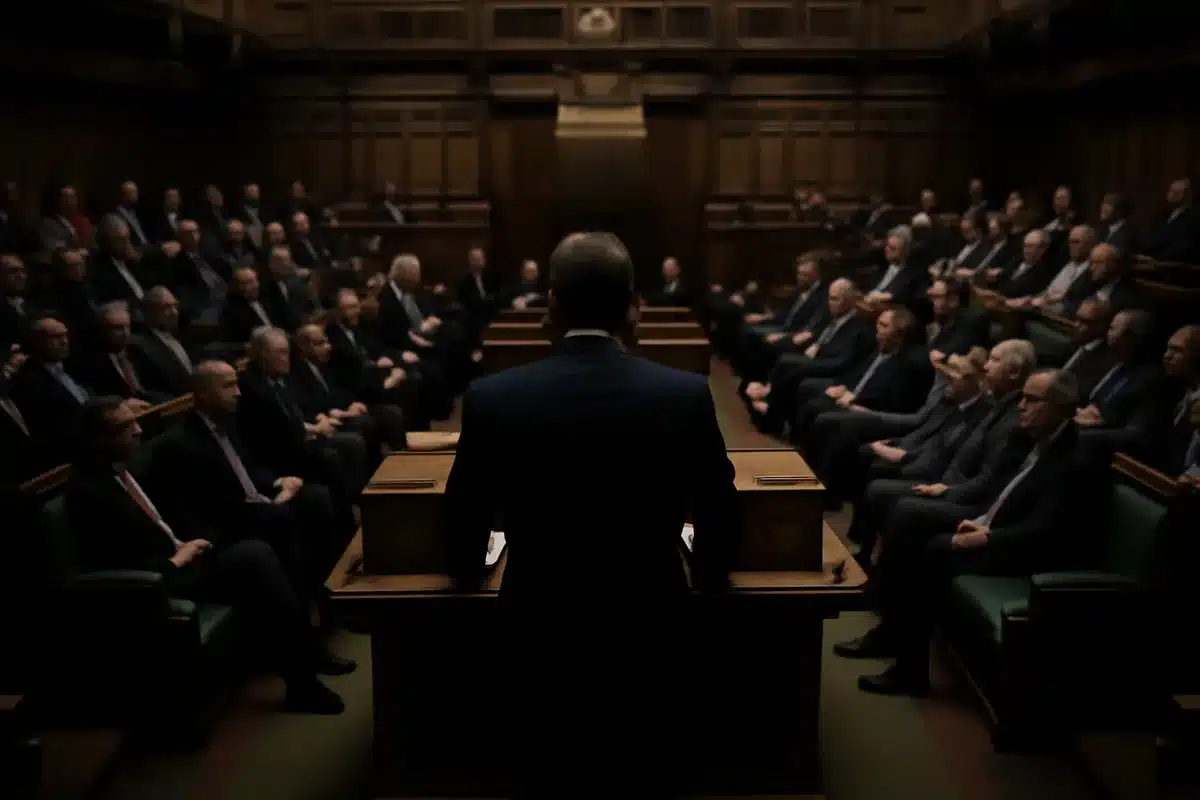
Prime Minister Andy Burnham blamed Brexit and four decades of Conservative economic policy for a decade of sluggish growth in the UK during his first address to the House of Commons on September 1, 2026, six weeks into his premiership. “Brexit compounded the damage, ushering in a decade of low growth and stalled regeneration,” Burnham told MPs, arguing that Britain must be “brutally honest” about the “series of wrong turns” it had taken since the 1980s.
Burnham’s diagnosis centered on the cumulative effects of political centralization, economic privatization, and de-industrialization that began under Margaret Thatcher, followed by austerity and then the 2016 Brexit vote. “Political power was centralised, economic power privatised, the country de-industrialised. Austerity followed, hollowing out councils and depriving them of the agency to act,” he said during a three-hour stint in the Commons. He framed the next decade as an opportunity to reverse this trajectory through devolution and greater public control of essential services.

The UK economy has taken a 6% hit from the effects of Brexit, according to economists’ analysis of internal Bank of England data on thousands of British companies since the referendum a decade ago. Academic research published in 2025 and 2026 by institutions including Stanford and the Centre for Economic and Policy Research estimates that by 2025, Brexit had reduced UK GDP by 6% to 8% compared with if Britain had remained in the EU. The Office of Budget Responsibility, the UK’s independent fiscal watchdog, puts the long-run impact at 4% of GDP.
Burnham’s first Commons appearance came as his predecessor, Keir Starmer, announced he would stand down as an MP, creating a byelection test in the traditionally safe Labour seat of Holborn and St Pancras. The prime minister paid tribute to Starmer’s foundation, saying he would “use it well” to deliver the “much more substantial change” the British people demanded on cost-of-living pressures, community regeneration, and greater public control of water, housing, and energy.

Burnham’s cabinet was told the government would establish three key taskforces led by his deputy, Louise Haigh, to tackle everyday costs like childcare and mortgages, explore state takeover of failing essential services, and revive struggling high streets and communities. He also hinted at a commitment to spending 3% of GDP on defence by 2030 and opened the door to electoral reform, saying a consensus would be needed before any change to the voting system in the next parliament.
The prime minister, whose own constituency voted for Brexit, has previously argued against rerunning the referendum but has said he wants the UK to rejoin the EU in his lifetime. He suggested the next UK-EU reset summit could take place in November. Conservative leader Kemi Badenoch accused Burnham of “living in the past” over his repeated criticism of Thatcher, who left office in 1990, and of wanting to take Britain “back to the 1970s.”
Sources
- The Guardian — Burnham’s full Commons speech, his blame of Brexit and Thatcher for low growth, his devolution and public control agenda, and Starmer’s resignation announcement
- BBC — Confirmation of Burnham’s first Commons address and pledges on devolution and public control of services
- Bank of England / BBC analysis — The 6% GDP hit from Brexit effects based on internal Bank of England data
- Stanford University and Centre for Economic and Policy Research — Academic estimates that Brexit reduced UK GDP by 6–8% by 2025
- Reuters — Confirmation of 6–8% GDP reduction and broader Brexit economic impacts
- Office of Budget Responsibility — Long-run 4% GDP loss forecast from Brexit