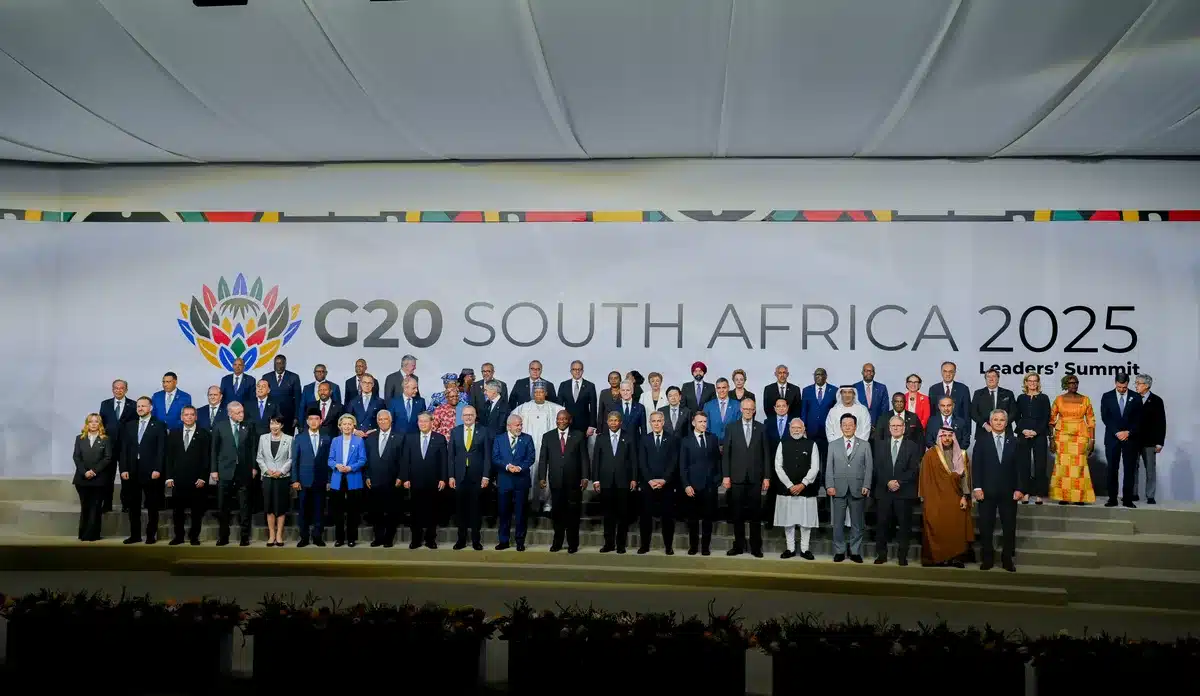
Finance ministers and central bank governors from the Group of 20 major economies gathered in Asheville, North Carolina on August 31 for a two-day meeting focused on boosting global economic growth and addressing persistent imbalances in international trade and finance.
U.S. Treasury Secretary Scott Bessent is hosting the ministerial-level meeting, which runs through September 1. The gathering brings together some of the world’s top economic policymakers to coordinate policy on growth priorities.
Bessent outlined an agenda centered on what he called a “streamlined, results-oriented approach” for the G20 finance track. According to Treasury’s February announcement of the meeting, the priorities include modernizing financial regulation and promoting innovation, strengthening understanding of excessive global imbalances, enhancing debt transparency and facilitating debt restructuring processes, endorsing a vibrant digital assets ecosystem, improving cross-border payments, and promoting financial literacy.

The Asheville meeting follows a deputies meeting held August 29-30, where finance and central bank officials prepared the ground for the ministerial discussions. The current schedule of in-person G20 Finance Track 2026 meetings also includes an April 16 gathering in Washington, D.C., and an October 15 meeting in Bangkok, Thailand.
Treasury Secretary Bessent emphasized that the selection of Asheville reflects the Trump Administration’s commitment to the region’s recovery following Hurricane Helene. The meeting is expected to draw as many as 21 finance ministers and 21 central bank governors, representing the 19 G20 member countries plus the European Union and the African Union.
The U.S. G20 presidency culminates with President Trump’s Leaders’ Summit scheduled for December 14-15 at Trump National Doral in Miami, Florida. The Asheville finance ministerial is one of the most significant policy coordination meetings of the year, as it sets the economic priorities that will shape global financial discussions through year-end.

The focus on growth comes as global economic forecasts have been revised downward. The OECD lowered its G20 growth forecast for 2026 to 2.9 percent, down from an earlier projection of 3.2 percent, citing higher trade barriers and policy uncertainty. The first quarter of 2026 saw G20 GDP growth at 0.7 percent according to provisional OECD estimates released in June.
Fed Chair Kevin Warsh, who delivered his first Jackson Hole speech as Fed chair in late August, is participating in the Asheville meeting alongside Bessent. The Treasury official emphasized that G20 discussions will seek to ensure economies avoid policies that push excess production and capacity into global markets, signaling a focus on fair trade practices and balanced economic policies.
Sources
- U.S. Department of the Treasury — Treasury Secretary Scott Bessent’s announcement of the 2026 G20 Finance Track agenda and schedule, including the Asheville meeting dates and priorities.
- Reuters — Reporting on the U.S.-hosted G20 finance meeting focusing on growth, trade imbalances, and Iran sanctions.
- CNBC — Live updates from the G20 finance meeting in Asheville on August 31, 2026.
- OECD — G20 GDP growth statistics for the first quarter of 2026 and revised growth forecasts for 2026.
- Citizen-Times — Coverage of the G20 finance leaders meeting in Asheville and its focus on global economic priorities.