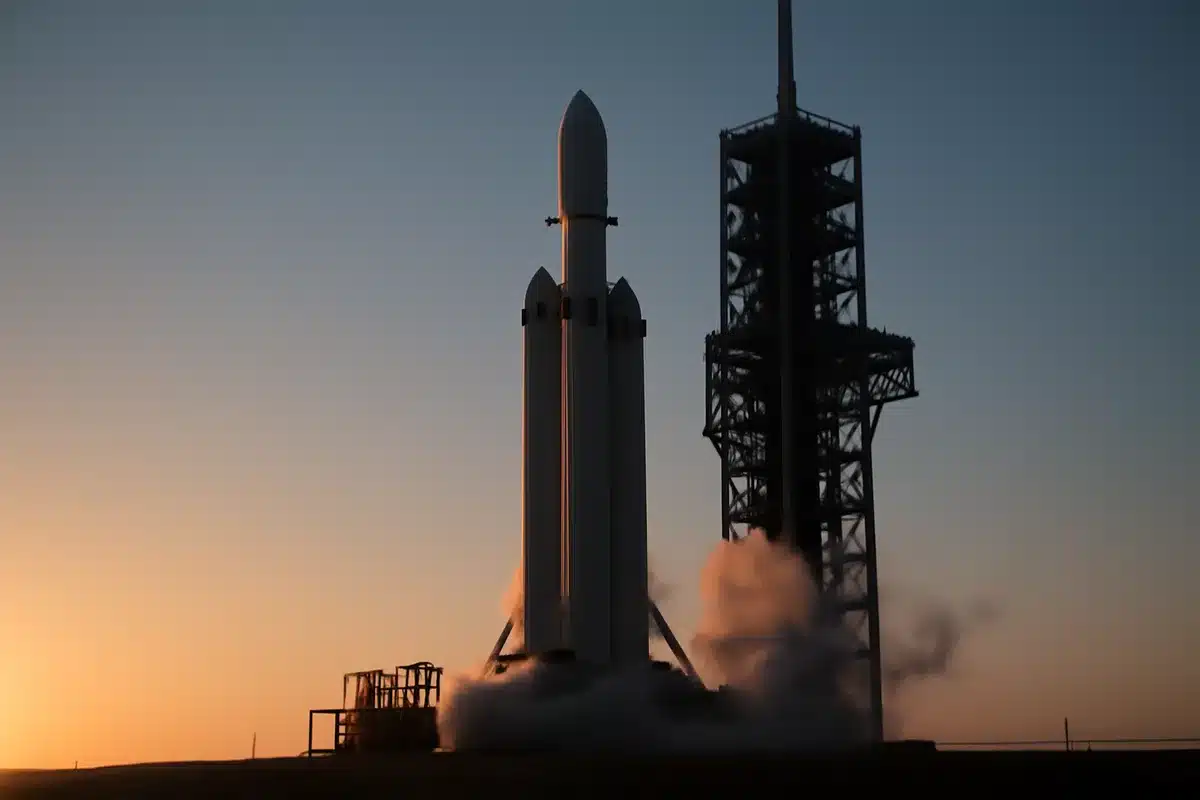
NASA’s Nancy Grace Roman Space Telescope is set to launch tomorrow at 7:26 a.m. EDT from Launch Complex 39A at Kennedy Space Center in Florida, aboard a SpaceX Falcon Heavy rocket. The $4 billion infrared observatory represents one of the most ambitious space missions ever built, designed to unlock mysteries of the universe that have eluded astronomers for decades.
The telescope is named after Nancy Grace Roman, NASA’s first chief astronomer and the “Mother of Hubble” for her foundational role in bringing the Hubble Space Telescope to life. Roman created NASA’s space astronomy program in the 1960s and served as the agency’s first female executive, establishing the groundwork for modern space-based astronomy before retiring in 1979.
Mission and Capabilities
The Roman Space Telescope will address fundamental questions about dark energy and dark matter, search for and image exoplanets, and investigate the evolution of galaxies. Its most striking capability is a field of view at least 100 times wider than the Hubble Space Telescope, despite sharing the same 2.4-meter mirror size. This means Roman can survey the sky far more rapidly—a month of observations would take Hubble approximately a century to complete, according to Space.com.
Roman will operate in near-infrared wavelengths, complementing observations from telescopes like Hubble and the James Webb Space Telescope. The observatory will be positioned at a Sun-Earth point called L2, approximately one million miles from Earth, where it will conduct three core survey programs that account for 75 percent of its primary mission.
Construction of the telescope was completed in November 2025, and teams have been conducting final preparations at Kennedy Space Center since its arrival in June. Flight readiness reviews were completed in late August, clearing the way for tomorrow’s launch. NASA’s live coverage will begin at 6:20 a.m. EDT.
The Roman mission builds on decades of space astronomy heritage. When the Hubble Space Telescope launched in 1990, it revolutionized our understanding of the cosmos. Roman’s wider view and advanced infrared capabilities are expected to reveal billions of cosmic objects and help answer long-standing questions about the universe’s composition and expansion. The mission will also contribute to planetary defense efforts by identifying potentially hazardous asteroids.
Sources
- NASA — official launch date, time, location, vehicle, and mission objectives
- Space.com — mission cost ($4 billion), field of view comparison with Hubble, surveying speed
- Washington Post — telescope assembly and naming after Nancy Grace Roman
- USA Today — launch schedule and timing
- Britannica — Nancy Grace Roman’s biography and role as “Mother of Hubble”
- ESA Hubble — Nancy Grace Roman’s foundational work on the Hubble Space Telescope
- Planetary Society — mission objectives including exoplanet discovery
- Science Daily — dark energy and dark matter research focus