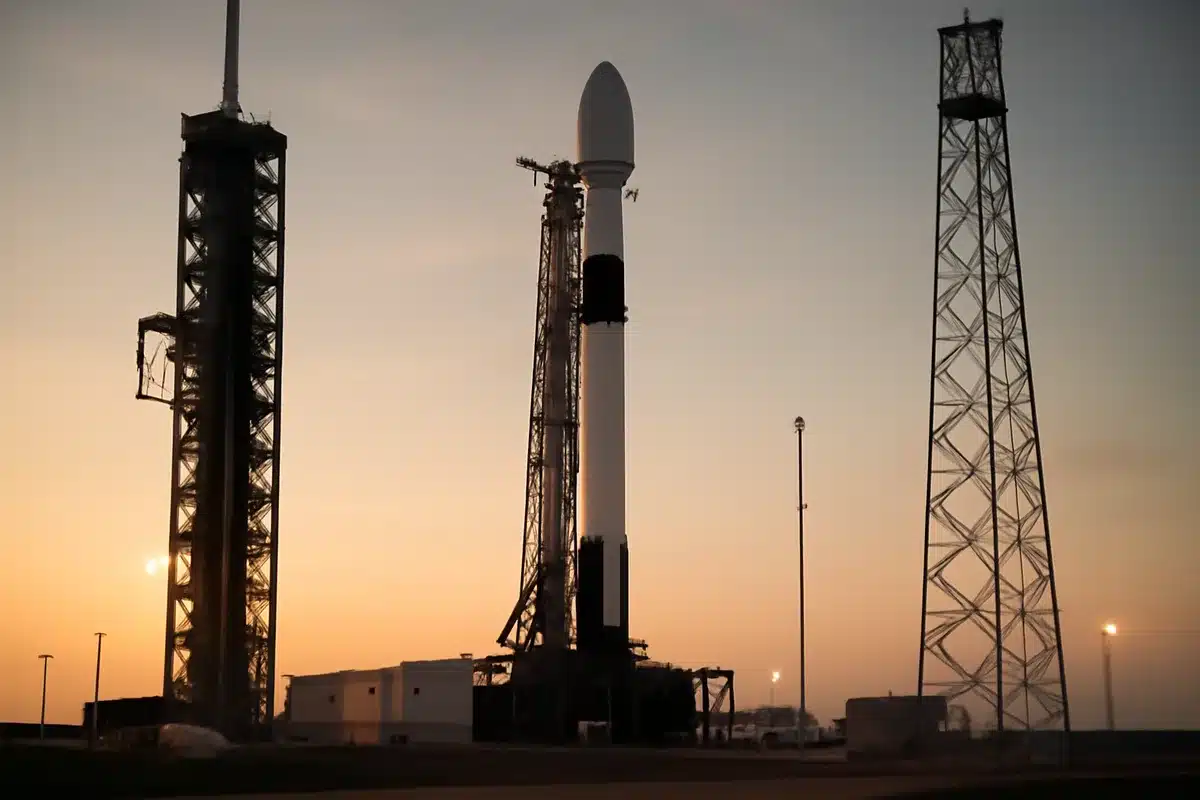
SpaceX will launch 29 Starlink satellites from Cape Canaveral early on August 25 as a Falcon 9 booster sets a new reuse record with its 37th flight. The Starlink 10-49 mission is scheduled to lift off at 5:33 a.m. EDT from Space Launch Complex 40 at Cape Canaveral Space Force Station, according to Spaceflight Now.
The flight-leading booster, designated B1067, will make history by completing its 37th mission after first entering service in June 2021. The mission also marks SpaceX’s 100th Falcon 9 launch of 2026, cementing the company’s extraordinary flight cadence this year.
B1067 has become the company’s most-flown booster, with the 37th flight extending the previous reuse record of 36 flights that was set in July 2026. The booster has mostly supported Starlink missions but has also carried NASA cargo resupply missions and crewed flights to the International Space Station, including the Crew-3 and Crew-4 missions.
Nearly 8.5 minutes after liftoff, B1067 will target a landing on the droneship “A Shortfall of Gravitas” in the Atlantic Ocean. If successful, this will be the 654th Falcon booster landing to date and the 165th landing on that particular droneship, according to Spaceflight Now.
The Starlink 10-49 mission will add another 29 broadband internet satellites to SpaceX’s low Earth orbit constellation, which now consists of more than 11,000 spacecraft. Spaceflight Now reported that this could be the last Starlink flight from Cape Canaveral for a while, with SpaceX having refocused its Cape Canaveral workforce on Starship preparations. The company has launched 44 of 76 Starlink missions this year from its West Coast launch site at Vandenberg Space Force Base in California.
The 45th Weather Squadron forecast a 90 percent chance for favorable weather during the launch window. Launch weather officers noted they are watching for a small possibility of interference from cumulus and anvil clouds.
Sources
- Spaceflight Now — detailed coverage of the Starlink 10-49 mission, booster B1067 specifications, landing details, weather forecast, and constellation size
- Space.com — confirmation of the 37th flight record and 100th Falcon 9 mission of 2026
- SpaceX official mission page — mission details and booster flight history