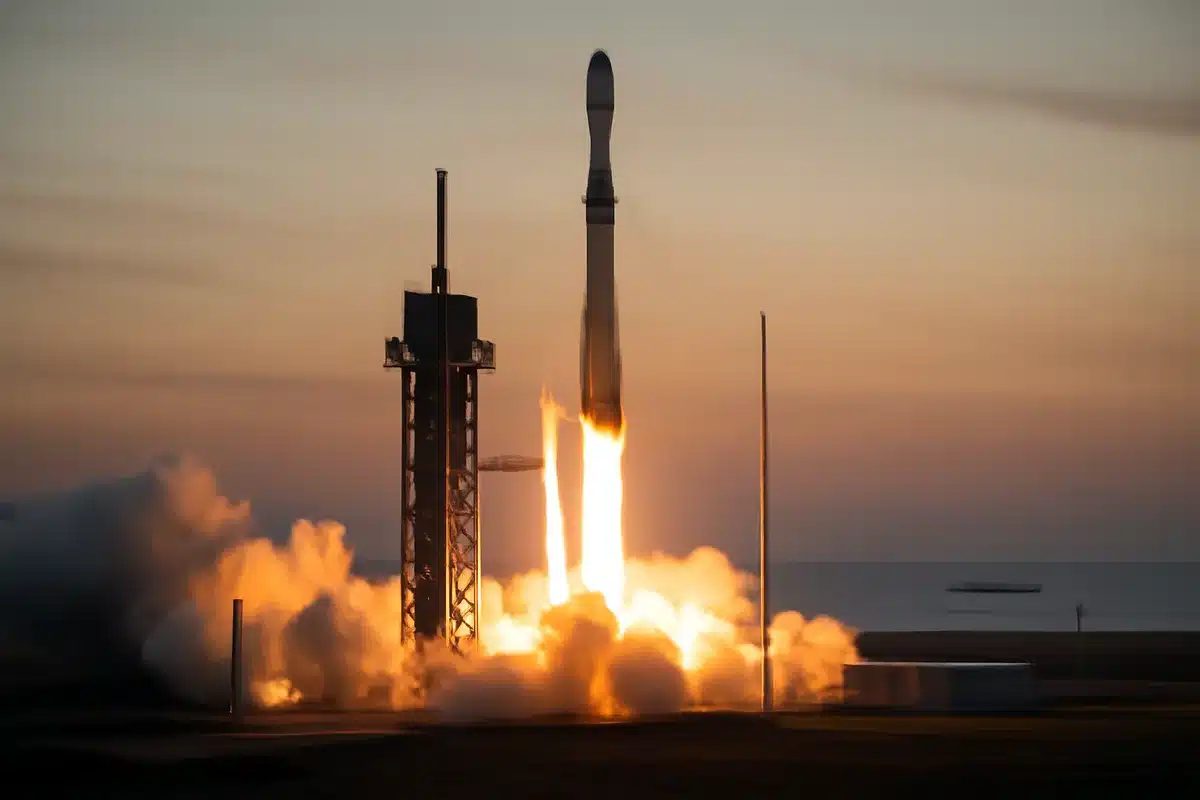
SpaceX reached a historic milestone early Saturday morning with its 100th Falcon mission of 2026, launching 27 Starlink satellites from Vandenberg Space Force Base in California. The Starlink 15-20 mission lifted off at 12:25 a.m. PDT on August 22, marking the company’s fastest journey to triple-digit launches since it first reached 100 missions in 2024.
The Falcon 9 booster, numbered B1100, completed its ninth flight before landing on the droneship “Of Course I Still Love You” in the Pacific Ocean. This was the 220th landing on that vessel and the 653rd Falcon booster landing to date, underscoring SpaceX’s reusability strategy.
The milestone reflects a dramatic acceleration in SpaceX’s launch cadence. The company hit 100 launches in 231 days in 2026, roughly two months faster than it achieved the same milestone in 2024. This acceleration builds on years of compounding growth: SpaceX flew 25 times in 2020, then 31, 61, 96, 134, and 165 times in subsequent years through 2025.
Nearly all of SpaceX’s 100 launches this year have carried the company’s own Starlink internet satellites. This self-feeding loop—SpaceX flying its own hardware to build its own network—is what enables the pace. The Starlink constellation crossed 11,000 satellites in orbit in mid-August, making it the largest satellite operator in the world by a significant margin.
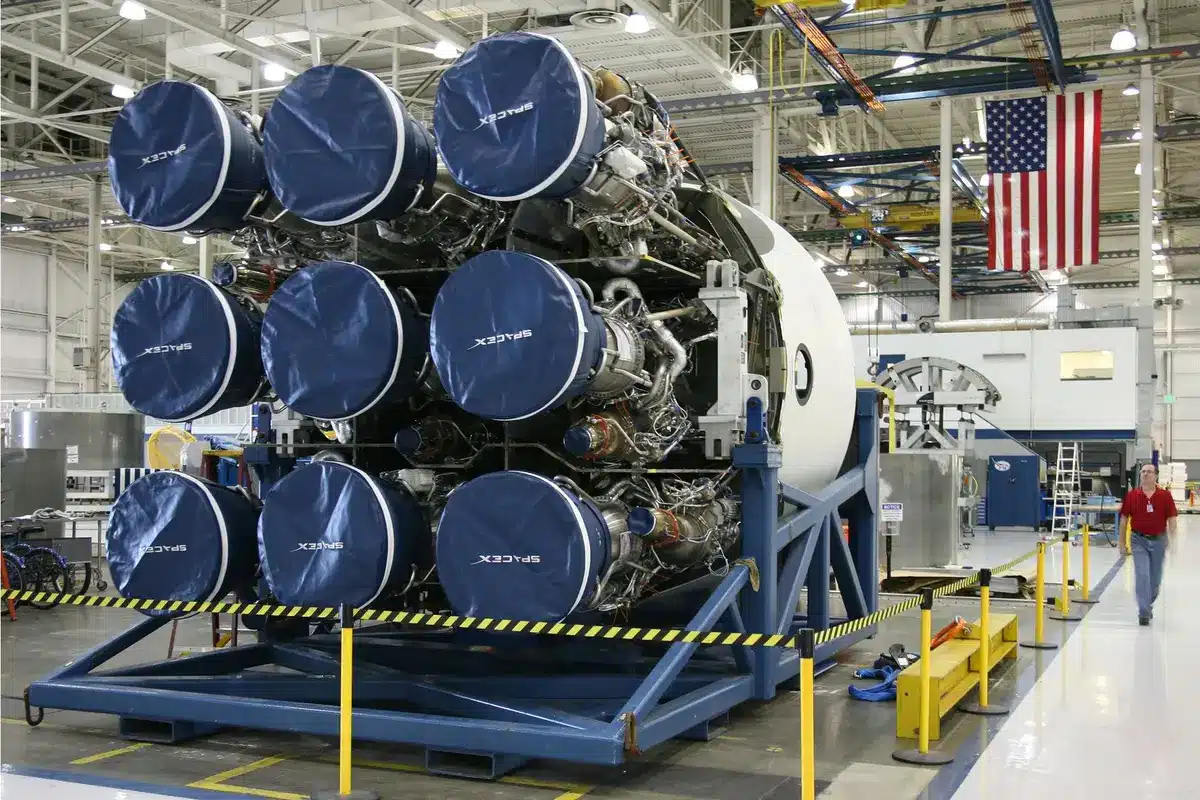
The cadence is driven by production capacity on the ground. Anne Mason, SpaceX’s director of national security space launch, noted last year that the company now produces a Falcon 9 second stage every 2.5 days. Because the upper stage is expended on each flight while boosters are reused, this manufacturing pace sets the ceiling for how often the company can launch. SpaceX founder Elon Musk has previously discussed pushing annual totals toward 1,000 launches using Starship, though that remains years away.
A New Baseline for Orbital Access
The speed of SpaceX’s growth exposes a shift in how orbital access is controlled. In 2025, SpaceX’s 165 launches were nearly twice as many as all of China and about 85 percent of the total U.S. figure. One company now represents a meaningful share of everything humanity puts into orbit. As SpaceX news coverage shows, this 100th-launch milestone represents more than operational efficiency—it reflects a fundamental reshaping of space economics and governance.
The concentration of launch capability and orbital assets in one company is quietly reshaping the industry. With Starlink passing 11,000 satellites in orbit, SpaceX controls roughly two-thirds of all active satellites in Earth orbit, according to space-tracking data. This dominance gives the company unprecedented influence over global broadband access and orbital infrastructure.
Sources
- Spaceflight Now — confirmed 100th orbital mission of 2026 on August 22, 2026, with Starlink 15-20 mission details, booster information, and landing data
- Space Daily — provided launch cadence history (25 launches in 2020 through 165 in 2025), 2024 precedent timing, and Anne Mason quote on manufacturing pace
- Space.com — reported 100 launches by mid-August 2026, comparison to 2024 milestone, and global launch share data
- Indian Express — confirmed 27 Starlink satellites deployed on 100th Falcon mission