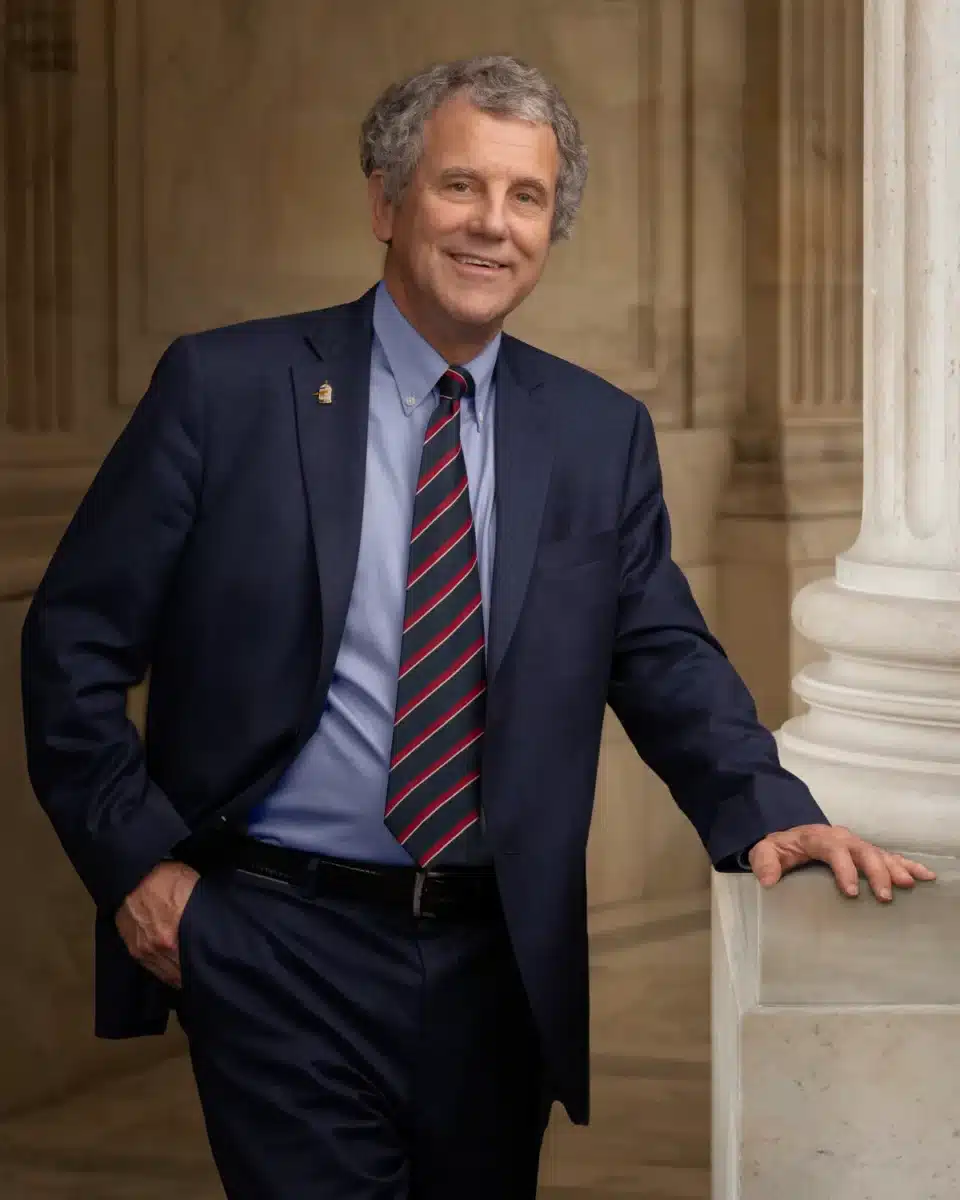
The United States launched “Operation Economic Outcast” on August 24, targeting Iran’s global financial networks through sweeping economic sanctions that mark a significant escalation in the Trump administration’s use of economic pressure over military force. Treasury Secretary Scott Bessent announced the campaign, which designates five critical Iranian economic sectors—digital assets, technology, gold, aviation, and shipping—as subject to secondary sanctions, meaning any country or company continuing to do business with Iran faces exclusion from the U.S. financial system.
The operation represents an unprecedented effort to sever Iran’s remaining international trade relationships. Bessent stated that Treasury has “mapped every node, every facilitator, and every network that Iran has used to smuggle oil and evade sanctions,” and will enforce what he called a “zero-leakage approach” to prevent revenue reaching the Iranian Revolutionary Guard Corps and the regime. As part of the initial wave, Treasury sanctioned over 60 entities, individuals, and vessels across the globe linked to Iran’s nuclear procurement, cyber operations, and oil revenue generation.
Bessent invoked the World War II D-Day invasion as the historical parallel for the campaign’s ambition, framing economic isolation as equivalent to a military invasion in scale and purpose. He warned that “any entity that facilitates money laundering on behalf of Iran will be removed from the U.S. dollar system,” and stated that every Bank Melli branch operating abroad must be shuttered. The Treasury Secretary emphasized that countries have defined timelines to comply, after which the U.S. will act unilaterally through Treasury authorities.
The shift toward economic warfare reflects a broader strategic pivot. According to analysis from the Soufan Center, the new measures represent a transition “toward reliance on economic pressure rather than kinetic military action to coerce Iran into compliance.” This approach complements the continued U.S. naval blockade of the Strait of Hormuz, which Bessent described as a two-pronged strategy combining financial isolation with energy-sector restrictions.
Precedent: The 2018-2021 Maximum Pressure Campaign
The Trump administration’s first term pursued a similar “maximum pressure” strategy against Iran between 2018 and 2021, imposing more than 1,500 individual sanctions designations across multiple rounds. That campaign aimed to force Iran back to the negotiating table and extract concessions on nuclear weapons development. However, according to Congressional Research Service analysis, the prior maximum pressure campaign failed to achieve its stated objectives of compelling Iran to renegotiate or abandon its nuclear program. Iran instead accelerated uranium enrichment and expanded its ballistic missile capabilities, demonstrating resilience against economic coercion.
The current operation targets the same evasion networks Iran relied upon during the earlier sanctions regime. Bessent’s emphasis on secondary sanctions—penalties against third-party countries and companies rather than Iran directly—signals an intent to close the loopholes that allowed Iran to maintain trade relationships through intermediaries. The Trump administration has explicitly stated that countries cannot claim ignorance of Iran’s activities and that nations must choose between “prosperity and isolation.”
Iran has dismissed the threat as ineffective, with officials arguing that years of prior sanctions have proven incapable of changing regime behavior. However, analysts inside Iran have warned that an economy already weakened by nearly six months of war may be far less capable of absorbing this new pressure campaign than it was during the 2018-2021 period. The sanctions coincide with significant military losses and economic contraction, potentially amplifying the impact of economic isolation.
Sources
- U.S. Department of the Treasury — Secretary Bessent’s full remarks on Operation Economic Outcast, including the five targeted sectors, secondary sanctions strategy, and timeline for international compliance
- Al Jazeera — Reporting on the operation’s announcement and Treasury’s stated objective to choke off Iran’s revenues
- Reuters — Coverage of expanded sanctions against Iran and its trade partners
- Atlantic Council — Expert analysis on whether Operation Economic Outcast will achieve Iran isolation, noting targets include Chinese and other countries’ firms and ghost-fleet tankers
- Congressional Research Service — Analysis of U.S. sanctions on Iran, including the 2018-2021 maximum pressure campaign’s failure to achieve stated objectives
- Soufan Center — Assessment of the shift from kinetic military action to economic pressure as part of the new campaign
- Iran International — Reporting on Iranian analysts’ concerns about the economy’s reduced capacity to absorb sanctions given war-related damage