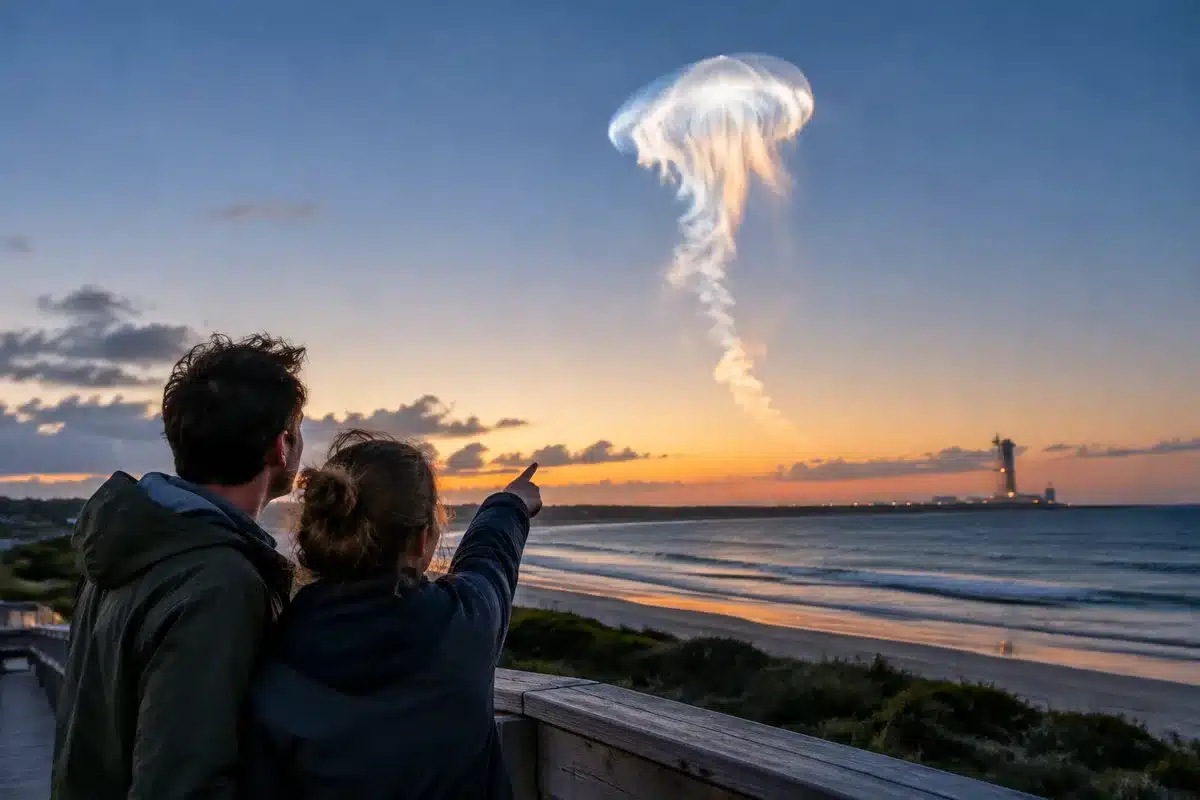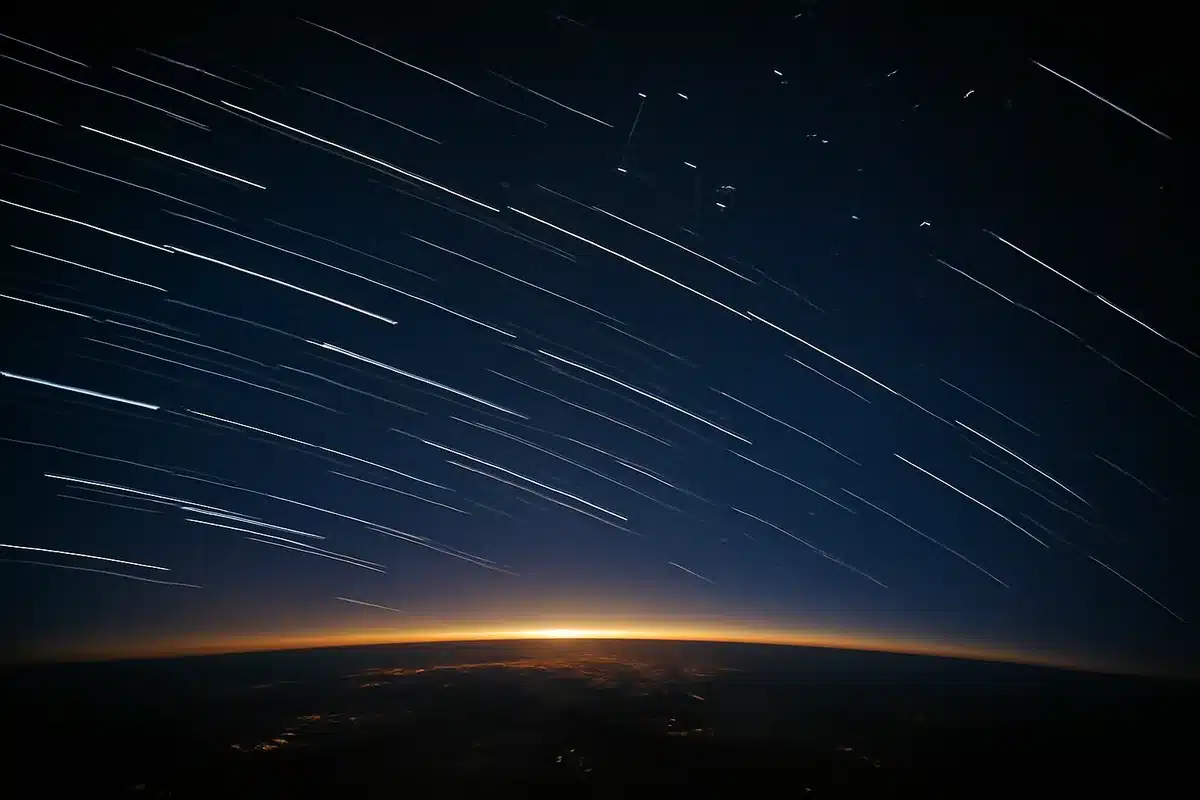
SpaceX launched 29 Starlink satellites to low Earth orbit early Tuesday morning from Cape Canaveral Space Force Station, marking the company’s 100th Falcon 9 flight of 2026 and another milestone in its aggressive deployment schedule for the year.
The Falcon 9 rocket lifted off at 5:33 a.m. EDT on August 25, carrying the Starlink 10-39 mission. The launch’s first stage booster, designated B1067, completed its 37th flight—a new reuse record for SpaceX’s most-flown rocket.
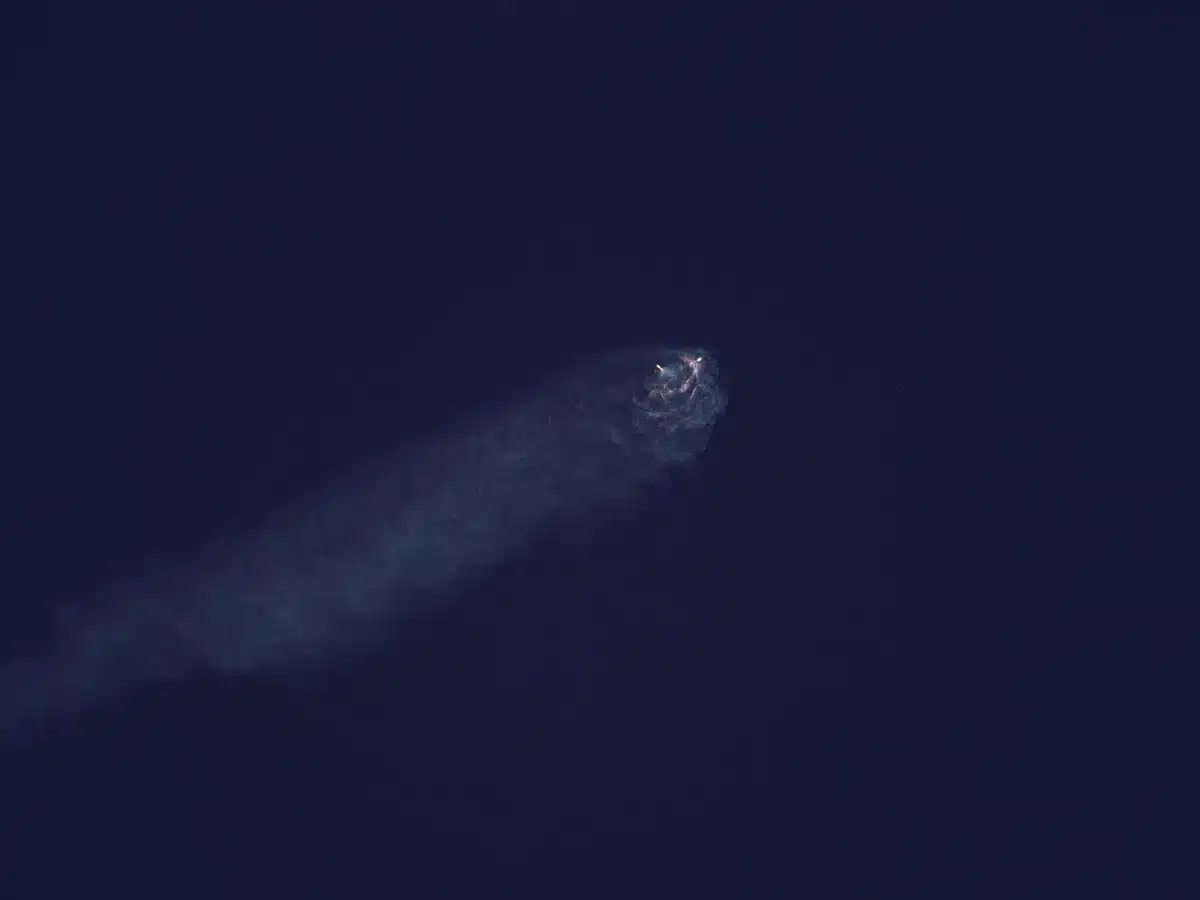
Booster reuse has become central to SpaceX’s operational model. In 2025, SpaceX’s Falcon 9 fleet completed 165 missions—one every 2.2 days—with a 100 percent success rate, according to Space Daily. The reusability of the boosters reduces launch costs and enables the high cadence SpaceX has maintained into 2026.
The 100th Falcon 9 launch of the year represents an acceleration in SpaceX’s pace. By mid-August, SpaceX had already deployed more than 2,000 Starlink satellites in 2026 alone, according to reports tracking the company’s deployment milestones. This rate surpasses the deployment schedules of previous years.
The Starlink constellation itself continues to expand. By August 19, 2026, the constellation had surpassed 11,000 satellites in orbit following a launch from California that deployed 24 additional satellites, according to Space Daily. As of late July, approximately 10,860 of those satellites were operational, making Starlink the dominant satellite network in low Earth orbit.
SpaceX’s launch cadence in 2026 reflects its broader strategy to expand Starlink’s global coverage and capacity. The company has announced plans to begin launching its third-generation satellites in the latter half of 2026, each designed to provide significantly higher throughput than current models. The continued deployment of second-generation satellites like those on this mission maintains coverage expansion while next-generation hardware is prepared.
Sources
- Space.com — Reported the 100th Falcon 9 flight of 2026, the 37th mission for booster B1067, and the August 25 launch date and time.
- UPI — Confirmed the rocket-reuse record set on August 25, 2026.
- Space Daily — Provided data on the 2025 Falcon 9 flight rate (165 missions) and the August 19 milestone of the Starlink constellation surpassing 11,000 satellites.
- Space.com — Reported that as of July 30, 2026, there were 10,876 Starlink satellites in orbit with 10,860 operational.
- Orbital Radar — Cited SpaceX’s deployment of more than 2,000 Starlink satellites in 2026 through August.