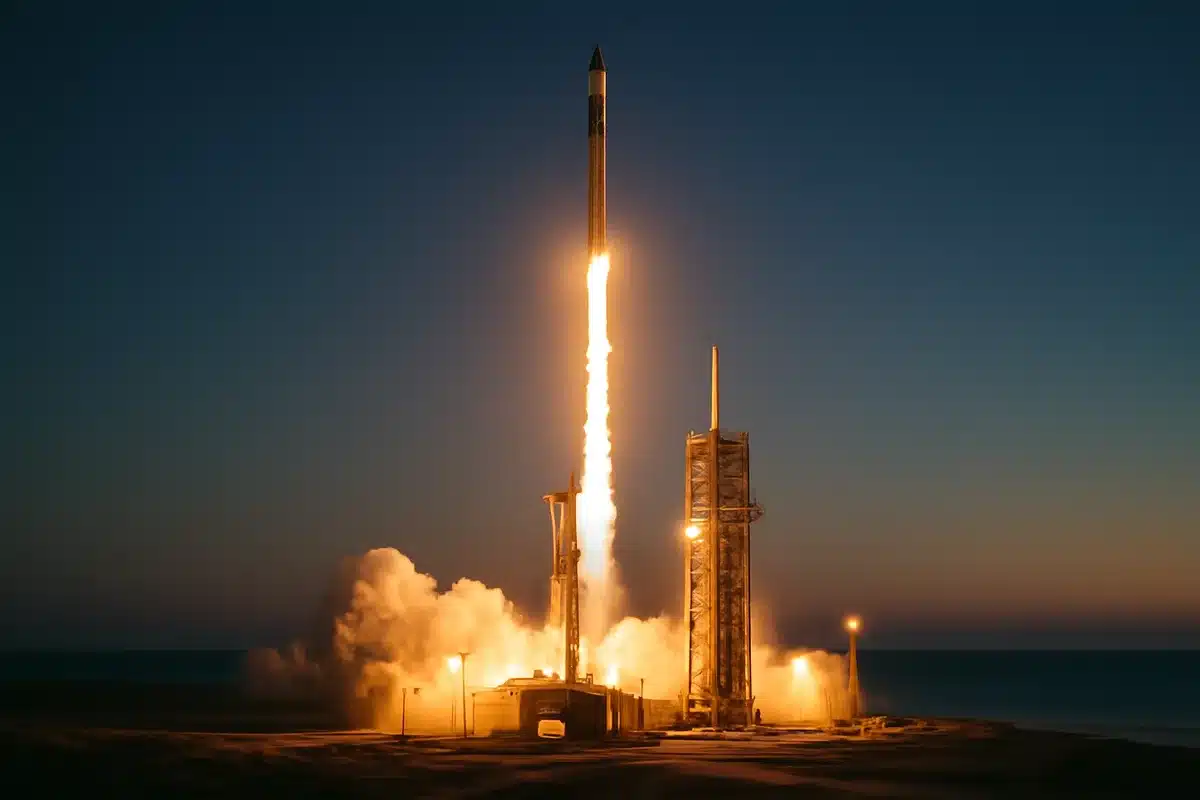
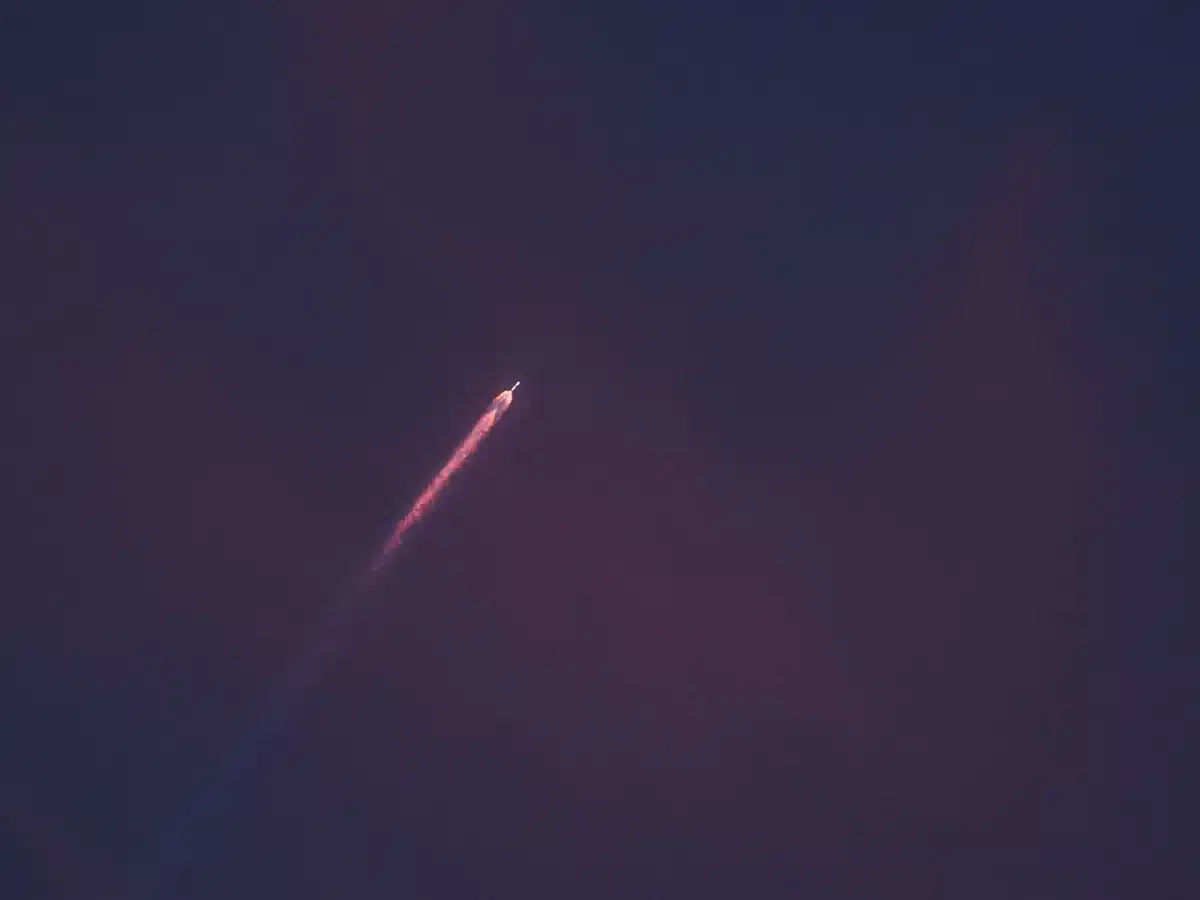
SpaceX launched a Falcon 9 rocket from Cape Canaveral on August 25, 2026, using a booster on its record-breaking 37th flight, according to Spaceflight Now. The mission, called Starlink 10-49, lifted off at 5:33 a.m. EDT and deployed 29 broadband internet satellites to low Earth orbit, adding to the company’s constellation of more than 11,000 spacecraft already in orbit.
The flight-leading booster, designated B1067, entered service in June 2021 and has become the most-reused rocket booster in history. Nearly 8.5 minutes after liftoff, B1067 landed on the droneship “A Shortfall of Gravitas” in the Atlantic Ocean, marking its 654th Falcon booster landing to date, according to Spaceflight Now.
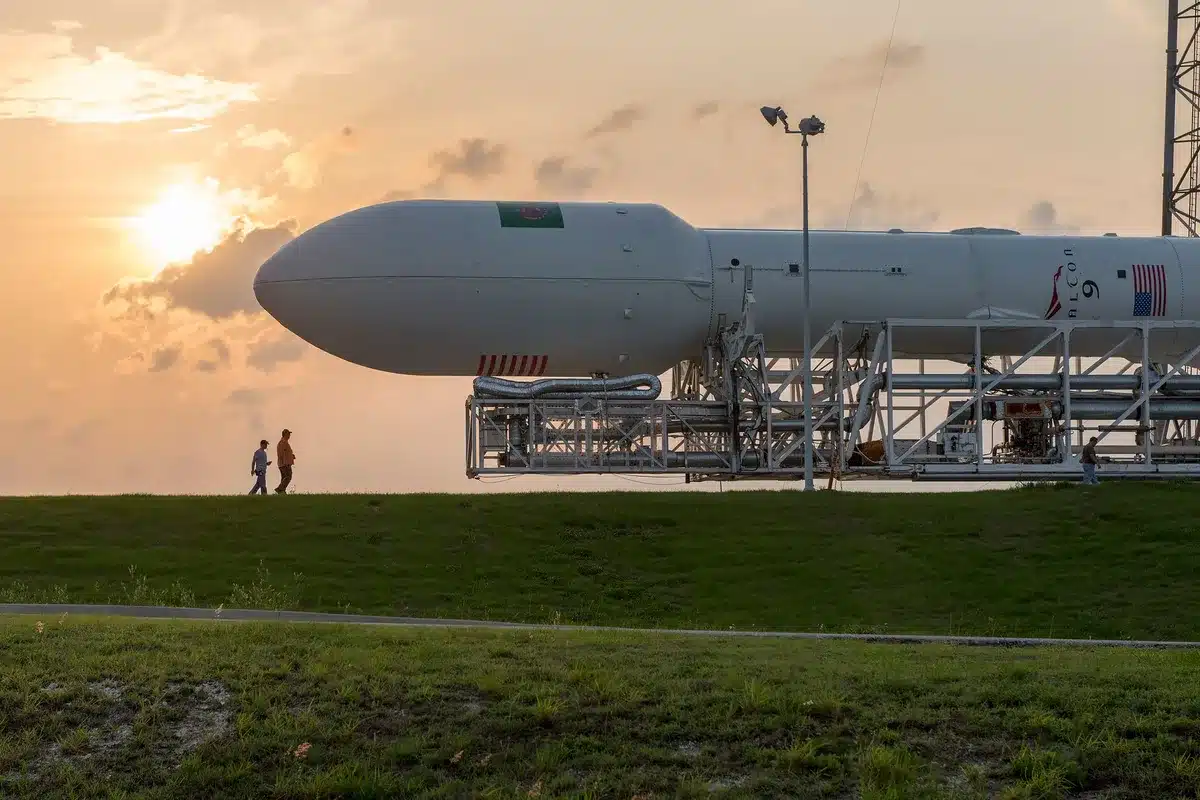
The August 25 launch was also SpaceX’s 100th Falcon 9 flight of 2026, according to Space.com. The company has been flying Falcon 9 rockets at an accelerating pace, launching several times per week as it deploys Starlink satellites and fulfills commercial and government contracts.
B1067’s achievement underscores the practical success of rocket reusability. Since the booster made its debut in June 2021, SpaceX has flown it far more frequently than traditional expendable rockets. Over the same period, United Launch Alliance—SpaceX’s primary U.S. competitor in medium and heavy-lift launch—completed 29 total launches with its Atlas V, Vulcan, and Delta IV Heavy vehicles, according to Ars Technica. In other words, a single reused Falcon 9 booster has put more mass into orbit in five years than two dozen expendable rockets operated by a rival company.
SpaceX has stated a goal of qualifying its Falcon 9 first-stage boosters to support 40 missions each, according to Ars Technica. However, with B1067 now approaching that target and flying safely across dozens of missions beyond initial expectations, the company may be preparing to extend the reuse limit further. The booster’s continued performance demonstrates that rocket reusability has moved from experimental concept to routine operational practice.
The August 25 launch may be the last Starlink mission from Cape Canaveral for a while, with SpaceX focusing its Florida workforce on preparations for Starship, according to Spaceflight Now. The company has been launching 44 out of 76 Starlink missions this year from its West Coast facility at Vandenberg Space Force Base in California.
Sources
- Spaceflight Now — launch details, booster B1067 history, landing confirmation, and Cape Canaveral workforce focus
- Space.com — 100th Falcon 9 flight of 2026 confirmation
- Ars Technica — B1067’s debut in June 2021, comparison with ULA launch rates, and SpaceX’s 40-mission goal