The Supreme Court on Monday granted the Trump administration’s emergency request to lift a federal injunction blocking implementation of an executive order that would restrict mail-in voting ahead of the November midterm elections. In a 10-page unsigned opinion, the conservative majority ruled that Democratic-led states challenging the order had sued too early, as the order has not yet been carried out and thus they have not yet suffered a concrete injury.
The March 2026 executive order, titled “Ensuring Citizenship Verification and Integrity in Federal Elections,” contains three main provisions. The first directs the Department of Homeland Security to create lists of eligible voters in each state and send them to states at least 60 days before federal elections. The second instructs the Attorney General to prioritize investigation and prosecution of state and local officials who issue federal ballots to ineligible voters. The third requires states to provide the U.S. Postal Service with lists of voters to whom they intend to send mail ballots and prohibits USPS from mailing ballots to voters not on the USPS’s “enrolled” voter lists.
A group of 23 states led by California, along with Washington, D.C., filed suit in federal court in Massachusetts after the order was issued, arguing it violated the Constitution’s grant of election authority to states. U.S. District Judge Indira Talwani agreed and issued an injunction blocking implementation of the order for the November elections. A federal appeals court upheld that decision, but the Trump administration appealed to the Supreme Court on July 27, calling Talwani’s order “extraordinary” and arguing that every day it remained in place caused irreparable harm to the government.
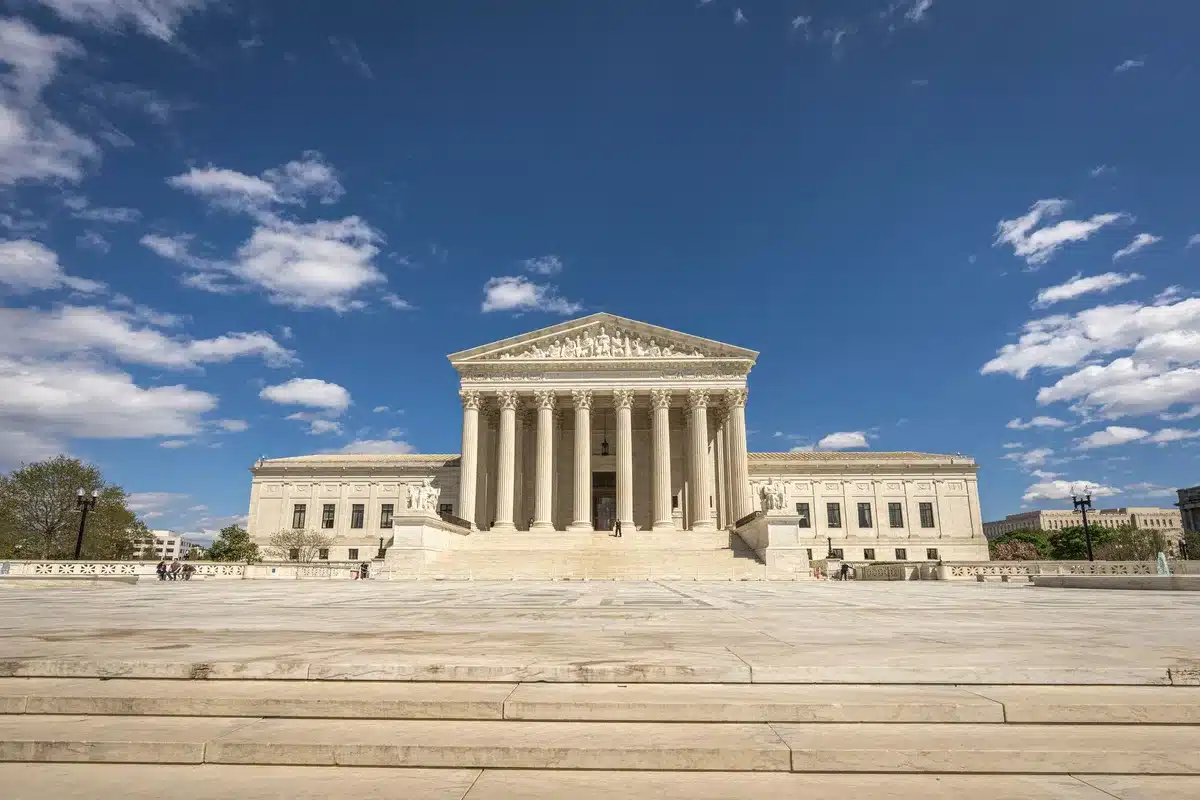
The Supreme Court’s majority found that the government would suffer irreparable harm if the injunction were not paused now, since any reversal “would come too late for the 2026 midterms.” The states, the majority reasoned, face no harm because the order does not require them to do anything — it only directs federal agencies to act. The Court’s three Democratic appointees dissented sharply. Justice Ketanji Brown Jackson issued a 23-page dissent, accusing the majority of creating a “Kafkaesque nightmare” for plaintiffs seeking to challenge election-related orders. She wrote that the ruling “needlessly injects chaos and uncertainty into the upcoming midterm elections” and suggested the Court had created a paradox: valid election claims can come too late, but also too early.
The Shadow Docket and Expanded Emergency Authority
The ruling is the latest in a pattern of emergency orders issued by the Supreme Court on its so-called shadow docket—expedited applications that bypass the Court’s normal briefing and oral argument process. According to the Brennan Center for Justice, since Trump’s second administration took office in January 2026, the Court has sided with the administration on emergency requests 80 percent of the time, often without revealing its reasoning. In contrast, between 2001 and 2017, the federal government sought emergency relief from the Supreme Court only 8 times; Trump’s first administration sought it 41 times.
The Brennan Center noted that the Court has used the shadow docket to advance major policy shifts—including allowing the administration to conduct immigration stops based on apparent ethnicity and to fire members of independent agencies—without explaining its legal reasoning. This lack of transparency has left lower court judges struggling to apply the Court’s decisions to other cases.

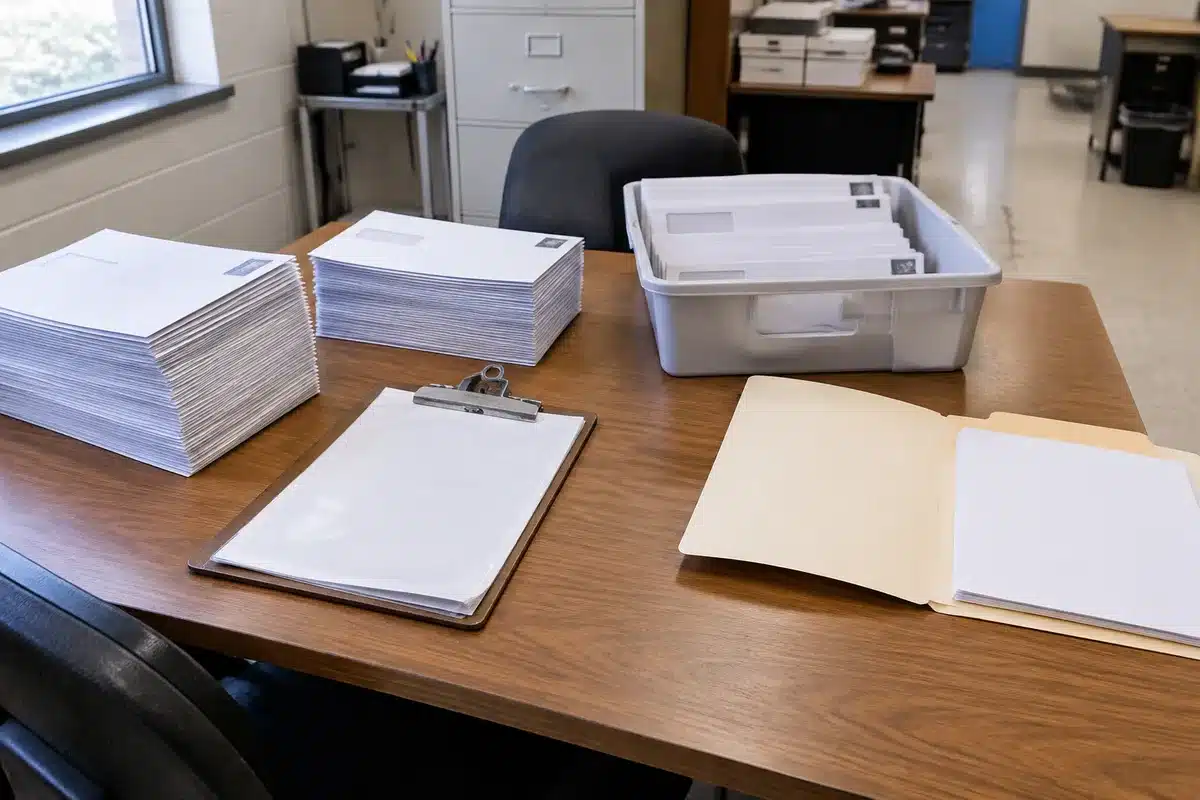
However, a second injunction remains in effect. That order, issued by a separate federal judge in Boston, bars the U.S. Postal Service from implementing one provision of the executive order anywhere in the country. The Trump administration filed a motion Monday evening seeking to remove that hold and posted new USPS regulations that would take effect Tuesday if the legal pathway is fully cleared. The new rule requires mail ballots to be sent in envelopes with specific formatting, including unique tracking barcodes, and mandates that states provide the Postal Service with an electronic list of voters eligible to receive mail ballots. States that do not comply risk having their mail ballots withheld.
Election officials and voting experts warned that implementation within the compressed timeline is practically impossible. North Carolina is scheduled to send ballots to overseas and military voters on September 4—just over a week away. In California’s Yolo County, ballots begin going out in 11 days, and the county has already printed its envelopes. Jesse Salinas, registrar of Yolo County and president of California’s election officers association, said the timeline is “a bit chaotic” and that he does not see the capacity for last-minute procedure revisions. Tammy Patrick, chief program officer at the Elections Center, an association of 2,500 election officers, stated flatly: “There isn’t a single state that does their elections in a way that this postal rule lays out.”
Cisco Aguilar, Nevada’s Democratic Secretary of State, noted the absurdity of the requirement: the Postal Service had already misdelivered three dozen mail ballots from his state’s June primary. “They’re going to come in within seven days and build a massive database that has 100% accuracy?” Aguilar said. “It is impossible to implement this system in that time frame.”
Legal experts stressed that the Supreme Court’s order does not resolve whether Trump’s executive order is constitutional. The majority explicitly noted it has not determined the order’s legality. The Court’s decision only addresses whether the states’ challenge was premature. Opposition groups are already preparing new lawsuits to block implementation, and experts including UCLA law professor Rick Hasen said it is inconceivable the regulation will affect voters in November. The ruling has ensured a fraught legal battle in the coming weeks, with courts facing the impossible choice of either allowing sweeping disruption to election procedures or visibly angering the administration.
Sources
- SCOTUSblog — detailed coverage of the Supreme Court’s unsigned opinion, the three provisions of the executive order, and dissenting opinions from Justices Jackson and Sotomayor
- Courthouse News Service — reporting on the stay granted, the emergency application timeline, and Democratic states’ arguments about the order’s unconstitutionality
- PBS NewsHour — coverage of election officials’ warnings about implementation impossibility, the compressed timeline, and legal experts’ assessments
- Brennan Center for Justice — analysis of the shadow docket’s expansion under Trump administrations and the 80% approval rate for emergency applications