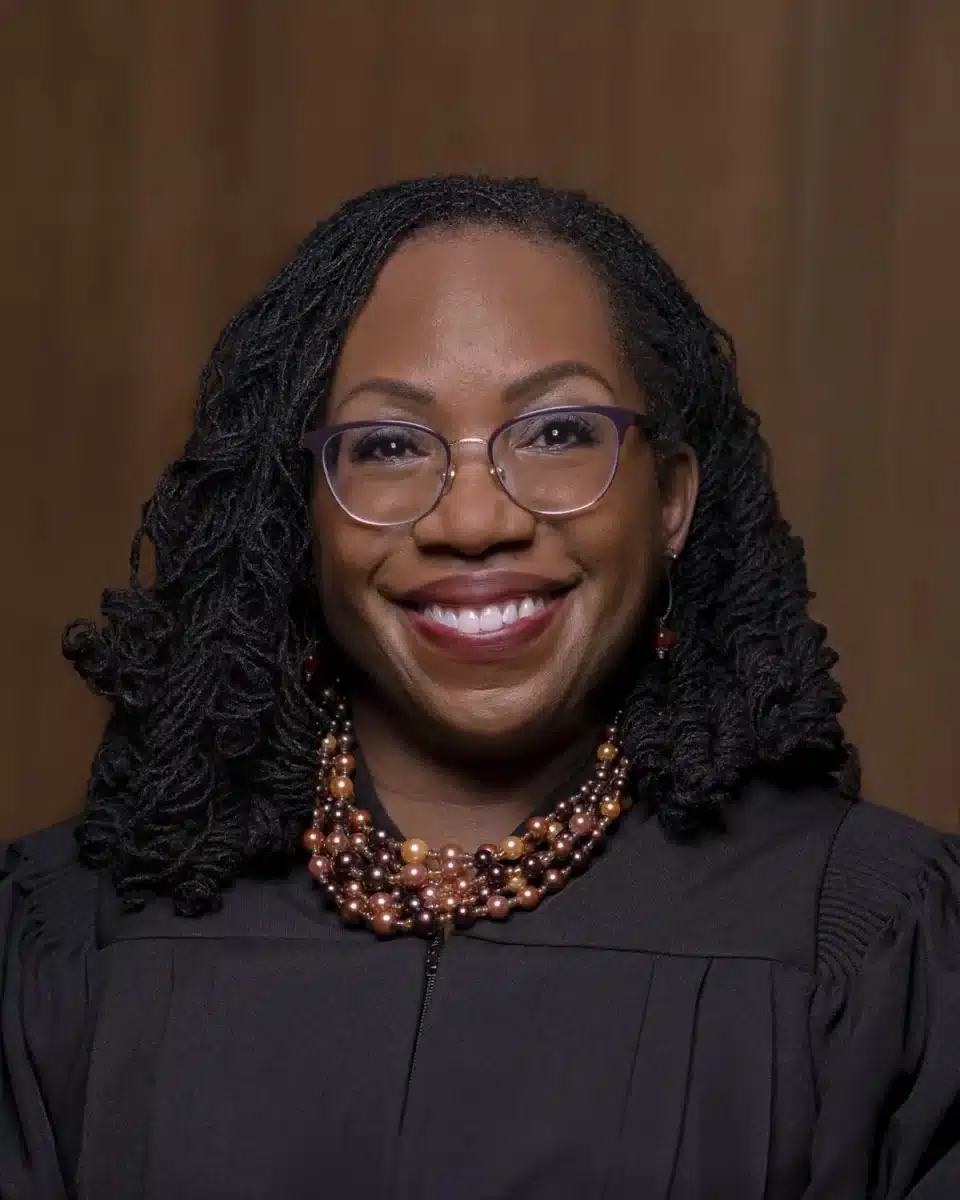
Justice Ketanji Brown Jackson accused the Supreme Court’s conservative majority of injecting “chaos and uncertainty” into the 2026 midterm elections after the Court lifted one injunction blocking President Donald Trump’s executive order restricting mail voting on Monday, August 24.
In a blistering dissent, Jackson warned that the ruling lets the Trump administration continue pursuing changes to state-run mail voting systems even though “no judge or Justice” has concluded that Trump’s order is constitutional. “This ruling violates well-established precedents concerning this Court’s equitable discretion and needlessly injects chaos and uncertainty into the upcoming midterm elections,” she wrote.
Jackson also described the situation as a “Kafkaesque nightmare,” noting that the decision creates a new legal bind for states and voting rights groups. They can be told they sued too early before a final rule is issued, only to later risk being told they sued too late as Election Day approaches. “The Court has held for a while now that even valid election-related legal claims can come too late,” Jackson wrote. “Today’s revelation is that such claims can also come too early — never mind that an election is looming and related harms are presently occurring.”
The Supreme Court’s unsigned majority opinion said it was too early for Democratic-led states to challenge the order in June, when they convinced a federal judge in Boston to freeze the order for November’s election. However, the Court emphasized that its decision did not settle the legality of Trump’s order. “The Court’s disposition of this application does not mean that any measure taken by the Government to implement the Order will necessarily be lawful,” the majority wrote. “On that score, time will tell.”
The Practical Chaos of Last-Minute Implementation
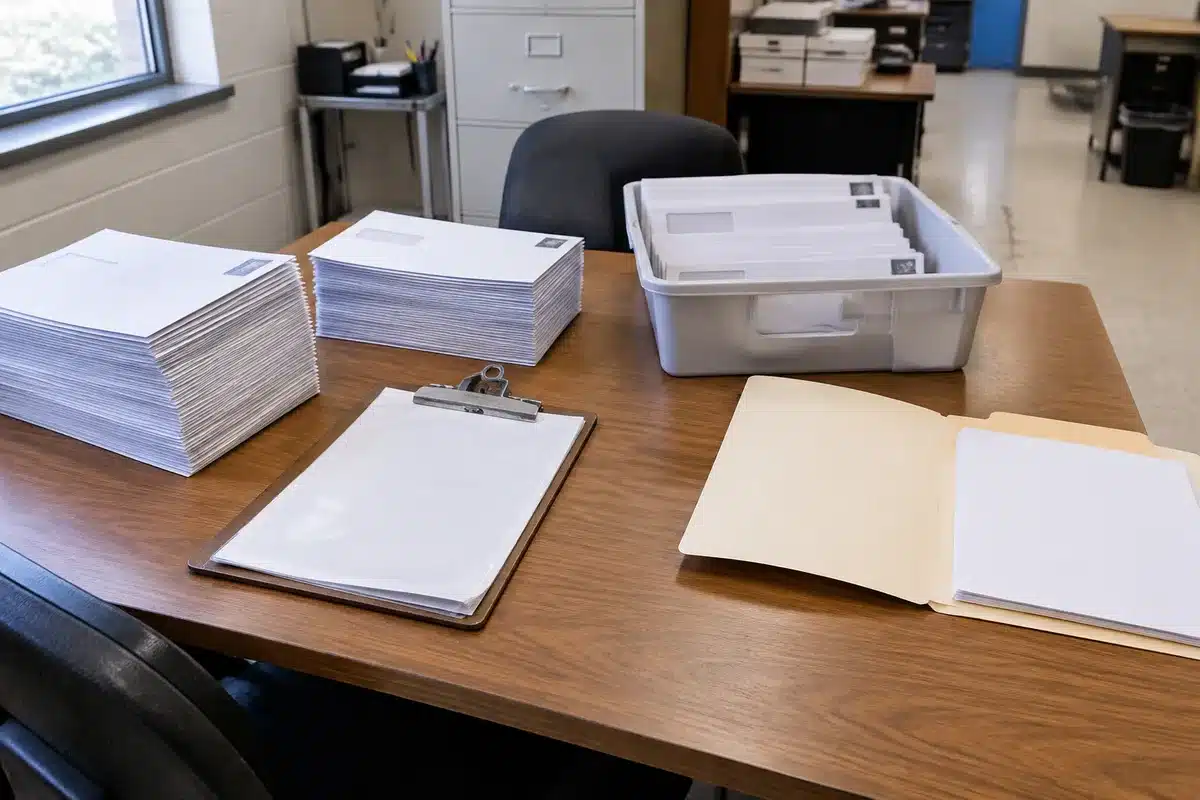
Election officials and legal experts warn that implementing the order’s requirements before November is practically impossible. The Postal Service’s new rule requires specific formatting for mail ballot envelopes—which may force some jurisdictions to completely revise theirs—and mandates that states use an electronic system to identify voters who are voting by mail. If states don’t comply, their mail ballots won’t get sent.
Initial ballots are scheduled to be sent to North Carolina’s overseas and military voters in just over a week, on September 4, and California ballots begin going out in 11 days. Jesse Salinas, the registrar of Yolo County in California and president of that state’s association of election officers, noted that his county has already printed its envelopes. “You look at the timeline, and it’s a bit chaotic,” Salinas said, adding that he doesn’t know precisely which envelope designs comply with the new rules. “The capacity to do that, I just don’t see it.”
Tammy Patrick, chief program officer at the Elections Center, an association of 2,500 election officers, warned that it’s impossible for any state to comply with the rule. “There isn’t a single state that does their elections in a way that this postal rule lays out,” Patrick said. “There has been this assumption that this is not going to happen because it could not happen the way it’s laid out, because no one does it this way.”
A Second Injunction Remains in Place—For Now
The Supreme Court’s ruling lifted one of two injunctions blocking the order. A second nationwide injunction against the U.S. Postal Service’s mail ballot rule remains in effect, though the administration filed a motion late Monday asking that the second hold be removed. The Postal Service published final regulations Friday night that would go into effect Tuesday if the legal pathway is fully cleared.
Jackson said the decision could force states to litigate Trump’s mail voting restrictions even closer to the election, compounding the exact kind of confusion the Court has previously warned against. She pointed to the Purcell principle, a 2006 Supreme Court doctrine holding that courts should not change voting rules too close to an election to avoid voter and administrator confusion. “States administering elections and the voting public that relies on them to do so deserve clarity, not caginess or confusion,” Jackson wrote. “The Court does a disservice to all concerned by distorting Article III standing and ripeness principles to issue a ruling that contributes to pre-election chaos instead of quashing it.”
Jackson was especially critical of the administration’s posture before the Court, accusing the government of arguing that its planned mail voting changes were too speculative for states to challenge while also claiming it needed immediate emergency relief to implement those same changes before November. “Taking its eye off the ball, the majority misses the Government’s actual objective: to secure our imprimatur for its effort to foment chaos ahead of the November elections,” Jackson wrote.
Legal experts stress that further litigation is expected. David Becker, executive director of the Center for Election Innovation & Research, said the majority “seemed to create complete chaos leading up to the midterm elections” and it would be “impossible” for states to comply with the new rules at this late date. Rick Hasen, a UCLA law professor, said after the ruling: “This doesn’t necessarily mean anything in terms of November.” Derek Muller, a Notre Dame law professor, noted that the Supreme Court still ensured a fraught court battle in the coming days. “It puts courts in a terrible place, because whatever happens is super close to the election,” Muller said.
Democratic state officials and voting rights advocates vowed to keep fighting. Colorado Secretary of State Jena Griswold said she was “disappointed that the Supreme Court’s conservative majority did not stop the Trump administration’s attempt to exert federal control over state-run elections.” New York Attorney General Letitia James, who helped lead the Democratic-led coalition challenging the order, called the decision “a painful setback,” but said “it will not be the final word.”
Sources
- Democracy Docket — Jackson’s full dissent, her “Kafkaesque nightmare” and “chaos and uncertainty” quotes, and details on the legal bind created by the ruling
- PBS News — Election officials’ implementation concerns, the timeline for ballot distribution, and expert commentary from Becker, Hasen, Muller, and Salinas
- Votebeat — Details on the Supreme Court’s ruling, the two injunctions, the Postal Service’s final rule, and the history of the case
- Democracy Docket (Purcell resource) — Background on the Purcell principle and its application to election timing