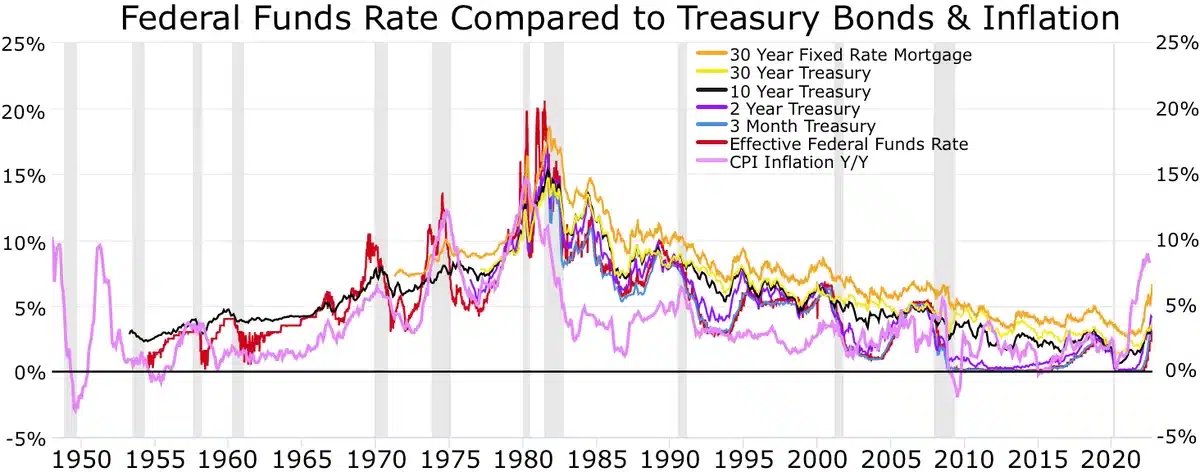
The US bond market is resetting expectations on long-term interest rates, with the 30-year Treasury yield climbing to 5.27% — a level not seen since 2007 — as investors demand higher compensation for holding government debt amid surging federal deficits and intense capital demand from artificial intelligence infrastructure projects.
Treasury Secretary Scott Bessent attempted to calm markets on August 19 by announcing the federal government would double its long-dated bond buyback operations to at least $4 billion per operation, targeting bonds maturing in 10 to 30 years. The initial announcement briefly eased selling pressure, but yields surged again within hours, signaling that market participants view the structural drivers of higher rates as too powerful for temporary policy interventions to contain.

The reset is being driven by multiple forces colliding at once. The federal deficit hit $432 billion in July 2026 — the highest monthly total since March 2021 — with the full-year deficit projected to reach $1.9 trillion, according to Congressional Budget Office data. That massive borrowing need is competing for capital with Big Tech companies racing to finance artificial intelligence data centers. Goldman Sachs data cited by economist Mohamed El-Erian shows that AI hyperscalers have already sold nearly $500 billion in bonds in 2026 and plan to borrow a minimum of another $300 billion before year-end.
El-Erian, the former PIMCO chief executive, argues in an opinion piece for The New York Times that this is no ordinary bond-market sell-off. “If selling pressure on bonds continues, it could mark the beginning of a structural economic shift more enduring and more globally consequential than most previous episodes of market volatility,” he wrote. The economist points out that what has surged is the real yield — the inflation-adjusted compensation investors demand to bear the risk of buying debt in a volatile world — rather than inflation expectations alone.
The cost of servicing the national debt has reached $963 billion for fiscal year 2026, according to the Congressional Budget Office, making interest payments second only to Social Security in yearly government spending. El-Erian notes that nearly 20% of federal revenue now goes to service the debt, leaving less available for defense, health care, and other priorities. With national debt crossing the $40 trillion threshold, higher yields translate into substantially increased borrowing costs for the government.

The bond market’s reset has broader ripple effects across the economy. Mortgage rates have held near 6.7%, pricing in expectations of sustained higher long-term yields. El-Erian warns that housing, auto loans, and credit card balances are in the “cross hairs” of the bond market turmoil, with low-income households likely to bear the brunt through higher borrowing costs and reduced access to credit.
Comparable precedent exists in the 2023 “Treasury Tantrum,” when the 10-year yield surged during the second half of that year as markets repriced expectations for Federal Reserve policy and fiscal sustainability. That episode, documented by Federal Reserve researchers, ultimately stabilized as market participants adjusted to the new rate environment. However, the current reset differs in that it reflects structural concerns about the long-term trajectory of federal deficits and the sheer volume of capital being absorbed by AI infrastructure buildout — factors that may sustain elevated yields even if short-term volatility subsides.
Bessent signaled openness to escalating buyback operations further, saying on August 20 that the Treasury could increase the size beyond $4 billion if needed. Yet the market’s immediate rejection of the initial buyback announcement suggests that investors are focused on the fundamental drivers — the fiscal deficit and competing capital demands — rather than temporary liquidity support. Treasury bond buyback plans have been doubled in recent days, but the underlying pressure on yields persists, reflecting a market reassessment of what returns are needed to attract and retain bond buyers in an era of larger deficits and competing demands for capital.
Sources
- Yahoo Finance / Moneywise — Mohamed El-Erian commentary on 30-year Treasury yield at 5.27% signaling structural shift, August 23, 2026
- Reuters — Treasury Secretary Bessent announcement of doubled bond buybacks to $4 billion per operation, August 20, 2026
- CNBC — Treasury yields rising again after Bessent buyback announcement, August 21, 2026
- Congressional Budget Office — Net interest on public debt at $963 billion for FY2026 and deficit projections
- U.S. Treasury Department / CNBC — Federal deficit of $432 billion in July 2026, August 18, 2026
- Goldman Sachs (via El-Erian) — AI hyperscaler bond issuance at ~$500 billion in 2026 with additional $300 billion planned
- Federal Reserve FEDS Note — Analysis of 2023 Treasury Tantrum precedent