President Donald Trump declined to rule out declaring a national security emergency to assert control over the November 2026 midterm elections, saying “stranger things have happened” when asked about the prospect during an interview released on August 11, 2026.
Conservative commentator Wayne Root suggested during the interview that Trump could declare a national emergency if the Senate fails to pass the Safeguard American Voter Eligibility (SAVE America) Act. Root argued that such a declaration would bypass Congress and immediately impose photo ID requirements, proof of citizenship for voter registration, and restrictions on mail-in voting. Trump’s noncommittal response—rather than outright rejection—signals he has not dismissed the idea, even as legal experts warn such a move would lack constitutional authority.
The SAVE America Act, which Trump has championed for months, proposes requiring Americans to provide documentary proof of citizenship to register to vote in federal elections and show photo ID at the polls. The legislation has struggled to gain traction in the Senate despite Trump’s pressure on Republican leaders. With the Senate unlikely to pass it before the midterms, the emergency declaration option has emerged as a potential workaround in Trump’s broader campaign to reshape voting procedures.

Trump’s July 16 primetime address on election security—which focused on alleged foreign interference and vulnerabilities in voting systems—has been interpreted by observers as laying groundwork for an emergency declaration. Ty Cobb, who served as White House counsel during Trump’s first term, said the speech was “intended to add the predicate that he needs to declare an emergency at or about the time of the elections,” according to PBS. Steve Bannon, Trump’s former political strategist, predicted on his War Room podcast on July 29 that Trump would declare the emergency, telling listeners to “block the last week of August out. It’s coming.”
The White House has been releasing a series of declassified documents this summer—including disputed analyses of alleged voting by noncitizens and historical intelligence assessments—to build a case for federal intervention. On August 23, the U.S. Census Bureau released a brief claiming it had identified 24,000 noncitizens voting in the 2020 election, though democracy advocates criticized the analysis for lacking methodological transparency. The Homeland Security Department has also released analyses claiming 278,000 noncitizens are registered to vote in federal elections, using tools that experts say are known to be inaccurate.
Legal scholars and election experts have made clear that even if Trump declares an emergency, he would lack constitutional authority to unilaterally control elections. The Constitution gives states primary power over election administration, with Congress retaining authority to set national guidelines. A federal judge examining Trump’s March 2025 executive order on elections stated that “our Constitution entrusts Congress and the States—not the President—with the authority to regulate federal elections,” according to court filings. The Center for American Progress argued in a March 2026 analysis that “now claiming that a national emergency allows the president to unilaterally nationalize elections is not based in legal reality.”
If Trump were to declare a national emergency and attempt to federalize the midterms, Congress could prevent him from doing so through a joint resolution—though such action would likely require veto-proof two-thirds majorities in both chambers. Aria Branch, a partner at the Elias Law Group who has led lawsuits blocking Trump’s previous election-related executive orders, said the administration is “trying to lay the groundwork to declare some sort of emergency to nationalize elections.” She added: “I think the president is looking for any opportunity to do that.”
Democratic leaders and voting rights advocates have begun preparing for potential executive actions before November. According to reporting from The Guardian, Democratic members of Congress have been “wargaming strategies” to respond to executive provocations, considering scenarios including AI-generated disinformation videos and Immigration and Customs Enforcement agents being dispatched to polls. Santiago Mayer, president of Voters of Tomorrow, a gen Z-led voter advocacy organization, told The Guardian: “I think we need to be prepared for everything.”
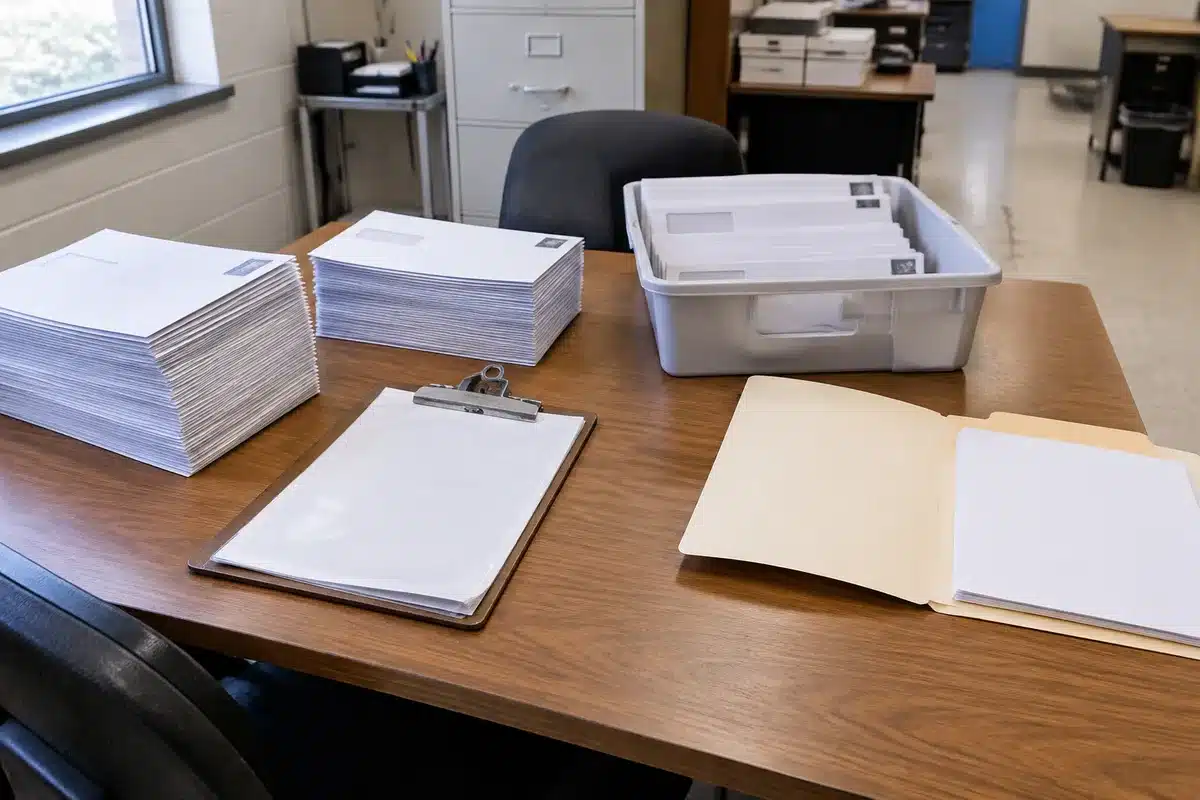
Trump’s interest in controlling voting procedures extends beyond the emergency declaration scenario. The administration has already issued an executive order directing the U.S. Postal Service to restrict delivery of mail-in and absentee ballots that do not provide eligible voter lists to the federal government. Federal courts have blocked or limited that directive in multiple instances, though an appeals court in July allowed the USPS to move forward with changes in some states. The USPS announced tighter mail-in ballot guidelines for November midterms, adding another layer of complexity to voting access.
Trump has also seized 2020 election ballots and voting materials in Fulton County, Georgia, and pressured states to turn over sensitive voter information. In February, Trump urged Republicans to “take over the voting in at least 15 places,” calling for the party to “nationalize the voting.” Trump doesn’t rule out national emergency to control 2026 voting, according to reporting from multiple outlets tracking the administration’s escalating rhetoric on election administration.
No president in U.S. history has attempted to invoke an emergency declaration to assert control over elections. The question of whether Trump will attempt such a move—and whether courts would allow it—remains one of the central uncertainties hanging over the 2026 midterm elections.
Sources
- CNN — Trump’s August 11 interview declining to rule out a national security emergency declaration for the 2026 midterms; details on the SAVE America Act and legal constraints on presidential power
- The Hill — Trump’s “stranger things have happened” response to Wayne Root’s emergency declaration proposal; Senate action on the SAVE America Act
- The Guardian — August 23 reporting on Trump’s election distrust rhetoric, declassified documents released by the administration, and Democratic preparations for potential executive actions
- PBS NewsHour — Ty Cobb’s interpretation of Trump’s July speech as laying predicate for emergency declaration
- Center for American Progress — Legal analysis of presidential authority over elections and constitutional constraints on executive power