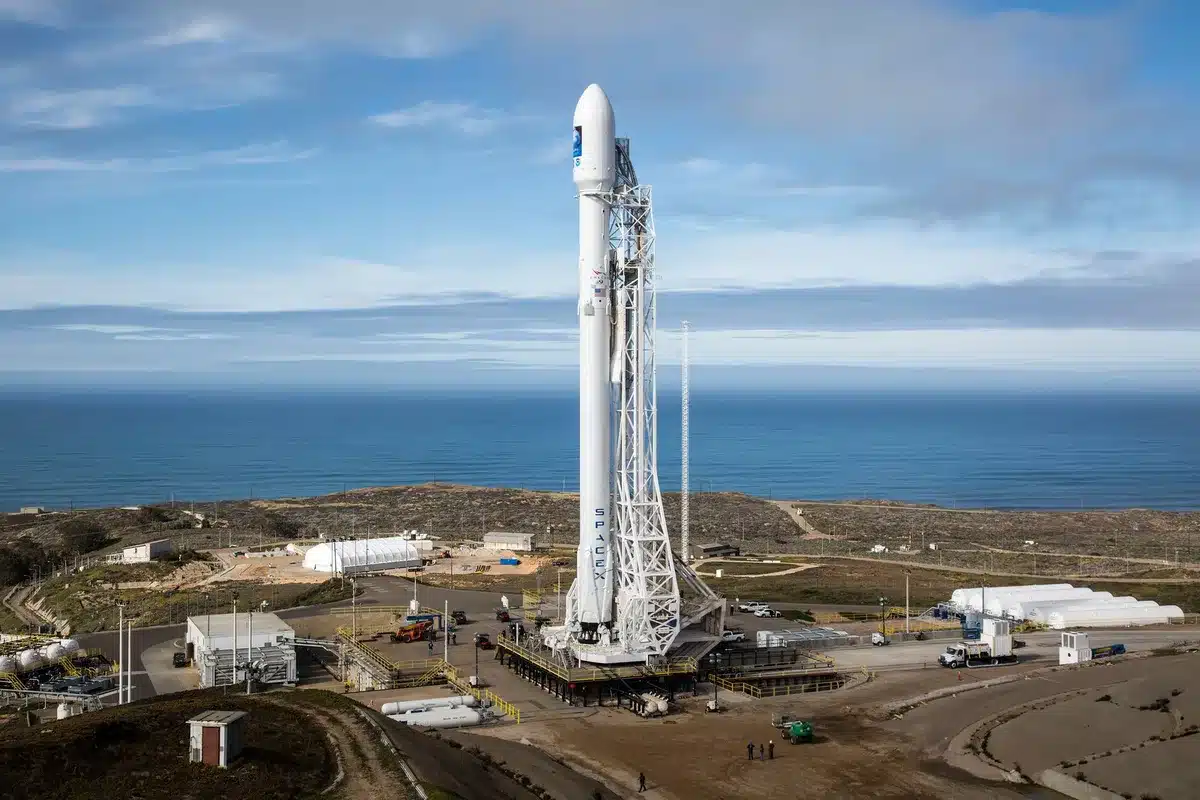
SpaceX reached its 100th orbital mission of 2026 on August 19, launching a Falcon 9 carrying 24 Starlink satellites from Vandenberg Space Force Base in California. The milestone, achieved by mid-August, marks a dramatic acceleration in the company’s launch cadence — it took until late autumn to hit 100 launches in 2024, but this year the target arrived roughly two months sooner.
The mission itself was routine by SpaceX standards: a pre-dawn liftoff from Space Launch Complex 4 East at Vandenberg, 24 broadband satellites delivered to low Earth orbit, a successful booster landing. What made it noteworthy was the count. One hundred launches by August 18 translates to a pace of roughly three per week, a rhythm that has begun to feel less like an achievement and more like infrastructure.
The speed of SpaceX’s climb is the real story. The company flew 25 launches in 2020, then 31 in 2021, 61 in 2022, 96 in 2023, 134 in 2024, and 165 in 2025, according to Space Daily and Space.com. Each year outran the last, but the jump from 2024 to 2025 — a 23% increase — signals a sustained acceleration rather than a one-time push.
Anne Mason, SpaceX’s director of national security space launch, captured the strangeness of this routine in a 2025 interview cited by Space Daily: “I always find it amazing that this cadence has become somewhat normal.” She described the transformation from SpaceX’s perspective: “If we look back just five years ago, in 2020 when we launched roughly 25 times, which is still a healthy rate at twice a month, and now launching on average every two to three days.”
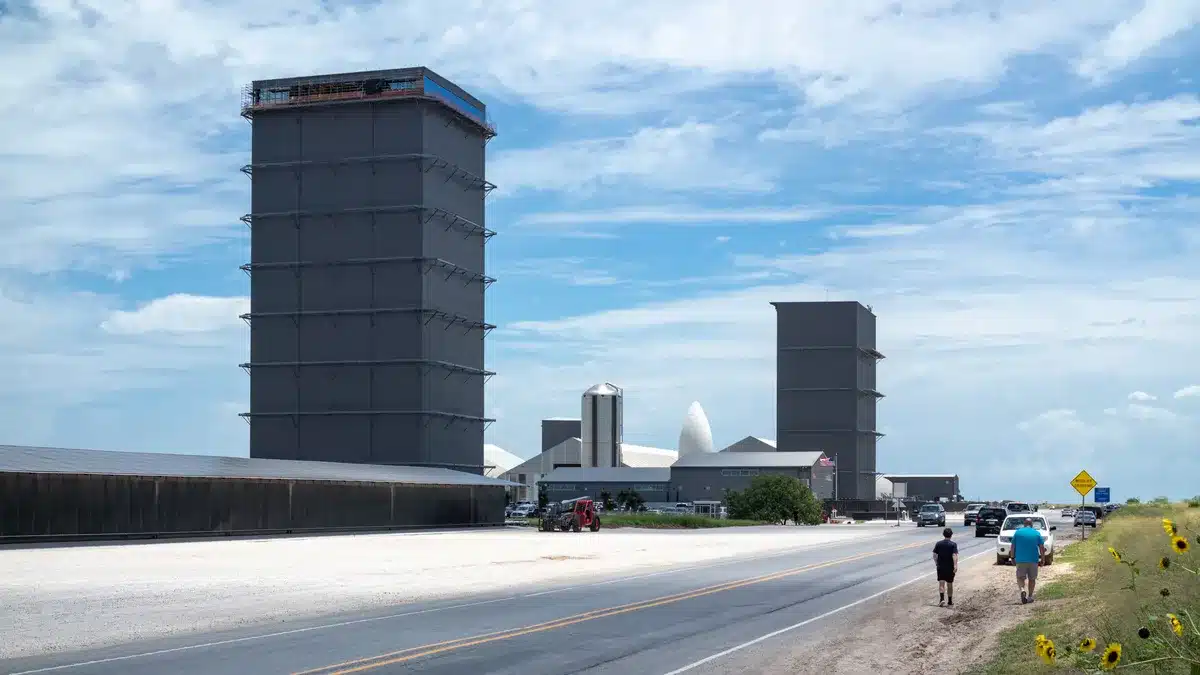
That production pace is not accidental. Mason pointed to the factory as the real bottleneck: “We have a second stage coming off the production line every two and a half days.” Falcon 9’s first-stage boosters land and reflew, but the upper stage is expended on every flight. To launch every couple of days, SpaceX must manufacture a new second stage at roughly the same rate. The cadence in the sky is ultimately a cadence on the assembly line.
Almost all of these 100 launches carried Starlink satellites — SpaceX’s own broadband constellation. The company now operates around 10,000 active Starlink satellites, making it the largest satellite operator in the world by a wide margin. According to Space Daily, Starlink now controls nearly two-thirds of every working satellite orbiting Earth, a dominance underscored by the fact that SpaceX’s 2025 output of 165 launches was nearly twice as many as China and roughly 85% of the total US figure.
This concentration of launches is both SpaceX’s strength and an emerging challenge. The more densely populated low Earth orbit becomes, the greater the risk of collisions and the accumulation of debris. Space Daily reported that Starlink satellites performed over 355,000 collision avoidance maneuvers in the past year — more than three times the count from 2024 — with each satellite now dodging debris or other spacecraft on an almost weekly basis.
SpaceX has responded by announcing plans to move thousands of Starlink satellites down from around 550 kilometers to roughly 480 kilometers in altitude. Michael Nicolls, the company’s vice president of Starlink engineering, argued in Space Daily that “the number of debris objects and planned satellite constellations is significantly lower below 500 km, reducing the aggregate likelihood of collision.”
The 100-launch milestone is not SpaceX’s destination but a waypoint. Elon Musk has discussed pushing annual totals toward 1,000 or more, with Starship flying multiple times daily and Falcon 9 eventually retired. If the climb from 25 launches in 2020 to 165 in 2025 felt steep, that goal sits on another scale entirely. For now, SpaceX has made the extraordinary routine — a shift that has reshaped what is possible in orbit and raised new questions about the long-term consequences of a sky that busy.
Sources
- Space Daily — SpaceX’s 100th launch milestone on August 19, 2026, the historical launch progression from 2020-2025, Anne Mason’s commentary on launch cadence and production rates, Starlink satellite count and market dominance, collision avoidance maneuvers and space debris trends, orbit-lowering initiative and Michael Nicolls’ statement.
- Space.com — The 100th mission details (Falcon 9, Starlink Group 17-50, 24 satellites, Vandenberg SFB, August 19, 2026), historical launch records, and the acceleration compared to 2024.
- Spaceflight Now — Confirmation of the 100th orbital mission on August 21, 2026 (Starlink 15-20 mission).