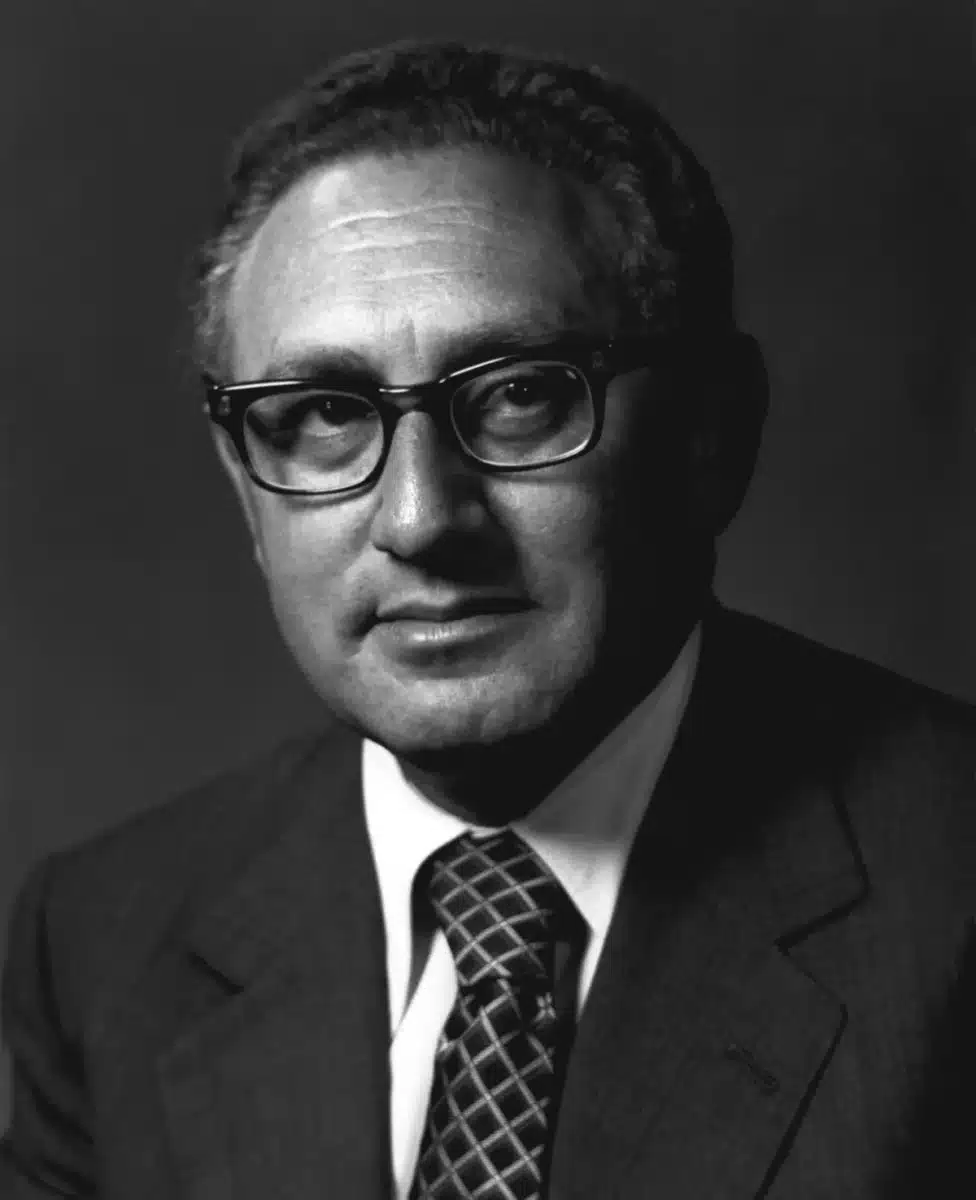
President Trump’s renewed push to acquire Greenland and his confrontational stance toward NATO allies echo the realpolitik philosophy that defined Henry Kissinger’s approach to American foreign policy, according to historians and analysts tracking the ideological roots of Trump’s geopolitical strategy. While Trump and Kissinger appear as opposites—the populist businessman versus the elite Cold War strategist—scholars have identified profound Kissingerian nuances in Trump’s approach, particularly his skepticism of multilateral institutions and his emphasis on national interest over alliance loyalty.
Trump has revived his bid for U.S. control of Greenland, reiterating in July 2026 at a NATO summit that the Danish territory “should be controlled by the United States, not by Denmark,” according to Reuters and other outlets covering the summit in Turkey. His administration has signaled willingness to use military force and has threatened tariffs against countries opposing the Greenland acquisition, including Denmark and Norway. The strategy reflects what analysts describe as a transactional approach to foreign policy, where traditional alliance relationships are subordinate to perceived American strategic interests.

Thomas A. Schwartz, a leading historian of Kissinger’s thought and author of “Henry Kissinger and American Power: A Political Biography,” identifies striking parallels between the two leaders’ worldviews in a June 2026 interview published by World Geostrategic Insights. “You are correct to see certain similarities in Kissinger and Trump’s skepticism toward multilateralism,” Schwartz said. Kissinger famously questioned the utility of European consensus, asking “if I want to know what Europe thinks, whom do I call?”—a sentiment that resonates with Trump’s dismissal of NATO as “obsolete” and his pressure on allies to increase defense spending to 5 percent of gross domestic product, more than double the current 2 percent target.
Yet Schwartz cautions against overstating the comparison. “Unlike Trump, Kissinger knew how to conceal his realism about multilateralism and those institutions and avoid unnecessarily antagonizing those who put their faith in them,” Schwartz explained. “Trump seems to go out of his way to attack these institutions in ways that cause unnecessary friction, something Kissinger would never do.” This distinction highlights a crucial difference: Kissinger’s realpolitik operated through calculated diplomacy and strategic ambiguity, while Trump’s transactional approach relies on public confrontation and threats.
Kissinger’s legacy rests on the principle that American foreign policy should prioritize national interest and power balance over ideological commitments or multilateral consensus. He orchestrated the opening to China in 1972 to isolate the Soviet Union, pursued détente with Moscow, and generally operated on the assumption that states act rationally to advance their interests. Trump’s Greenland strategy reflects this same calculus: he has justified the acquisition on national security grounds, citing the Arctic’s strategic importance amid competition with China and Russia.

The Trump administration has also threatened to withdraw U.S. military forces from Europe if allies do not comply with his demands—a move that mirrors Kissinger’s willingness to use the threat of reduced American commitment to extract concessions from allies. In a July 2026 NATO summit, Trump renewed his threat to pull American soldiers from Europe if the continent did not meet his defense spending requirements, according to reporting from PBS and the Guardian. This leverage tactic, while more bluntly delivered than Kissinger would have employed, shares the underlying logic of conditional alliance commitment.
Schwartz notes that Kissinger’s 1970s “Year of Europe” initiative, which attempted to reinvigorate the Atlantic Alliance on American terms, ultimately failed due to the Watergate scandal and the Yom Kippur War. The parallel to Trump’s current transatlantic tensions is instructive: both leaders sought to reorder European relationships around American interests, yet both faced resistance rooted in Europe’s own strategic concerns. However, Schwartz suggests that external threats may eventually force a realignment. “The persistence of the Russian threat may bring America and Europe back together,” he observed, though “it won’t be the same as in the heyday of the alliance.”
The Greenland push and NATO pressure campaigns reveal Trump’s application of what some analysts call “transactional realpolitik”—a variant of Kissinger’s philosophy adapted to the 21st-century context of great-power competition with China and Russia. Where Kissinger sought to manage the Cold War through strategic triangulation and careful balance-of-power calculations, Trump is attempting to reshape the international order through direct assertion of American interests, even when doing so strains long-standing alliances. Whether this approach can achieve the stability Kissinger sought through subtlety and maneuver remains uncertain, but the intellectual lineage connecting the two leaders’ worldviews is now evident to scholars studying the evolution of American foreign policy.
Sources
- Reuters — Trump’s statement that Greenland should be controlled by the U.S., not Denmark, at the July 2026 NATO summit.
- PBS NewsHour — Trump’s renewed demands for Greenland and threats to withdraw military forces from Europe.
- The Guardian — Trump’s renewed call for U.S. acquisition of Greenland and threat to pull armed forces from Europe.
- World Geostrategic Insights — Interview with Thomas A. Schwartz on Kissinger’s legacy and Trump’s Kissingerian nuances, including quotes on multilateralism skepticism and diplomatic subtlety.
- Atlantic Council — Analysis of Trump’s NATO summit statements and European responses to Greenland demand.
- RUSI — Analysis of Trump’s foreign policy after year one, including transactional approach to NATO allies.