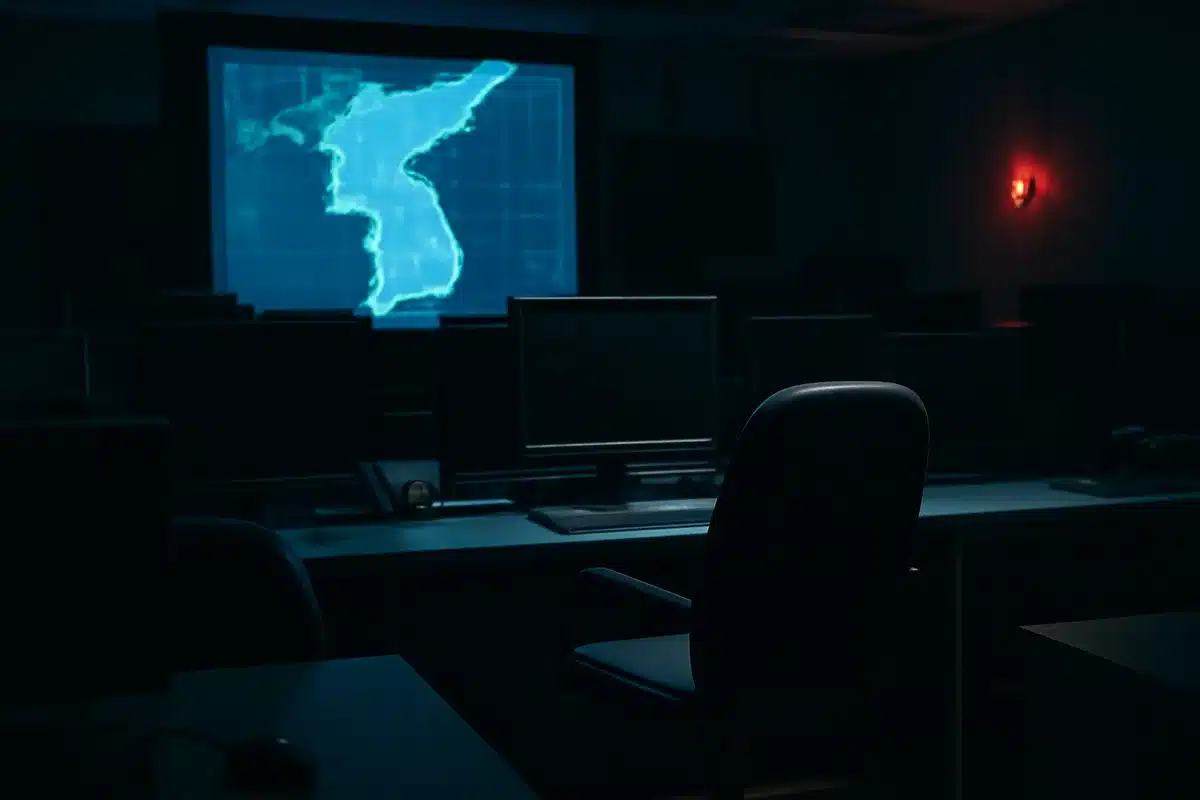
South Korea’s government said it would continue coordinating with the United States on military readiness after President Trump ordered the Pentagon to “substantially reduce” joint military exercises, citing costs and Seoul’s refusal to help with Iran operations. The Ulchi Freedom Shield drills, scheduled to run until August 27 with about 18,000 South Korean troops, began Monday despite Trump’s Sunday announcement that he viewed the exercises as sending an “inappropriate and hostile” signal to North Korea.
South Korea’s presidential Blue House said it was reviewing Trump’s comments and expressed hope that “the friendly relationship between the U.S. and North Korean leaders will lead to meaningful dialogue between the two countries,” according to Reuters. The office emphasized that Seoul and Washington would “continue coordinating on their combined defense posture and military exercises,” signaling Seoul’s intent to preserve the alliance even as Trump pursues engagement with Kim Jong Un.
President Lee Jae Myung struck a more cautious tone, saying Tuesday that while maintaining peace was “most important” for South Korea, the country needed to prepare for the “worst case scenario,” according to CNBC. Lee described the annual Ulchi Freedom Shield exercises as defensive in nature and not intended to raise tensions or attack North Korea. His comments reflected Seoul’s balancing act: supporting Trump’s diplomatic overtures to Pyongyang while protecting its own security interests on the peninsula.
Trump cited two grievances for the cuts: the cost of the drills and what he characterized as South Korea’s unwillingness to participate in U.S. efforts to denuclearize Iran. In a Truth Social post, Trump wrote that he had asked Seoul whether it would join the “denuclearization of the Islamic Republic of Iran,” and claimed the answer was “No thanks!” South Korea’s government countered that it was “actively participating” in international talks on Iran and was consulting with the U.S. on “practical and military contributions,” according to NBC News.
Trump’s move echoes his first term, when he suspended major U.S.-South Korean military exercises in 2018 during denuclearization talks with Kim Jong Un. That effort ultimately collapsed in 2019, and North Korea has since advanced its nuclear and missile programs while deepening military ties with Russia, providing troops and weapons for the Ukraine war. The Guardian reported that more than 14,000 North Korean troops have fought alongside Russian forces in the Kursk region, gaining battlefield experience with modern drone tactics and cyber-attacks that Seoul and Washington now incorporate into their own training.
Military experts warned that scaling back the exercises weakens the alliance. Leif-Eric Easley, professor of international studies at Ewha Womans University in Seoul, told NBC News that the cuts could “damage alliance coordination, slow the process of South Korea taking on greater responsibility for its own defense, and weaken deterrence against possible conflicts in Asia.” He added that “the cost savings from downsizing drills are marginal, while the diplomatic benefits for relations with North Korea are doubtful,” according to The Guardian.
Victor Cha, Korea chair at the Center for Strategic and International Studies, suggested Trump is using the exercises as leverage to entice Kim into talks. Speaking on a CSIS podcast, Cha argued that Trump is “trying to entice North Korea’s Kim into meeting with him” and that “this is not something that is unusual. We have seen the president use military exercises as a tool in the past.” Cha noted that Trump may also be seeking to shift attention away from tensions with Iran, according to CNBC reporting.
The timing of Trump’s announcement—just hours before the drills began—surprised both allies and analysts. North Korea has long denounced the annual exercises as “rehearsals for an aggressive war,” a charge the U.S. and South Korea deny. The country test-fired ballistic missiles last week in what analysts read as a protest against the upcoming drills, and its foreign ministry warned it would “respond to a new level of a threat with a new level of a deterrent,” according to Reuters and The Guardian.
Sources
- Reuters — Trump’s order to reduce the drills, South Korea’s response, history of Trump’s efforts to curtail exercises, and expert commentary from Jenny Town of the Stimson Center and Victor Cha of CSIS.
- CNBC — President Lee’s statement about preparing for worst-case scenario, details on the Ulchi Freedom Shield exercises, and Victor Cha’s analysis of Trump’s diplomatic strategy.
- The Guardian — Trump’s reasoning, North Korea’s military experience in Ukraine, military officials’ concerns about new threats, expert commentary from Leif-Eric Easley and Lim Eul-chul, and historical context of Trump’s 2018 suspension of exercises.
- NBC News — Trump’s announcement and reasoning, South Korea’s official response, Leif-Eric Easley’s assessment of alliance risks, and North Korea’s recent ballistic missile tests.