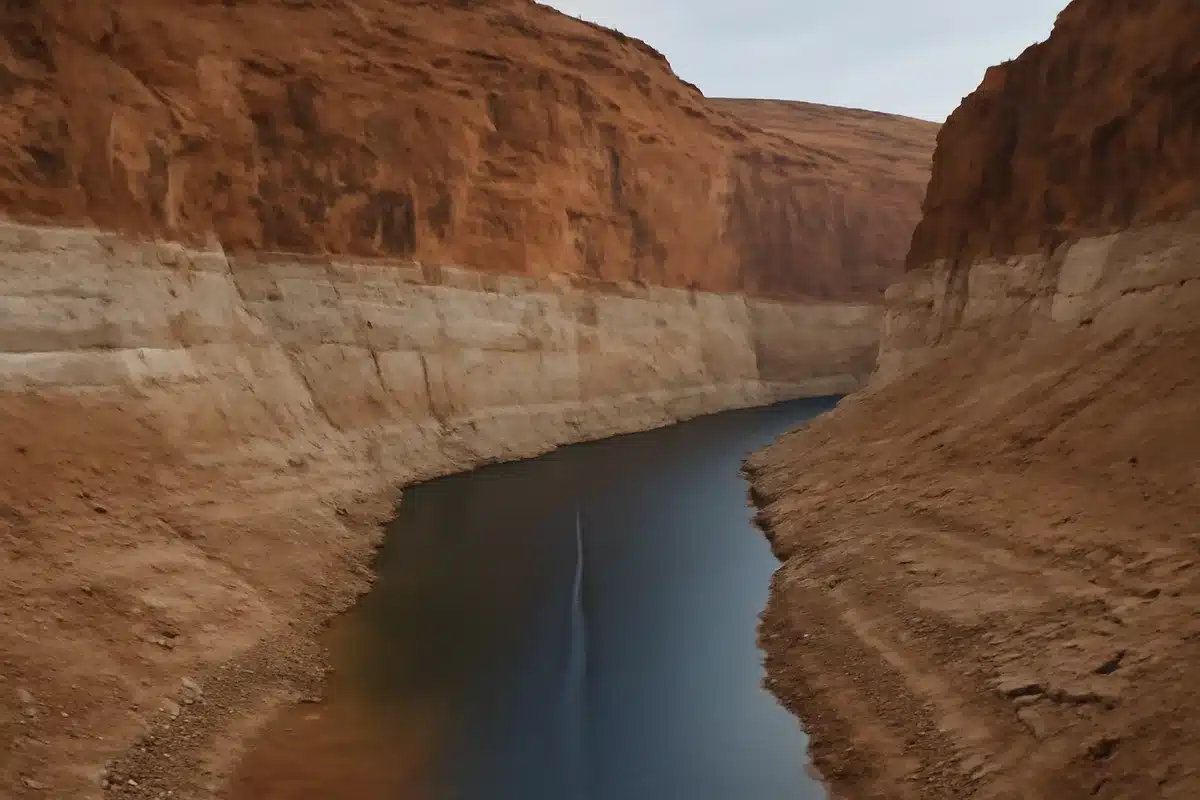
Lake Powell, the nation’s second-largest reservoir, hit a record-low water level of 3,519.91 feet above sea level on August 17, breaking the previous low of 3,519.92 feet set in April 2023. The drop leaves the reservoir just 30 feet above the minimum power pool level of 3,490 feet, below which the Glen Canyon Dam can no longer reliably generate hydroelectric power.
The record comes as a 26-year drought grips the Colorado River basin, with 95% of the region classified as experiencing drought conditions. Lake Powell now sits at roughly 23 percent of its full capacity, which is designed to hold more than 26 million acre-feet of water when completely full.
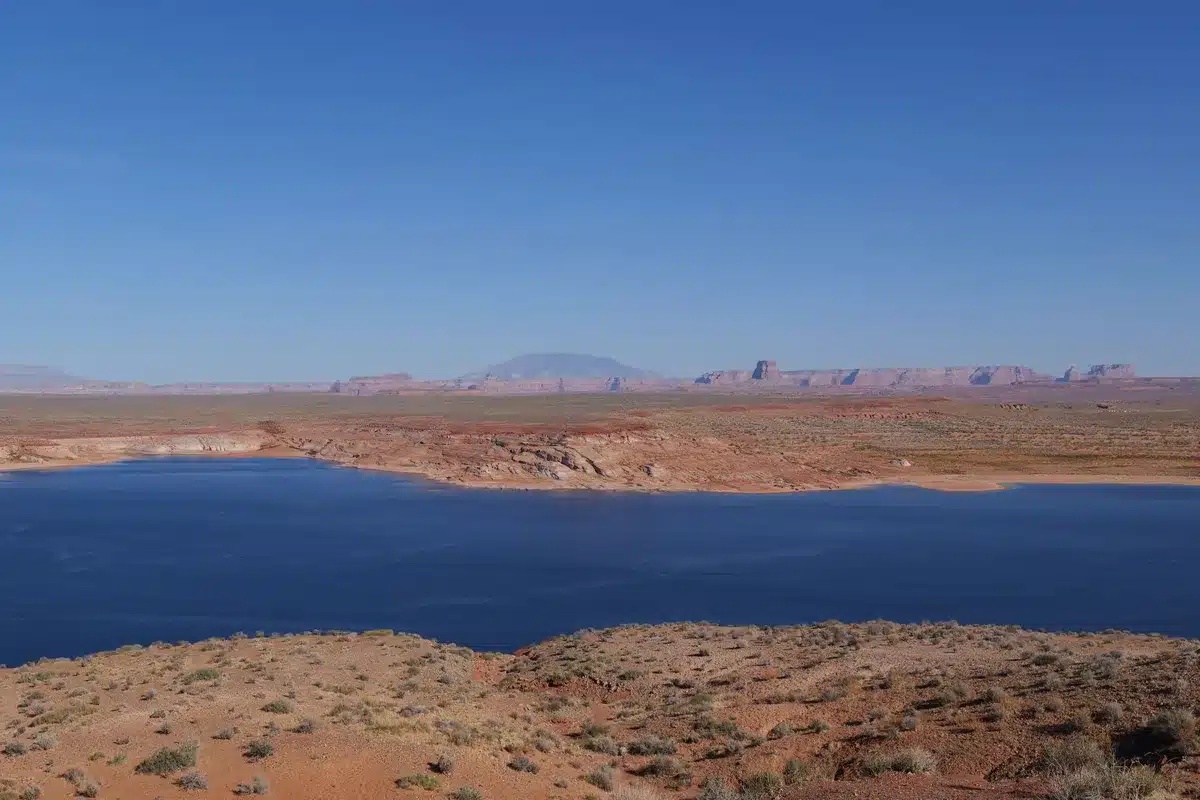
The Colorado River system that feeds Lake Powell supplies water to 40 million people and irrigates 5.5 million acres of farmland across seven states. The record low intensifies pressure on water allocations in the Lower Basin states of Arizona, California, and Nevada, which face cuts of up to 40 percent under federal provisions announced in early August.
Glen Canyon Dam, completed in 1963, produces around five billion kilowatt-hours of hydroelectric power annually through eight turbines when water levels permit. If Lake Powell falls below 3,490 feet, the dam’s main intakes would lose sufficient water pressure to operate, forcing the facility to release water only through river outlet works. The dam modifications currently under study are aimed at extending power generation capability as levels continue to decline.
The severity of the current crisis mirrors historical precedent. On July 12, 2026, the combined storage of Lake Powell and Lake Mead—the nation’s two largest reservoirs—reached levels last seen in May 1957, according to analysis cited by multiple outlets. That year marked a low point before the completion of Glen Canyon Dam in 1963, which was designed in part to stabilize water supply across the region.
The drought has forced the Bureau of Reclamation and the seven basin states—Wyoming, Colorado, Utah, New Mexico, Arizona, Nevada, and California—into ongoing negotiations over water management and allocation. The challenge is compounded by the fact that the Colorado River Compact, signed in 1922, allocated water based on flow rates that have not been sustained in recent decades, leaving the system structurally oversold.
Water managers have signaled that further intervention may be necessary to prevent the reservoir from crossing the hydropower threshold. The Lake Powell crisis deepens as record lows persist, raising urgent questions about how the region will manage electricity generation, agricultural irrigation, and municipal water supply if current drought conditions continue.
Sources
- The New York Times — Lake Powell record-low water level of 3,519.91 feet, Colorado River system supplies 40 million people
- PBS NewsHour — Lake Powell elevation dropped to 3,519.91 feet, threatening water and electricity supply
- ABC News — Lake Powell pool elevation 3,519.91 feet, nation’s second-largest reservoir
- Circle of Blue — Glen Canyon Dam minimum power pool at 3,490 feet, penstocks incapacitated below that level
- CNN — 95% of basin in drought, Lake Powell at 23% full, combined storage matching May 1957 levels
- Sierra Club — 26-year drought affecting Colorado River, Lake Powell water levels
- Water World — Lake Powell 30 feet above minimum power pool threshold
- USBR — Colorado River supplies 40 million people, seven-state system management