The 60-day ceasefire between the United States and Iran expired on Monday, August 18, as President Trump escalated rhetoric by declaring the Strait of Hormuz a “new US territory” in a post on Truth Social—a claim that experts say has no legal basis and that Iran has sharply rejected as “nonsense.”
The Memorandum of Understanding signed June 17 between Trump and Iranian President Masoud Pezeshkian was meant to pause the war that began on February 28 and to launch two months of peace talks. However, the agreement collapsed within weeks, derailed primarily by disputes over control of the crucial shipping channel through which roughly one-fifth of global oil and gas passes daily.
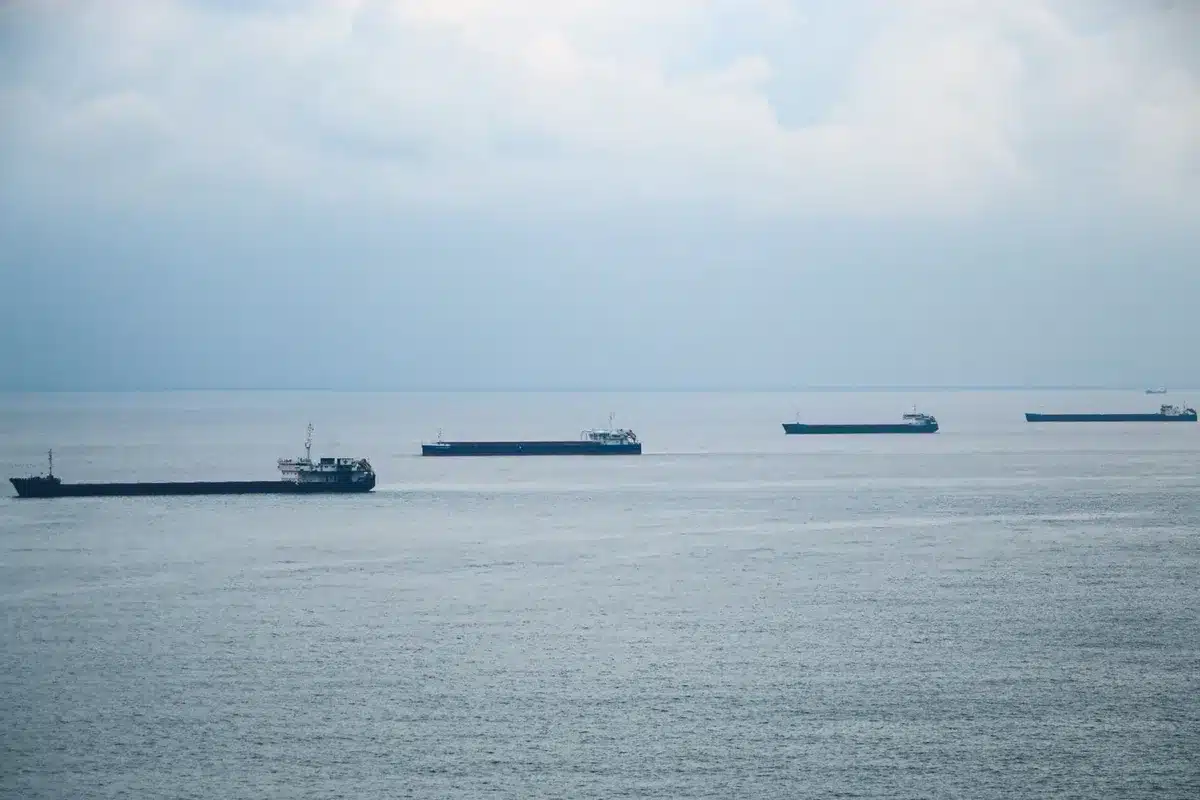
The core disagreement centered on Article 5 of the MoU, which promised safe passage for commercial vessels through the strait with no charge for 60 days. Iran insisted ships follow a route closer to its own coast and deemed the Oman-backed route “restricted,” while the US and Oman supported passage along Oman’s coast. When vessels followed the Oman route in late June, Iran attacked several ships, prompting the US to resume strikes on Iranian military sites—triggering a cycle of retaliation that effectively ended the ceasefire by early July, according to Al Jazeera reporting on the agreement’s collapse.
The vaguely worded agreement also failed to address Israeli military operations in Lebanon and Gaza, which continued despite ceasefire language, and left undefined the $300 billion reconstruction package the US promised Iran. Joey Hood, the former acting director of the Office of Iranian Affairs at the US State Department, told Al Jazeera the MoU “was doomed to fail” because it was “very poorly written” and gave Iran room to claim sovereignty over the strait.
Trump’s declaration that the Strait of Hormuz is now US territory appears to reflect his administration’s determination to maintain a naval blockade and prevent Iranian control of the waterway. “We have the blockade. No ships get through unless we want them to,” Trump said during a speech at a police academy in New York on August 14. “Essentially, that’s what it is. After we finish defeating Iran, pretty soon I’ll be declaring the Hormuz Strait a territory of the United States.”

Iran’s deputy foreign minister, Kazem Gharibabadi, responded bluntly: “The Strait of Hormuz cannot be seized by tweet, nor by aircraft carrier, nor by issuing an order, nor by an election speech. The Strait of Hormuz has been Iranian, is Iranian, and will remain Iranian; this strait will only be closed and opened under Iran’s command,” according to Al Jazeera. Iran’s head of judiciary called Trump’s remarks “nonsense.”
Legal experts and international law specialists say Trump lacks the constitutional power to annex foreign territory unilaterally. Bruce Fein, who served as associate deputy attorney general under President Ronald Reagan, told Al Jazeera that annexation requires either a Senate-ratified treaty or legislation—citing precedents like the Louisiana Purchase, Hawaii’s annexation, and the Panama Canal acquisition. Attempting unilateral annexation, Fein said, would “constitute the crime of aggressive war under international law, including the UN Charter.”
Under the UN Convention on the Law of the Sea (UNCLOS), which the US has not ratified but whose rules on international straits are widely regarded as customary law, the Strait of Hormuz is an international waterway where coastal states—Iran and Oman—hold only 12-nautical-mile territorial seas. Ships have a guaranteed right of transit passage that “shall not be impeded.” Natalie Klein, a specialist in international law at the University of New South Wales, Sydney, told Al Jazeera that the only scenario where Trump’s claim could have any plausibility would be if the US had military occupation of Iran or its coastal areas, comparable to post-World War II Japan—a scenario absent from the current conflict.
The war’s impact on global commerce has been severe. According to Wikipedia data on the economic impact of the 2026 Iran war, the oil shipping index plunged from 3,737 in March 2026 to 1,850 in July, reflecting massive disruption to energy and goods transport. Global oil prices surged more than 25 percent since the war began, driving up fuel costs worldwide. The US has faced its own economic headwinds, with gasoline averaging more than $4 a gallon and approval for the war hovering around 35 percent, according to a Reuters/Ipsos poll cited in Al Jazeera reporting.
Iran is now holding separate talks with Oman, the only other coastal state bordering the strait, to negotiate management of maritime traffic. Foreign Minister Abbas Araghchi said negotiations with Muscat “may reach a conclusion soon,” but reopening the waterway remains contingent on US concessions—specifically removal of the naval blockade and sanctions—that were originally conditions for ending the war entirely.
Paul Musgrave, an associate professor of government at Georgetown University in Qatar, told Al Jazeera that Trump’s territorial declaration is primarily rhetoric aimed at his domestic political base. “This is a guy who speaks big. You have to take him seriously in some cases but not literally,” Musgrave cautioned, noting that Trump is a “showman” shaped by reality television. The statement shows Trump’s determination not to accept defeat in the conflict, but making the strait US territory is “physically and legally impossible,” Musgrave added.
Sources
- Al Jazeera — detailed reporting on the MoU’s collapse, Trump’s Strait of Hormuz declaration, Iran’s response, and expert legal analysis
- Wikipedia — economic impact data on the 2026 Iran war, including oil shipping index figures
- Reuters/Ipsos poll — US public approval for the Iran war, cited in Al Jazeera reporting