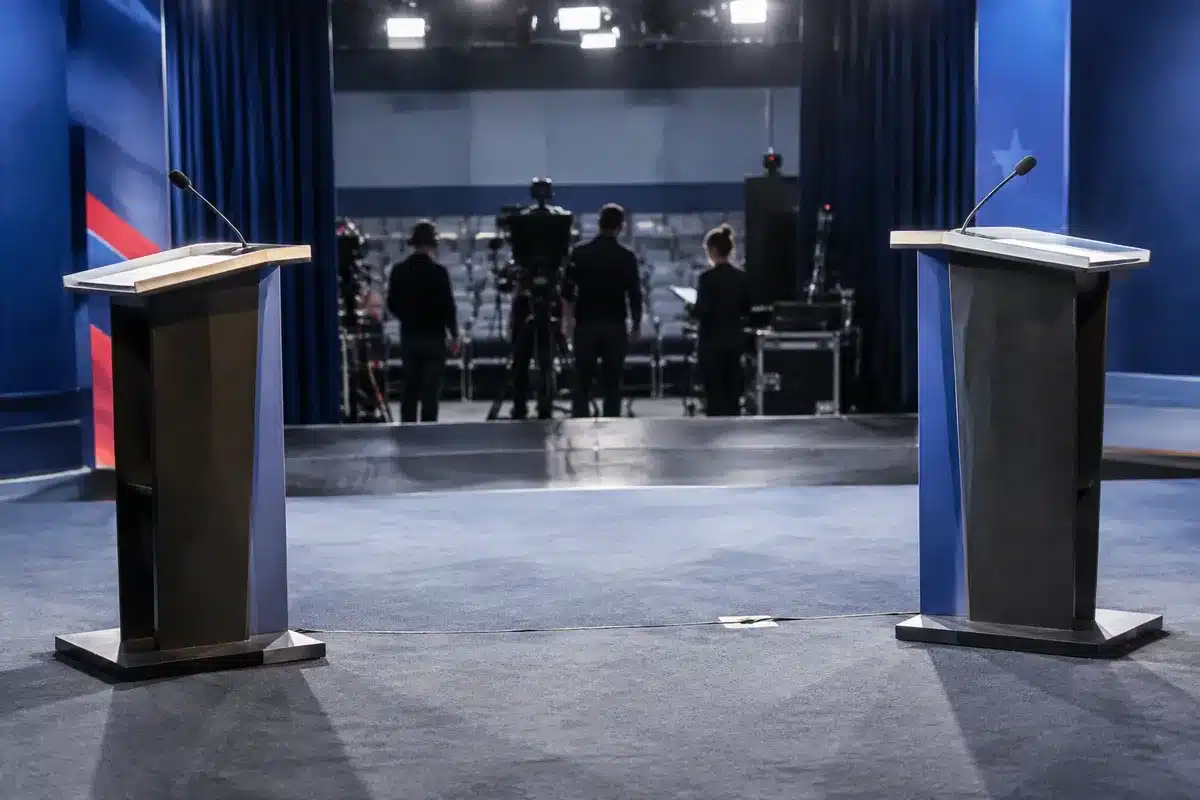
Alaska voters cast ballots today in a crowded governor’s primary featuring 17 candidates seeking to advance to November’s general election under the state’s distinctive top-four system. The primary on August 18 will determine which four vote-getters, regardless of party affiliation, move forward to face off in a ranked-choice voting contest.
The 17-candidate field includes 12 Republicans, 2 Democrats, and 3 independents competing in a state where Republican Governor Mike Dunleavy is barred by term limits from seeking another term. Early polling and candidate fundraising suggest that Democrat Tom Begich, Republicans Click Bishop, Dave Bronson, and Bernadette Wilson are among the frontrunners poised to advance.
Alaska’s top-four primary system allows all candidates to run on a single ballot, with voters selecting one candidate per race. The top four finishers, determined by raw vote count, automatically qualify for the November general election. This nonpartisan approach differs from the traditional party-based primary system used in most states, where each party holds its own contest to select nominees.
The system reflects a major shift in Alaska’s electoral structure. In 2020, voters approved Ballot Measure 2, which established both the top-four primary and a ranked-choice voting general election. The 2026 governor’s race will be the first statewide election to use ranked-choice voting in the general election phase, allowing voters to rank candidates by preference rather than casting a single vote.
In the 2022 governor’s primary, the first held under the top-four system, three Republicans and one Democrat advanced to the general election. Incumbent Governor Mike Dunleavy led the primary with 40.4 percent of the vote, followed by independent former Governor Bill Walker at 22.8 percent, Democrat Les Gara at 23.1 percent, and Republican Charlie Pierce at 6.6 percent. Dunleavy went on to win the general election with 50.3 percent of the vote under ranked-choice voting, defeating Democrat Les Gara and independent Bill Walker.
Political analysts note that the 2026 race presents a notably wide-open field. With no incumbent in the governor’s office, the large number of candidates reflects heightened competition for the seat. Observers expect both major-party candidates to advance from today’s primary, though the specific composition of the final four remains uncertain with multiple Republicans competing for limited spots.
The Alaska primary election also features competitive races for U.S. Senate and House seats, along with several state legislative contests and one ballot measure. Results from today’s primary will be released by the Alaska Division of Elections, with the general election scheduled for November 3, 2026.
Sources
- Ballotpedia — confirmed 17 candidates in Alaska’s 2026 governor primary, composition by party (12 Republicans, 2 Democrats, 3 independents), and top contenders advancing to the general
- Alaska Public — reported on August 18, 2026 primary election details and what voters needed to know
- New York Times — analyzed Alaska’s 2026 governor race and expectations for primary advancement
- Alaska Division of Elections — official source on top-four primary system mechanics and ranked-choice voting implementation
- Washington Post — provided live election results and analysis of 2026 primary outcomes
- NBC News — covered the 2026 Alaska governor primary results
- FairVote — analyzed Alaska’s top-four system and what to expect in the 2026 primary
- Ballotpedia — documented 2022 Alaska gubernatorial election results, showing Dunleavy’s 40.4% primary lead and the four candidates who advanced